Nagaland church body urges Centre, state to avoid scheduling official events on Sundays
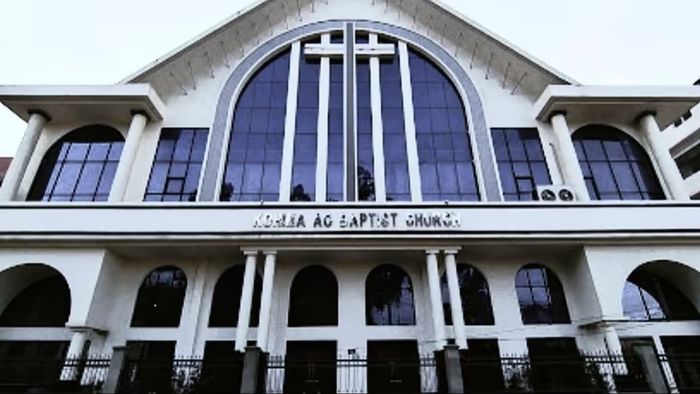
The Nagaland Baptist Church Council (NBCC) on September 25 urged the Centre and the state government to exercise greater sensitivity while scheduling official events, electoral exercises, government meetings and public activities on Sundays and major Christian observances.
- Sep 25, 2026,
- Updated Sep 25, 2026, 5:25 PM IST
The Nagaland Baptist Church Council (NBCC) on September 25 urged the Centre and the state government to exercise greater sensitivity while scheduling official events, electoral exercises, government meetings and public activities on Sundays and major Christian observances.
In a statement, the NBCC said administrative efficiency and economic requirements should not come at the cost of religious freedom and citizens' freedom of conscience. It urged governments to take constitutional freedoms into account while planning official activities.
The council cited the Special Intensive Revision (SIR) of electoral rolls in Nagaland, pointing out that the draft electoral roll for Phek district was initially scheduled to be published on September 20, which fell on a Sunday. The date was later changed to September 21.
The NBCC also raised concern over the reported schedule for publication of the final electoral roll in Nagaland on November 22, which also falls on a Sunday.
While acknowledging that electoral exercises are essential to democracy, the council said the administration should remain sensitive to the religious practices of the communities it serves.
“There is no inherent conflict between conducting an important constitutional exercise and respecting the worship practices of citizens,” it said, adding that a mature democracy should be able to accommodate both.
Banking services on Sunday
The NBCC also referred to arrangements reportedly made to maintain banking services ahead of the proposed three-day nationwide bank strike from September 28 to 30.
It said public sector banks and regional rural banks have reportedly been directed to operate on Sunday, September 27, ahead of the strike and the preceding weekend holidays.
While acknowledging the need for uninterrupted banking services and economic continuity, the council questioned why similar consideration could not be given while scheduling government programmes and other public exercises that affect Christian worship.
The NBCC said its concern was not against economic necessity but what it described as an inconsistency in treating Sunday as a flexible working day when administrative or economic interests require it.
It said Christians are not opposed to governance, public service, economic development or the legitimate responsibilities of the state, noting their contribution to the country's social, educational, economic, administrative and democratic life.
The council said respecting Sunday worship should not be viewed as a concession to Christians but as recognition of citizens' dignity and constitutional freedom.
The NBCC said it was not seeking privilege or opposing the state, but was asking for fairness and governance based on “wisdom, sensitivity and respect for conscience”.
It urged the Centre and the Nagaland government to review the practice of designating Sundays as working days wherever such arrangements could reasonably be avoided.
The council also called for consultation with religious and community representatives when public decisions have significant implications for religious observances.
It urged authorities to ensure that administrative convenience does not result in religious marginalisation and called for governance based on justice, inclusion and mutual respect.
During a recent press conference in Kohima, Nagaland Chief Electoral Officer Bhagyashree Banayat clarified that the electoral schedule had been issued by the Election Commission and that the State Election Office was following it.