Nagaland CM launches food processing, incubation centres to spur rural economy and jobs
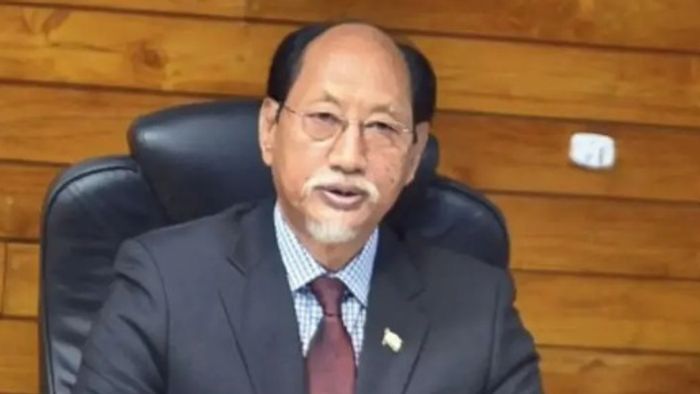
Nagaland Chief Minister Neiphiu Rio on Monday, June 8, inaugurated four food processing and incubation centres across the state under the Special Assistance to States for Capital Investment (SASCI) 2024-25 scheme, aimed at strengthening market linkages for farmers, promoting entrepreneurship and generating employment opportunities for youth.
- Jun 08, 2026,
- Updated Jun 08, 2026, 10:49 PM IST
Nagaland Chief Minister Neiphiu Rio on Monday, June 8, inaugurated four food processing and incubation centres across the state under the Special Assistance to States for Capital Investment (SASCI) 2024-25 scheme, aimed at strengthening market linkages for farmers, promoting entrepreneurship and generating employment opportunities for youth.
The chief minister inaugurated the Food Processing Centre at the State Industrial Area in Toluvi, Dimapur, and virtually launched three other projects, the Incubation Centre for Entrepreneurs and Infrastructure Development at the Industrial Growth Centre in Ganeshnagar under Chümoukedima, the Incubation Centre for Food Processing in Tuensang, and the Modern Aggregation Centre at Longnak in Mokokchung.
Addressing the gathering, Rio said small-scale industries, particularly food processing, offer one of the most promising avenues for Nagaland's economic growth. He said the newly established centres align with the Centre's vision of building a "Viksit Bharat" and have the potential to become catalysts for rural entrepreneurship and value addition.
Highlighting the importance of the initiative, Rio said there has been strong demand for such projects from both farmers and the state government. Referring to Prime Minister Narendra Modi's goal of transforming India into a developed nation by 2047, he stressed the need for Nagaland to actively participate in the country's growth journey.
The chief minister said the benefits of the centres would directly reach farmers once operations begin in full swing and added that the government plans to replicate similar facilities in all districts of the state.
According to Rio, district-level processing units would help regions identify crops best suited to local conditions, enhance value addition and improve income generation for farming communities.
Expressing confidence in the state's youth, he said Nagaland possesses abundant talent and natural resources. He encouraged young entrepreneurs to make use of the new infrastructure and combine innovation with traditional knowledge to build sustainable businesses.
MLA and Advisor for Industries and Commerce Hekani Jakhalu described the four centres as pilot projects developed after extensive study of local resources and market opportunities. She said the department aims to establish independent processing centres in every district by 2028.
Jakhalu emphasised that food processing is not merely about machinery but about building an integrated value chain connecting farmers, processors and markets. She termed the sector a crucial bridge between agriculture and manufacturing.
Advisor for SCERT and Food Processing Achumbemo Kikon said the department would focus on six key pillars, Production, Processing, Preservation, Packaging, Pricing and Patenting — to strengthen the sector in a mission mode.
He stressed that processing infrastructure would only be successful if backed by adequate agricultural production and called for cooperation among farmers, villages and stakeholders to strengthen Nagaland's economy.
Several ministers, advisors and legislators attended the programme, including Rural Development Minister Metsübo Jamir, Advisor for Urban Development and Municipal Affairs Zhaleo Rio, Advisor for Agriculture Mhathung Yanthan, Advisor for Science and Technology Kuzholuzo Nienu, Advisor for Sericulture and Minority Affairs Imkong L. Imchen, and MLA Dr Sukhato A. Sema.