Nagaland launches Doyang wildlife division in Wokha to tackle human-elephant conflict
The Department of Environment, Forest and Climate Change, Nagaland, on April 16 inaugurated the Doyang Wildlife Division along with a dedicated control room to address rising human-elephant conflict (HEC) in the region.
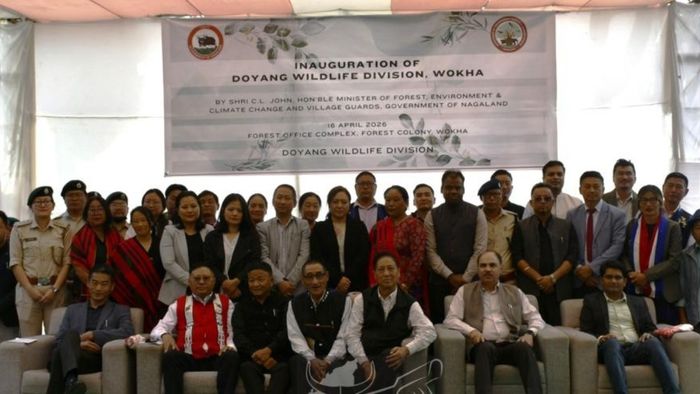
- Apr 16, 2026,
- Updated Apr 16, 2026, 9:06 PM IST
The Department of Environment, Forest and Climate Change, Nagaland, on April 16 inaugurated the Doyang Wildlife Division along with a dedicated control room to address rising human-elephant conflict (HEC) in the region.
The programme, held at the Doyang Wildlife Division Office in Forest Colony, Wokha, was attended by Forest, Environment & Climate Change Minister C L John as the chief guest.
In his address, the minister stressed the need to translate environmental awareness into action and highlighted the importance of balancing forests, wildlife, and human needs for a sustainable future. He acknowledged that while traditional respect for nature exists among Nagas, broader awareness and active participation in conservation have only recently begun to grow. He expressed optimism that public mindset would shift significantly in the coming years.
Highlighting the issue of human-elephant conflict, John called for coexistence and urged communities to cooperate in mitigating damage caused by wildlife, assuring that mechanisms are being put in place for quicker response and redressal.
Principal Chief Conservator of Forests and Head of Forest Force Vedpal Singh said the creation of the Doyang Wildlife Division was necessitated by increasing incidents of human-elephant conflict in Wokha, terming the new division and control room a major step towards immediate intervention and citizen support.
Principal Secretary Y. Kikheto Sema also underscored the need for awareness and long-term planning, noting that efforts are underway to secure externally aided projects to address the issue comprehensively.
The newly formed division, carved out of the former Doyang Plantation Division, will cover Wokha, Mokokchung, and Zunheboto forest divisions, and is expected to strengthen conservation efforts while providing a dedicated mechanism to handle wildlife-related conflicts in the region.