Nagaland scholar calls for balancing economic growth and indigenous identity at UN Conference
A research scholar from Nagaland University represented India at the United Nations World Indigenous Youth Conference 2026 held in Kathmandu, Nepal, highlighting the challenges and aspirations of Indigenous youth in the region and strengthening cross-border engagement on Indigenous issues.
- Jun 30, 2026,
- Updated Jun 30, 2026, 9:23 AM IST
A research scholar from Nagaland University represented India at the United Nations World Indigenous Youth Conference 2026 held in Kathmandu, Nepal, highlighting the challenges and aspirations of Indigenous youth in the region and strengthening cross-border engagement on Indigenous issues.
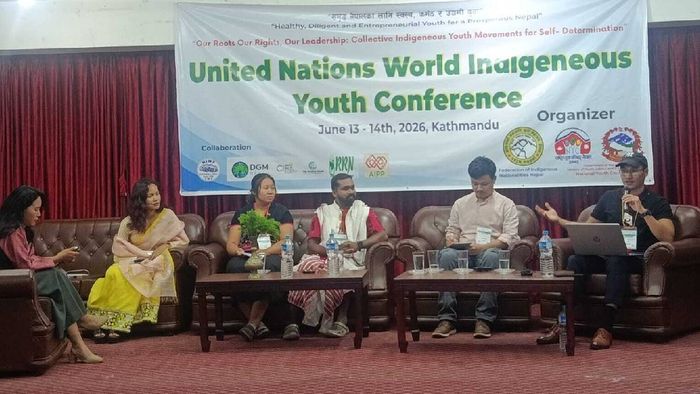
Repakaba Tzudir, a research scholar from the Department of Sociology at Nagaland University, Lumami, participated in the two-day international conference held on June 13–14 as an International Delegate and Indigenous Scholar.
The conference was jointly organised by the Youth Federation of Indigenous Nationalities (YFIN), Nepal and the National Youth Council (NYC), Nepal under the theme, “Our Roots, Our Rights, Our Leadership: Collective Indigenous Movement for Self-Determination.” The event brought together nearly 150 Indigenous youth leaders, academics, activists and community representatives from across Asia.
Tzudir joined delegates from Bangladesh, Myanmar, Nepal and different parts of India and also served as a panel speaker during the session titled “Indigenous Youth Movement in Asia.” During the discussion, he addressed the realities faced by Naga youth, particularly the challenge of unemployment and the manner in which immediate socio-economic concerns often take precedence over wider Indigenous issues and long-term aspirations.
Reflecting on his participation, Tzudir said the conference underscored the shared experiences among Indigenous communities despite differences in geography and cultural backgrounds.
He noted that discussions repeatedly highlighted concerns relating to the protection of identity, preservation of land and culture, and the creation of meaningful opportunities for young people.
According to him, one of the most significant exchanges centred on how Indigenous youth are balancing the preservation of traditions while adapting to changing social and economic realities. He said the discussions reinforced the importance of regional solidarity and mutual learning among Indigenous communities.
Tzudir further stated that unemployment, migration, limited access to education and livelihood opportunities, along with the gradual erosion of Indigenous languages and traditional knowledge, emerged as common challenges across participating countries.
Drawing from the discussions, he observed that in Nagaland, economic concerns often become an immediate priority for young people, limiting their engagement with broader Indigenous rights and identity-related issues.
At the same time, he acknowledged the role of Indigenous youth organisations across Asia in creating platforms for leadership, advocacy, cultural revitalisation and community participation.
He emphasised that economic development and Indigenous identity should not be treated as competing priorities and stressed the need to create sustainable livelihood opportunities while maintaining connections with community values and cultural heritage.
Tzudir added that greater investment in youth leadership, stronger community-based initiatives and continued regional collaboration could contribute to shaping the future of Indigenous voices across Asia.
The scholar said the conference experience strengthened networks among Indigenous youth and deepened understanding of shared challenges, reinforcing his commitment to research, advocacy and community engagement for Indigenous peoples.
Participation in the conference was supported by the Indigenous Peoples of Asia Solidarity Fund (IPAS Fund) and the Youth Federation of Indigenous Nationalities (YFIN), Nepal, which provided travel and hospitality support.