Nagaland University develops eco-friendly hydrogel electrolyte for safer, durable supercapacitors
Nagaland University has created an eco-friendly hydrogel electrolyte to improve supercapacitor safety and durability. This innovation supports green energy storage advancements with sustainable materials.
- Apr 07, 2026,
- Updated Apr 07, 2026, 4:27 PM IST
Researchers at Nagaland University have developed a sustainable chitosan-based hydrogel membrane electrolyte that promises safer, more durable, and environmentally friendly energy storage solutions for next-generation supercapacitors.
The research team created a quasi-solid hydrogel electrolyte using chitosan, a natural biodegradable polymer, offering an alternative to conventional liquid electrolytes that often face issues such as leakage, volatility, and safety risks. By incorporating potassium oxalate as an ionic crosslinker, the team achieved a stable three-dimensional network that enables efficient ion transport.
The innovation combines the high ionic conductivity of liquid electrolytes with the mechanical stability of solid materials, making it suitable for solid-state electrical double-layer capacitors (EDLCs). The researchers also demonstrated its practical application by developing a prototype supercapacitor capable of powering a red LED indicator.
Supercapacitors play a crucial role in modern energy systems, including renewable energy, electric vehicles, and portable electronics, due to their ability to charge rapidly and operate over thousands of cycles. Addressing the limitations of existing systems, the newly developed hydrogel electrolyte enhances both safety and performance.
The findings, published in the International Journal of Biological Macromolecules, highlight the technology’s durability, with the supercapacitor maintaining stable performance for over 46,000 charge-discharge cycles.
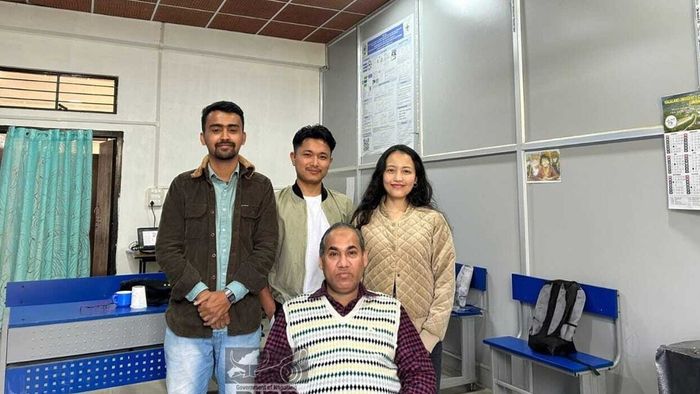
The study was led by research scholar Dipankar Hazarika, along with co-researchers Nuphizo Shijoh and Marjo A Kichu, under the supervision of Nurul Alam Choudhury.
Vice Chancellor Jagadish K. Patnaik described the development as a significant breakthrough in sustainable energy research, emphasising its potential to advance eco-friendly and reliable energy storage technologies.
The researchers noted that the technology has reached Technology Readiness Level-3, indicating successful proof-of-concept in laboratory conditions. They also highlighted its commercial potential, with a startup initiative already emerging from the research.
Future work will focus on scaling up production, integrating the technology into commercial supercapacitors, and exploring applications in flexible and wearable energy storage devices.