Nagaland University–led international team converts apple-leaf waste into green corrosion shield
Researchers from Nagaland University, in collaboration with international partners, have developed an innovative and eco-friendly corrosion inhibitor derived from discarded apple leaves, offering a sustainable alternative to conventional toxic anti-corrosion chemicals widely used in industry.
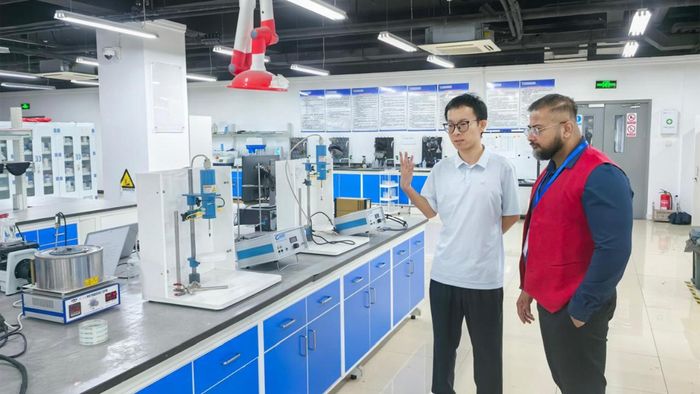
- Jan 19, 2026,
- Updated Jan 19, 2026, 10:03 PM IST
Researchers from Nagaland University, in collaboration with international partners, have developed an innovative and eco-friendly corrosion inhibitor derived from discarded apple leaves, offering a sustainable alternative to conventional toxic anti-corrosion chemicals widely used in industry.
The study demonstrates that compounds extracted from apple-leaf waste can deliver long-lasting, cost-effective protection against metal corrosion, particularly in acidic environments. The findings highlight a promising waste-to-wealth approach that could significantly reduce environmental harm associated with traditional corrosion inhibitors.
The international research collaboration was led by Prof. Ambrish Singh of Nagaland University and Prof. Yujie Qiang of the University of Science and Technology Beijing. According to the study, the apple-leaf-based green inhibitor achieved corrosion inhibition efficiency of up to 94.02 per cent at low concentrations, improving further to 96.2 per cent with prolonged exposure, making it highly suitable for real-world industrial applications.
The research has been published in the peer-reviewed journal Corrosion Science, published by Elsevier, which focuses on the synthesis, structure, properties, and industrial applications of metallic alloys and advanced compounds.
Nagaland University Vice-Chancellor Prof. Jagdish Kumar Patnaik congratulated the research team, noting that the innovation represents a major step toward environmentally responsible corrosion control. He said the Indo-China collaboration exemplifies how sustainable, high-impact scientific research can emerge from international academic partnerships.
Beyond industrial relevance, the study underscores the value of circular economy models by converting agricultural waste into high-value functional nanomaterials. The corrosion inhibitor has potential applications across multiple sectors, including farming communities, infrastructure, and manufacturing.
The research team includes Prof. Ambrish Singh of the Department of Chemistry, Nagaland University, who is also a Visiting Professor at the National University of Science and Technology Beijing, and Prof. Yujie Qiang, a Visiting Scientist at the National Center for Materials Service Safety, University of Science and Technology Beijing.
The study details how nano-scale carbon particles doped with sulphur and nitrogen, extracted from apple-leaf waste, form a protective film on copper surfaces, effectively preventing corrosion. Advanced theoretical modelling revealed that specific nitrogen-containing groups play a critical role in anchoring the protective layer to metal surfaces.
Researchers noted that the green inhibitor is compatible with existing industrial anti-corrosion coatings, making it suitable for large-scale adoption. Potential applications include pipelines, storage tanks, industrial equipment, wastewater treatment systems, and infrastructure in acidic environments.
The collaboration positions Nagaland University at the forefront of sustainable materials research and highlights the growing role of Northeast India in addressing global industrial and environmental challenges through green innovation.