Nagaland’s forest cover at 73 per cent, far above national average: Principal secy
Protecting Nagaland’s rich biodiversity will require active participation from communities, citizens, educational institutions and churches, as the state Forest Department owns less than five per cent of the total forest cover, a senior government official said on September 23.
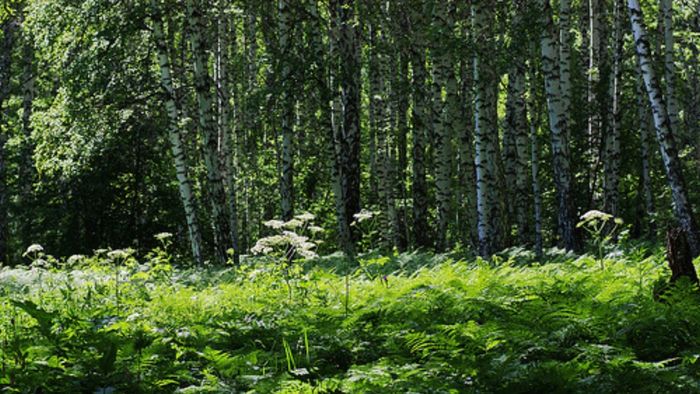
- Sep 23, 2026,
- Updated Sep 23, 2026, 8:39 PM IST
Protecting Nagaland’s rich biodiversity will require active participation from communities, citizens, educational institutions and churches, as the state Forest Department owns less than five per cent of the total forest cover, a senior government official said on September 23.
Principal Secretary, Environment, Forest and Climate Change, and Nagaland State Biodiversity Board Chairman Y Kikheto Sema made the remarks while addressing a stakeholder consultation on the revision of the Nagaland State Biodiversity Strategy and Action Plan (NSBSAP).
"Because of the peculiar landholding system of Nagaland, we need the help of all of you and all our people to be involved," Sema said.
He said biodiversity conservation could not be achieved by the Forest Department alone and stressed the need for greater public awareness, particularly on waste management. Environmental protection, he said, was a responsibility shared by citizens and the government.
Sema, who is also the state's Development Commissioner, urged families to discuss biodiversity and waste management and called for environmental issues to be incorporated into school education.
He also appealed to churches to include biodiversity conservation in Sunday School lessons, sermons and church conferences. Referring to an earlier resolution adopted by the Nagaland Baptist Church Council (NBCC) to protect and promote biodiversity, Sema urged the council to uphold the commitment.
He also flagged the need to address waste generated during church conferences, campaigns and other large gatherings.
Focus on traditional agriculture
Sema highlighted Nagaland's traditional shifting cultivation system, saying it was closely linked with Naga culture and festivals and could not simply be discontinued.
However, he said the practice in its present form was no longer economically viable or ecologically sustainable and was affecting biodiversity.
He described the traditional agricultural system as unique but said it was not adequately represented in agricultural education despite around 70 per cent of Nagaland's population living in rural areas and being engaged in agriculture and allied activities.
With limited scope for large- and medium-scale industries, agriculture and allied activities remain a key economic avenue for the state's rural population, he said.
Nagaland has 73 per cent forest cover
Sema pointed to Nagaland's rich biodiversity and said the state has forest cover of around 73 per cent, compared with the national average of about 21-22 per cent.
He said Nagaland should leverage its biodiversity and ecological resources by encouraging visitors to experience the state's ecological services.
The state is revising its NSBSAP in line with India's updated National Biodiversity Strategy and Action Plan (NBSAP) and the Kunming-Montreal Global Biodiversity Framework (KMGBF).
The Nagaland State Biodiversity Board, in association with The Nature Conservancy Centre (TNCC) and Foundation for Ecological Security (FES), organised Wednesday's stakeholder consultation.
The consultation is seeking inputs on biodiversity challenges, state-specific priorities, governance, capacity building and community participation for the revised action plan.
Nagaland prepared its first State Biodiversity Strategy and Action Plan in 2005 and revised and formally launched it in May 2022, incorporating 12 targets drawn from the national plan and the Aichi Biodiversity Targets.
Sema said the latest revision reflected the state government's commitment to aligning its biodiversity conservation efforts with the global framework and called for cooperation, coordination, confidence and contribution from all stakeholders.
TNCC India Executive Director Ishwar Narayanan and FES General Manager Sanjay Sharma also addressed the consultation.