Prehistoric human habitation discovered in Nagaland's Noklak caves, rewriting region's ancient history
A team of archaeologists has uncovered compelling evidence of prehistoric human habitation in caves and rockshelters within the Naga Hills Ophiolite Belt in Nagaland's Noklak district, marking a major breakthrough in understanding the state's ancient past.
- Jul 20, 2026,
- Updated Jul 20, 2026, 7:00 PM IST
A team of archaeologists has uncovered compelling evidence of prehistoric human habitation in caves and rockshelters within the Naga Hills Ophiolite Belt in Nagaland's Noklak district, marking a major breakthrough in understanding the state's ancient past.
The discovery was made during a preliminary archaeological expedition conducted in March by a joint team from the Department of History & Archaeology, Nagaland University, and the Department of Art & Culture, Government of Nagaland.
The research team was led by Prof. Tiatoshi Jamir, Dr. Heme Lamthaiu, Dr. Limasanen Longkumer, Archaeological Research Officer Khumeng T., Robinson Huidrom, and Victoria Leyri of Delhi University.
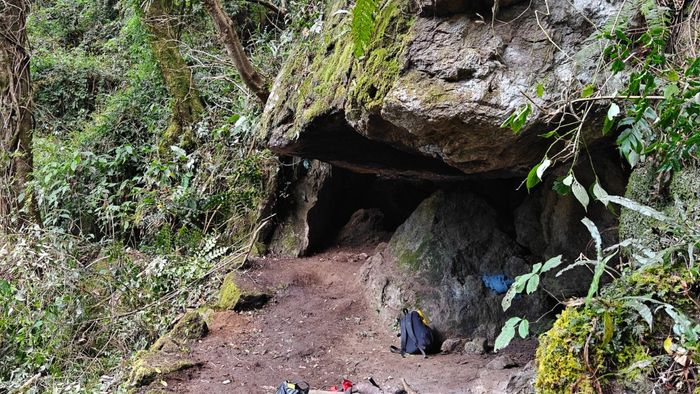
With assistance from the Chiphur Village Council, the team carried out intensive exploration of the limestone karst terrain in Chiphurarea, identifying five caves and four rockshelters, many of which had never been archaeologically investigated before.
Excavations at the high-altitude sites unearthed a range of prehistoric artefacts, including cord-marked pottery, ground stone tools, hearth features, carbonised cereal remains such as foxtail millet (Setaria italica) and Job's tears (Coix sp.), along with wild animal remains. The findings provide valuable insights into the subsistence practices and daily lives of the region's earliest inhabitants.
Scientific dating carried out by Beta Analytic Laboratory in Florida, USA, using Accelerator Mass Spectrometry (AMS), revealed that the Leilo Kaa rockshelter dates back approximately 3,500 years, while the Kathso Kaa cave was occupied around 1,000 years ago. The results indicate that these cave sites were used continuously from prehistoric to historical times.
Researchers said the findings strengthen the long-held view that Northeast India served as a major corridor for ancient human migration. The Naga Hills Ophiolite Belt and the adjoining Naga Metamorphic Complex along the Indo-Myanmar mountain ranges are believed to hold immense archaeological potential for understanding prehistoric human movement, early agriculture, ceramic technology, tool-making traditions, burial practices and cultural evolution.
The discovery is expected to significantly enrich the archaeological record of Nagaland, where scientific excavation of cave sites has remained limited.
To showcase the findings, the Department of Art & Culture's State Museum and Nagaland University are planning a public exhibition of the excavated artefacts in October this year. The exhibition is expected to offer visitors a rare glimpse into the lives of some of the earliest human communities that inhabited the Naga Hills thousands of years ago.