Soybean festival begins in Chümoukedima to boost production in Nagaland
A two-day Soybean Festival under the theme “From Field to Feast: Celebrating Our Soybean Legacy” began at Angh Hall, Agri Expo, Chümoukedima, on February 20, with a focus on promoting scientific cultivation, value addition and market linkages to strengthen soybean production in Nagaland.
- Feb 21, 2026,
- Updated Feb 21, 2026, 4:01 PM IST
A two-day Soybean Festival under the theme “From Field to Feast: Celebrating Our Soybean Legacy” began at Angh Hall, Agri Expo, Chümoukedima, on February 20, with a focus on promoting scientific cultivation, value addition and market linkages to strengthen soybean production in Nagaland.
The festival is being organised by the ICAR–AICRP on Soybean under the Tribal Sub Plan (TSP) and North Eastern Hill (NEH) components in collaboration with the School of Agricultural Sciences (SAS), Nagaland University, Medziphema Campus.
Addressing farmers, entrepreneurs, scientists and stakeholders from across the state, Dr. G.P. Singh, Director of ICAR-NBPGR, and Sanuzo Nienu, Director of Agriculture, Government of Nagaland, underscored the growing significance of soybean as a “miracle crop” for economic empowerment and nutritional security.
Describing soybean (Glycine max) as one of the most valuable leguminous crops globally, Nienu said it is rich in protein and oil and plays a crucial role in ensuring food security. He noted that soybean serves as a high-protein food for human consumption and is also widely used in livestock and poultry feed industries.
“Soybean is a crop of the future. It supports heart health, bone health and metabolic functions, while helping regulate blood sugar levels. At the same time, it strengthens our agricultural economy,” he said.
He also highlighted the crop’s environmental benefits, pointing out that soybean enriches soil fertility by fixing atmospheric nitrogen through symbiotic bacteria, thereby reducing dependence on synthetic fertilisers and improving soil health for subsequent crops.
Nienu further emphasised the crop’s industrial potential, stating that in addition to food products such as tofu, soy milk, soy nuts and fermented items, soybean is used in the production of bio-diesel, cosmetics, plastics and inks. He encouraged farmers to adopt soybean cultivation as a sustainable and profitable option.
Delivering the keynote address, Prof. L. Tongpang Longkumer of the Department of Agronomy, SAS, Nagaland University, stressed the need for scientific advancements and adoption of improved soybean varieties suited to Nagaland’s agro-climatic conditions. He said soybean cultivation could significantly enhance soil health, raise farmers’ income and contribute to nutritional security.
Highlighting the crop’s global importance, he described soybean as a “wonder crop” contributing nearly 50 per cent to the global oilseed sector. In India, soybean was introduced in the 1970s and has since emerged as the second most important oilseed crop in the country.
Soybean seeds contain around 20 per cent oil and approximately 40 per cent high-quality protein, making them a highly nutritious food source. Being cholesterol-free, soybean oil was described as beneficial for health. The crop supports a wide range of products, including edible oil, soy flour, soy milk, tofu and animal feed.
Among Indian states, Telangana was highlighted as one of the leading soybean producers, demonstrating the crop’s potential with appropriate technology and policy support.
Despite its potential, Nagaland currently contributes only about 0.1 per cent to the country’s soybean production. Around 38 metric tonnes of soybean are presently utilised in the state, indicating substantial scope for expansion.
Speakers at the festival stressed the need to promote soybean cultivation on a larger scale, introduce improved seed varieties and establish local processing units to produce value-added soybean products within the state. They said that with proper awareness, training and market linkages, soybean farming could become a viable and profitable venture for farmers.
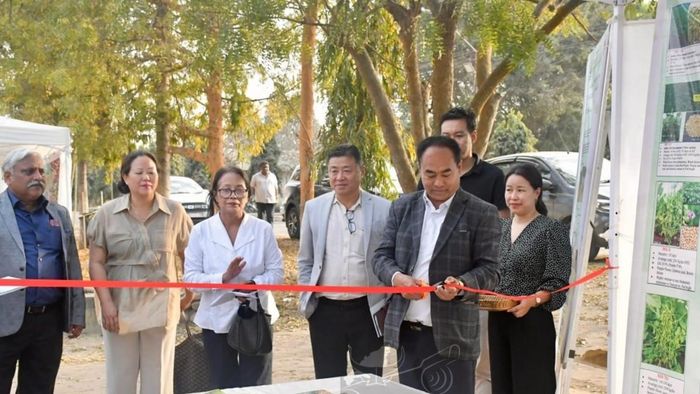
An exhibition stall showcasing soybean varieties, technologies and value-added products was inaugurated during the event. Technical sessions featured expert talks on variety selection for rainfed conditions and the current soybean scenario in Nagaland, equipping participants with updated knowledge and best practices.
The festival aims to strengthen soybean production, promote improved cultivation techniques and encourage value addition in the state, taking soybean from farm to table while boosting Nagaland’s agricultural economy.