Australia's Bondi Beach shooter hailed from Hyderabad, had no radical history in India
Telangana Police confirm Sajid Akram left the city 27 years ago, maintained minimal contact with family; radicalisation occurred entirely in Australia
- Dec 16, 2025,
- Updated Dec 16, 2025, 6:52 PM IST
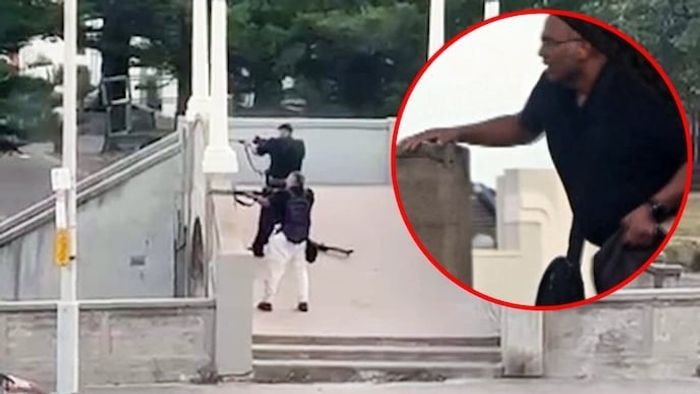
Sajid Akram, one of the two gunmen who killed 15 people at a Hanukkah celebration in Sydney on Sunday, December 14, 2025, was originally from Hyderabad and had left India nearly three decades ago with no history of radical activities, Telangana Police confirmed on December 16.
The 50-year-old, who was shot dead by police during the Bondi Beach attack, completed his Bachelor of Commerce degree in Hyderabad before migrating to Australia in November 1998 on a student visa. He carried out the mass shooting alongside his 24-year-old son Naveed Akram, who was born in Australia and remains hospitalised with critical injuries.
Australian authorities have declared the incident a terrorist attack, with investigators suggesting the father-son duo were inspired by Islamic State ideology.
Sajid Akram's connection to Hyderabad had grown increasingly tenuous over the years. After arriving in Australia seeking employment opportunities, he married Venera Grosso, a woman of European origin, and settled permanently. Whilst he retained his Indian passport throughout his life, both his children—son Naveed and a daughter—were born in Australia and hold Australian citizenship.
According to the Telangana Police press note, Akram visited India only six times after his 1998 departure, primarily for family matters such as property issues and visits to elderly parents. Significantly, he did not return even following his father's death in 2017, illustrating the distance that had developed between him and his roots.
Family members in Hyderabad have expressed complete shock at the attack, stating they had no knowledge of his radical mindset or the circumstances that led to his radicalisation. One relative told media outlets the family had minimal contact with Sajid for many years, particularly after his marriage to a Christian woman.
Telangana Police have categorically stated that the factors leading to Sajid Akram's radicalisation "appear to have no connection with India or any local influence in Telangana". The state police confirmed they have no adverse record against him during his 27 years in Hyderabad prior to his 1998 departure.
"The family members have expressed no knowledge of his radical mindset or activities, nor of the circumstances that led to his radicalisation," the police statement noted, adding that Telangana Police have no adverse record against Sajid Akram during his stay in India.
The press note emphasised that whatever transformation Akram underwent occurred entirely abroad, with no connection to his time in Telangana or any influence from India.
Recent travel records reveal that Sajid and Naveed Akram arrived in the Philippines on 1 November 2025—just six weeks before the attack. Philippine authorities confirmed that Sajid travelled on his Indian passport, whilst Naveed used his Australian passport. They listed Davao as their final destination, a major city on Mindanao island known for Islamic insurgency activity, before departing on November 28 to return to Sydney.
Australian investigators are examining whether this trip played any role in the planning or preparation for the attack. Two ISIS flags were reportedly found in the gunmen's vehicle at Bondi Beach.
The Telangana Police have urged the public and media to avoid speculation or attribution without verified facts, emphasising their commitment to cooperating with central agencies and international counterparts as required during the ongoing investigation.
"Telangana Police remain committed to cooperating with central agencies and other counterparts, as and when required, and urges the public and media to avoid speculation or attribution without verified facts," the statement concluded.
The attack at Bondi Beach, which targeted around 1,000 people gathered for a public Chanukah celebration, marks one of Australia's deadliest mass shootings in nearly three decades.