Centre proposes expanding Lok Sabha to 850 seats ahead of women’s reservation rollout
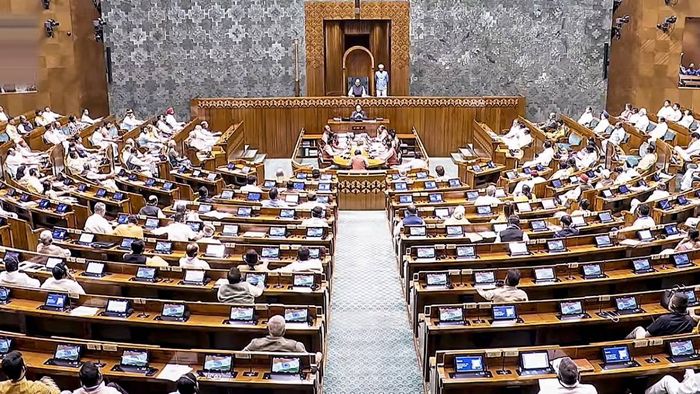
The Union government has proposed a significant expansion of the Lok Sabha, increasing its strength from 543 to 850 seats, as part of a broader plan to implement the long-pending women’s reservation law alongside a fresh delimitation exercise.
- Apr 14, 2026,
- Updated Apr 14, 2026, 8:25 PM IST
The Union government has proposed a significant expansion of the Lok Sabha, increasing its strength from 543 to 850 seats, as part of a broader plan to implement the long-pending women’s reservation law alongside a fresh delimitation exercise.
According to sources, a draft bill detailing the proposed expansion has been circulated among Members of Parliament. The government is expected to take up key constitutional amendments during a special three-day sitting of Parliament, with the focus on enabling a 33 per cent reservation for women in the Lok Sabha and state legislative assemblies.
The special session has been convened to amend constitutional provisions linked to the reservation policy and to undertake delimitation of constituencies based on the 2011 Census. The increase in the number of seats is aimed at facilitating the implementation of the quota by allowing for a reconfiguration of constituencies.
Under the proposal, 815 seats would be allocated to states and 35 to Union Territories, taking the total strength of the House to 850. The changes are expected to be implemented ahead of the 2029 Lok Sabha elections.
The move has, however, drawn early resistance from Opposition parties, which are preparing to contest the delimitation exercise, particularly the reliance on 2011 Census data. Parties such as the Aam Aadmi Party (AAP), Rashtriya Janata Dal (RJD) and Dravida Munnetra Kazhagam (DMK) are expected to argue that the exercise should instead be based on updated Census figures.
In addition, several parties within the INDIA bloc are likely to raise the demand for a “quota within quota” to ensure representation for women from backward classes within the proposed reservation framework.
A strategy meeting of Opposition leaders is scheduled to be held at the residence of Congress president Mallikarjun Kharge in New Delhi. Leaders from key parties, including the Trinamool Congress and DMK, are expected to attend the meeting to coordinate their response.
Trinamool Congress MP Derek O’Brien questioned the government’s intent, suggesting that the proposed amendments appear to prioritise delimitation over the implementation of women’s reservation. He also raised concerns over the timing of the special session, which comes ahead of assembly elections scheduled later this month.
The passage of the proposed constitutional amendments will require a two-thirds majority in Parliament, making Opposition support crucial. Opposition parties are expected to use this requirement to press for greater clarity from the government and to push for revisions to the proposed framework.