Chandrayaan-3 wins top global astronautics honour for Moon south pole landing
India's Chandrayaan-3 mission has received the 2026 Goddard Astronautics Award from AIAA for its Moon south pole landing. The honour highlights the mission's scientific contribution and future relevance for lunar exploration.
- May 22, 2026,
- Updated May 22, 2026, 8:39 AM IST
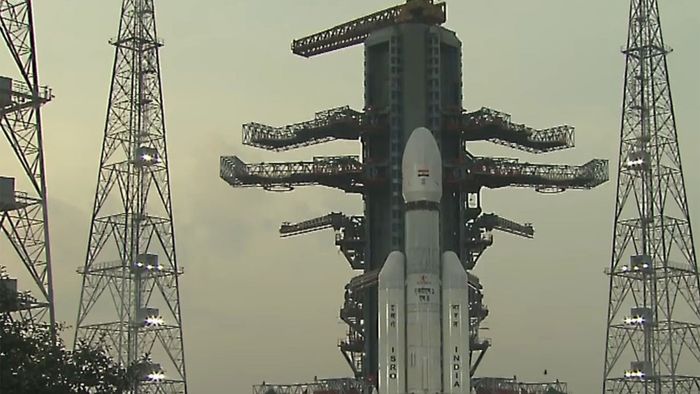
India’s Chandrayaan-3 mission has received the 2026 Goddard Astronautics Award from the American Institute of Aeronautics and Astronautics, recognising the historic lunar mission that achieved the first soft landing near the Moon’s south pole.
The award was presented at the AIAA ASCEND 2026 Conference in Washington DC on May 21. India’s Ambassador to the United States, Vinay Kwatra, accepted the honour on behalf of the Indian Space Research Organisation.
Chandrayaan-3 created history on August 23, 2023, when it successfully landed near the lunar south pole — a region considered crucial for future space exploration because of its potential water ice reserves and scientific value. No spacecraft had previously carried out a surface-level soft landing in the area.
The mission gathered key scientific data from the Moon’s south polar region and confirmed the presence of several chemical elements in the lunar soil. Scientists believe such findings could help future human missions and support long-term lunar operations, including possible resource utilisation and manufacturing activities on the Moon.
During the ceremony, Kwatra highlighted Prime Minister Narendra Modi’s Space Vision 2047 roadmap, which focuses on deep-space exploration, human spaceflight and the expansion of India’s commercial space sector. He also stressed the need for stronger cooperation between India and the United States in the field of space research and technology.
The Goddard Astronautics Award is regarded as the highest honour presented by the AIAA for achievements in astronautics. Named after rocket pioneer Robert H. Goddard, the award recognises outstanding contributions by individuals or teams in advancing space science and technology.
Originally introduced as the Goddard Award, it was renamed and expanded in 1975 to cover broader achievements in astronautics and space exploration.