ISRO launches NVS-03 satellite, restores India's NavIC navigation system to minimum operational strength
The Indian Space Research Organisation (ISRO) on Saturday, October 31 successfully launched its navigation satellite NVS-03, restoring India's indigenous satellite navigation system, Navigation with Indian Constellation (NavIC), to its minimum operational strength of four satellites.
- Oct 31, 2026,
- Updated Oct 31, 2026, 12:57 PM IST
The Indian Space Research Organisation (ISRO) on Saturday, October 31 successfully launched its navigation satellite NVS-03, restoring India's indigenous satellite navigation system, Navigation with Indian Constellation (NavIC), to its minimum operational strength of four satellites.
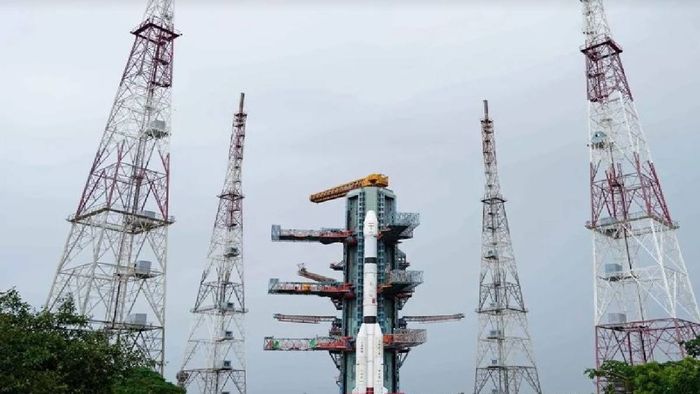
The satellite was launched aboard the Geosynchronous Satellite Launch Vehicle (GSLV-F18), which lifted off from the second launch pad at the Satish Dhawan Space Centre in Sriharikota at 11.51 pm following a 24-hour countdown.
Around 18 minutes after liftoff, the rocket successfully placed the 2,232-kg satellite into its designated Geosynchronous Transfer Orbit (GTO), marking another significant step in India's efforts to strengthen its independent navigation infrastructure.
NVS-03 is part of the second generation of NavIC satellites and will join three other operational satellites, including NVS-01, to bring the constellation back to its minimum operational configuration. The development is expected to improve India's ability to provide independent Position, Navigation and Timing (PNT) services without relying entirely on foreign navigation systems such as the US-based Global Positioning System (GPS).
NavIC is India's indigenous regional navigation system, designed to provide coverage across the country and an area extending approximately 1,500 km beyond its borders. Its applications include real-time tracking of trains, vehicles and ships, along with other civilian and strategic services.
Following the successful launch, ISRO Chairman V Narayanan said the mission would help restore PNT services through the NavIC constellation. He described the navigation system as a strategic national asset that provides India with independent positioning and timing capabilities.
The NVS-03 satellite is equipped with indigenous and procured atomic clocks, including an Indian-made Rubidium atomic clock. It will transmit navigation signals through the L1, L5 and S bands to support navigation services.
NavIC to support 'One Nation, One Time' initiative
Narayanan also highlighted the role of NavIC in the government's 'One Nation, One Time' initiative, which aims to establish a reliable and uniform timing infrastructure across the country.
The initiative assumes significance following the notification of the Legal Metrology (Indian Standard Time) Rules, 2026. The NavIC constellation is expected to contribute to accurate and synchronised timekeeping across different sectors.
The ISRO chief also noted the performance of the GSLV rocket, which completed its 20th flight with the successful deployment of NVS-03. He said all systems of the launch vehicle functioned as expected and the satellite was placed accurately into its designated orbit.
Following its placement in the transfer orbit, NVS-03 will use its onboard propulsion system to reach its final geosynchronous orbital position at 32.5 degrees East.
The satellite's target orbit has a planned perigee, or closest point to Earth, of 170 km and an apogee, or farthest point, of 37,023 km.
ISRO also highlighted a safety measure adopted for the mission, under which the satellite's pyrotechnic valves were kept open before launch to ensure the reliability of its propulsion system.
Narayanan said the NVS-03 mission was completed with a turnaround time of just 56 days between two successive GSLV launches. He congratulated the scientists, industry partners and academic institutions involved in the mission, adding that nearly 80 per cent of the mission budget had gone to Indian industries.
Union Minister of State (Independent Charge) for Science and Technology Jitendra Singh also congratulated ISRO on the successful GSLV-F18/NVS-03 mission.
In a social media post, Singh said the achievement reflected India's growing capabilities in space technology and its commitment to developing independent navigation systems. He also credited the space sector reforms introduced under Prime Minister Narendra Modi for supporting the country's progress in space exploration.
The successful launch of NVS-03 is expected to strengthen India's home-grown navigation network, improve the reliability of positioning and timing services, and reduce dependence on foreign satellite navigation systems.