Lok Sabha seats to rise by 50%, representation frozen for 25 years: Centre's fresh delimitation push
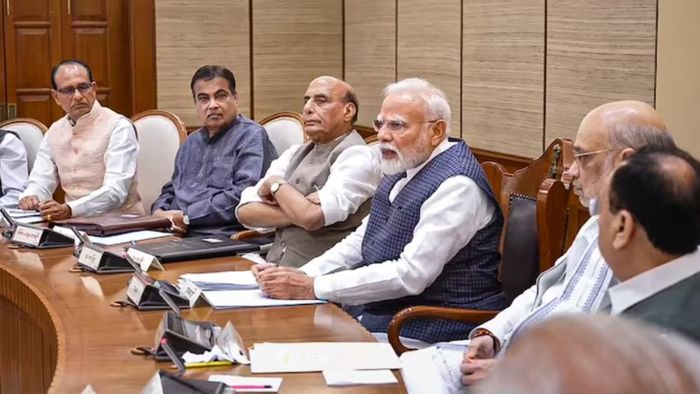
The Union Cabinet has approved a proposal to increase the strength of the Lok Sabha by 50 per cent across all states, while freezing the allocation of seats for the next 25 years until 2051, in a major push to revive the government's delimitation exercise.
- Nov 27, 2026,
- Updated Nov 27, 2026, 4:42 PM IST
The Union Cabinet has approved a proposal to increase the strength of the Lok Sabha by 50 per cent across all states, while freezing the allocation of seats for the next 25 years until 2051, in a major push to revive the government's delimitation exercise.
The proposed amendments are aimed at addressing concerns raised by southern states over the potential impact of population-based delimitation on their parliamentary representation. The revised bill, which the Centre has linked to the implementation of 33 per cent women's reservation in Parliament, is expected to be introduced during a special sitting of Parliament beginning November 30.
Under the proposed formula, the strength of the Lok Sabha would increase from its present 543 seats to 850. The uniform 50 per cent increase across states would also delink the proposed expansion from population-based redistribution, which has been a major point of contention between the Centre and opposition parties.
How the Centre is addressing southern states' concerns
The amendments seek to address a key concern of southern states, which have argued that a delimitation exercise based on the latest Census could disproportionately benefit northern states with higher population growth.
States such as Tamil Nadu, Kerala, Karnataka and Andhra Pradesh have historically performed better in population control. Their concern has been that a population-based redistribution could reduce their relative share of representation in the Lok Sabha despite their progress in controlling population growth.
By proposing an equal 50 per cent increase in seats across all states, the Centre has attempted to address this concern. However, questions remain over whether the revised formula will fully preserve the proportional representation of states.
The strength of the Lok Sabha was last fixed at 543 elected seats based on the 1971 Census. Subsequent constitutional amendments froze the allocation of seats, with the arrangement extended twice.
The government had earlier introduced the Constitution (131st Amendment) Bill during a special parliamentary session in April. However, the legislation failed to secure passage after opposition parties objected to linking delimitation and the implementation of women's reservation to the next Census.
Does the NDA have the numbers?
The proposed amendments have also brought parliamentary arithmetic into focus.
With the effective strength of the Lok Sabha currently at 539, the government would require around 358 votes to secure the two-thirds majority needed to pass the constitutional amendment.
The NDA is estimated to have the support of 319 MPs, including 20 MPs from the Trinamool Congress who have joined the separate NCPI faction, which is backing the ruling alliance. The alliance is also expected to receive support from one Shiromani Akali Dal MP following the party's return to the NDA.
The crucial question is whether the eight MPs of the Sharad Pawar-led NCP (Sharadchandra Pawar) and the 22 MPs of the DMK will support the legislation.
If both parties back the bill, the government's tally could approach 350, leaving it short of the required threshold by around eight to nine votes.
The government would therefore need additional support from outside the NDA or benefit from abstentions that could lower the effective voting threshold.
The latest amendments appear to have improved the government's prospects compared with the failed attempt in April, although securing the required numbers remains a challenge.
Will DMK and Sharad Pawar's NCP support the bill?
The positions of the DMK and NCP (SP) will be crucial ahead of the proposed parliamentary sitting.
DMK president and former Tamil Nadu Chief Minister MK Stalin has outlined two key conditions for supporting the delimitation exercise.
Stalin has insisted that Tamil Nadu's existing 7.18 per cent share of Lok Sabha seats must not be reduced even if the total number of constituencies increases. He has also demanded that the existing proportion of parliamentary representation based on the 1971 Census remain frozen for another 25 years.
The Cabinet's proposed uniform 50 per cent increase and the 25-year freeze appear to address these concerns.
Sources in the NCP (SP) have also indicated that the party could consider supporting the government if its key objections are addressed.
Apart from the uniform 50 per cent increase in seats, the party has sought 50 per cent reservation for women instead of the proposed 33 per cent and representation for opposition parties in the Delimitation Commission.
With the Centre having addressed some of the major concerns raised by regional parties, attention will now turn to whether the DMK and NCP (SP) break ranks with the INDIA bloc to support the legislation.
The government's immediate challenge will be to secure the necessary numbers before the special parliamentary sitting begins on November 30.