'No verified evidence' links E20 to engine failures as Centre defends ethanol blending
The Centre told the Lok Sabha that studies and field experience found no verified evidence linking E20 petrol to engine failures. It said the blending programme also supports fuel price management, energy security and farmers.
- Jul 30, 2026,
- Updated Jul 30, 2026, 4:39 PM IST
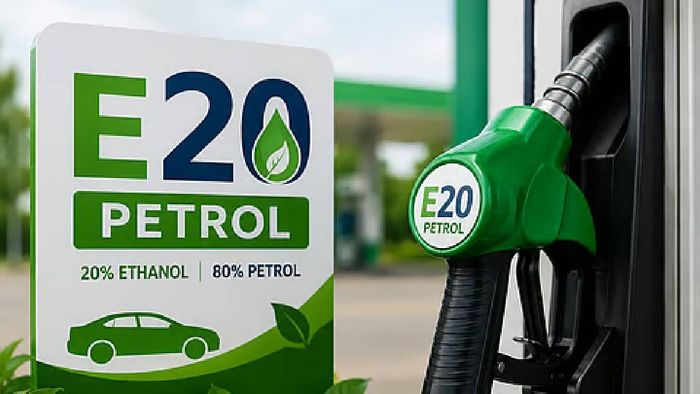
The Centre on July 30 defended its ethanol blending programme, saying extensive scientific studies and years of field experience have found no evidence that E20 petrol causes abnormal engine wear, corrosion or reduces vehicle lifespan.
Responding to a question in the Lok Sabha, Minister of State for Petroleum and Natural Gas Suresh Gopi said the Ethanol Blended Petrol (EBP) Programme had been introduced in phases after consultations with NITI Aayog, automobile manufacturers, the Automotive Research Association of India (ARAI), the Society of Indian Automobile Manufacturers (SIAM), oil marketing companies and other technical institutions.
According to the minister, laboratory tests and field trials conducted by ARAI, SIAM, Indian Oil Corporation, the Indian Institute of Petroleum and vehicle manufacturers confirmed that E20 fuel is safe when used under prescribed standards. He added that studies involving older vehicles also found no significant changes in performance or signs of abnormal wear due to the use of E20 fuel.
The government said more than 20 crore two-wheelers and over three crore petrol cars have been operating on ethanol-blended fuel for the past several years without any verified evidence linking E20 to widespread engine failures or vehicle breakdowns. It added that manufacturer service records had not reported unusual corrosion, excessive wear or shortened vehicle life associated with E20, while warranty coverage continued for vehicles using the fuel.
Citing industry data, Gopi said one leading automobile manufacturer serviced 2.84 crore vehicles during 2025-26, including around 1.5 crore vehicles that were not originally certified for E20, without recording any E20-related corrosion or abnormal wear. Another manufacturer tracked 1.4 crore vehicles using E20 over an extended period and similarly found no evidence of ethanol-induced corrosion, while a major two-wheeler manufacturer reported comparable results.
The minister said E20 fuel offers higher octane levels, improved anti-knock performance, better combustion, smoother acceleration and lower emissions, contributing to cleaner and more efficient engine operation.
On fuel pricing, the government said public sector oil marketing companies procure ethanol under a framework aimed at ensuring adequate supplies, supporting farmers and providing fair prices to ethanol producers rather than maximising profits. The weighted average ex-mill price of ethanol for the 2025-26 supply year stood at Rs 66.61 per litre, while the procurement cost, including GST and transport, was estimated at around Rs 71 per litre.
The government also maintained that petrol prices are market-linked and depend on global crude oil prices, exchange rates, freight charges, taxes, ethanol procurement costs and other operational expenses. Despite this, public sector oil marketing companies reportedly incurred an average under-recovery of around Rs 11 per litre on petrol between March and June 2026, amounting to approximately Rs 21,300 crore, as retail fuel prices remained below market levels.
Highlighting the strategic importance of ethanol blending, Gopi said India's reliance on imported crude oil made the programme particularly significant during the ongoing West Asian crisis. He claimed that while international crude oil prices had risen by around 70-80 per cent since February 2026, domestic fuel prices increased by only 7-8 per cent due to calibrated government interventions, diversified sourcing and the growing contribution of domestically produced biofuels.
The minister said petrol prices in Delhi could have reached about Rs 125 per litre when the Indian crude basket approached USD 135 a barrel, but consumers continued to pay Rs 94.77 per litre, aided by ethanol procurement at roughly Rs 70 per litre.
Describing ethanol blending as a long-term strategy rather than a revenue-generating exercise, the government said the programme has helped reduce India's exposure to global oil price fluctuations and exchange-rate volatility while strengthening energy security, supporting farmers and saving foreign exchange.