Passport is a travel document, not proof of citizenship, clarifies government
The Ministry of External Affairs (MEA) has clarified that a passport, while issued exclusively to Indian citizens, should not be treated as a document that conclusively establishes citizenship.
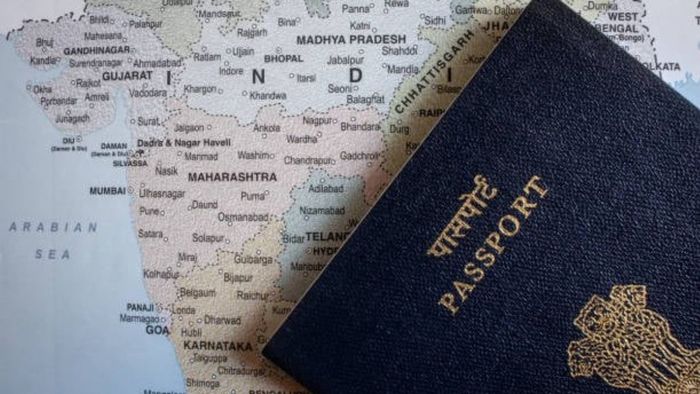
- Jun 24, 2026,
- Updated Jun 24, 2026, 10:11 PM IST
The Ministry of External Affairs (MEA) has clarified that a passport, while issued exclusively to Indian citizens, should not be treated as a document that conclusively establishes citizenship.
The clarification was made on the occasion of the 14th Passport Seva Divas, sparking fresh debate over what constitutes definitive proof of Indian citizenship.
According to the MEA, a passport is primarily a travel document issued by the Government of India to facilitate international travel. The ministry emphasised that possession of a passport does not, by itself, determine or establish citizenship status.
The clarification has generated discussion on social media, particularly regarding the distinction between identity documents and proof of citizenship. The issue has remained a complex legal and administrative subject in India.
The government noted that although passports are issued only to Indian citizens, the document itself remains the property of the Government of India. A note printed inside Indian passports states that the document must be surrendered whenever required by the government.
The clarification comes months after the Supreme Court, during hearings related to the Special Intensive Revision (SIR) of electoral rolls, reiterated that an Aadhaar card is not conclusive proof of citizenship and serves primarily as a proof of identity. Similarly, a voter identity card is regarded as a document enabling electoral participation and proof of residence rather than proof of citizenship.
Under Indian citizenship laws, persons born in India between January 26, 1950, and July 1, 1987, are considered citizens by birth. For those born between July 1, 1987, and December 2, 2004, citizenship by birth requires that at least one parent be an Indian citizen. Individuals born on or after December 3, 2004, qualify for citizenship by birth only if both parents are Indian citizens, or if one parent is a citizen and the other is not an illegal immigrant at the time of birth.
Highlighting improvements in passport services, the MEA said that 1.5 crore passport-related services were delivered in 2025, including 1.39 crore passports. The ministry also reported significant improvements in service delivery timelines, with passports now being issued within six working days on average, excluding the time required for police verification.
Officials attributed the improved efficiency to a substantial expansion of the passport service network. India currently has 545 Passport Seva Kendras and related service centres, compared to just 77 a decade ago. Citizens now spend less than 45 minutes on average at passport centres, according to the ministry.
The MEA also highlighted the successful rollout of chip-enabled e-passports as part of its efforts to modernise passport services across the country.