Reaching the Last Field: How Canal Water is Transforming Punjab’s Agriculture
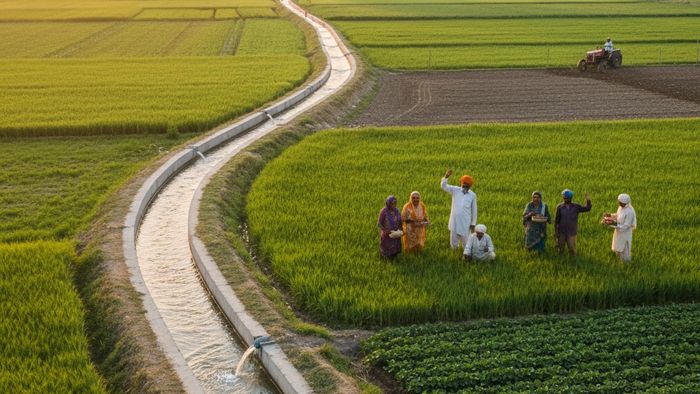
Canal water has reached the farthest fields in Punjab, helping farmers irrigate crops more effectively and reduce groundwater dependence. This advancement is expected to boost agricultural productivity and support sustainable farming practices
- Jan 11, 2026,
- Updated Jan 11, 2026, 12:15 PM IST
Water is the lifeline of Punjab’s agriculture. For decades, many farmers depended heavily on underground water, especially those at the tail end of canals who rarely received canal supply. This led to falling groundwater levels, rising costs, and unequal access to irrigation. The Punjab Government has now taken strong steps to change this by restoring canals and ensuring that canal water reaches even the farthest fields.
This is reshaping farming across the state.
Canal water reaches tail-end farmers for the first time
One of the biggest achievements of the government has been that canal water has reached tail-end fields for the first time in many areas. These are fields located at the far end of canal networks, which were earlier deprived of regular water.
With repaired canals and better management, water is now flowing to farmers who were once left out.
A farmer said: “Earlier, our fields never got canal water. We depended on tube wells. Now the canal brings water directly to our land. Our costs have gone down.”
What percentage of irrigation now comes from canals?
Due to massive restoration work, a significant share of Punjab’s irrigation is now being done through canal water. This has reduced pressure on underground water, which was rapidly depleting.
More canal irrigation means:
- Lower electricity use
- Lower cost for farmers
- Sustainable water management
- Restoration of canals, distributaries and minors
- The government has restored:
- Major canals
- Distributaries
- Minor channels
These water routes had been neglected for years, causing leakage and blockage. Cleaning and repairing them has allowed water to reach every branch of the irrigation system.
Thousands of kilometres of water channels have been revived to ensure smooth flow.
Impact on farmers’ lives
Canal water has brought major relief to farmers.
It means:
- Less dependence on tube wells
- Reduced electricity consumption
- Better crop yield
- More reliable irrigation
A farmer shared: “Now we don’t worry about power cuts or dry wells. Canal water is steady and reliable.”
Environmental benefits
By shifting from groundwater to canal water, Punjab is protecting its environment. Groundwater levels are stabilising, which is crucial for the future of farming in the state.
This move also supports climate-resilient agriculture.
Chief Minister Bhagwant Singh Mann’s message
Chief Minister Bhagwant Singh Mann has called canal revival a historic reform.
He said, “Water belongs to every farmer. We made sure that even the last farmer in the canal line gets water. This is true justice in agriculture.”
A sustainable future for Punjab’s farmers
By restoring canals and ensuring fair water distribution, Punjab is building a stronger and more sustainable farming system. Farmers save money, crops grow better, and the environment is protected.
Canal water is no longer a privilege; it is now reaching every field that needs it.