Supreme Court affirms constitutional right to peaceful protest, questions police action during student demonstrations
The Supreme Court on Monday, July 27 reaffirmed that the right to peaceful and lawful protest is "absolutely guaranteed" under the Constitution, observing that demonstrations conducted peacefully cannot be met with force solely because people are protesting.
- Jul 27, 2026,
- Updated Jul 27, 2026, 4:02 PM IST
The Supreme Court on Monday, July 27 reaffirmed that the right to peaceful and lawful protest is "absolutely guaranteed" under the Constitution, observing that demonstrations conducted peacefully cannot be met with force solely because people are protesting.
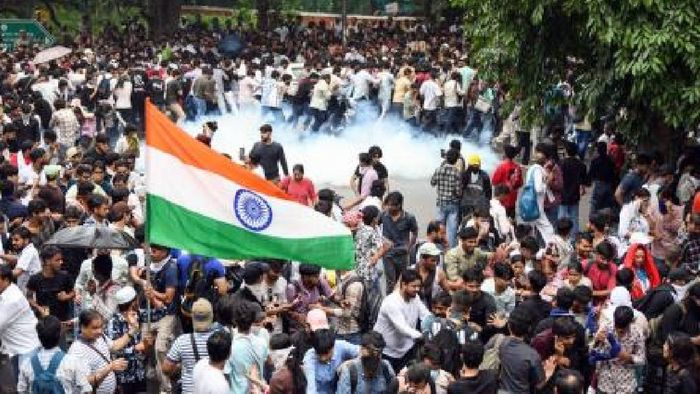
The observations came while the apex court heard a batch of petitions seeking an independent inquiry into the alleged police action during the July 20 'Sansad Chalo' march by protesting students in Delhi. The matter was heard after a plea was mentioned by Rashtriya Janata Dal (RJD) leader Manoj Jha, who raised concerns over allegations of excessive use of force, including claims of AK-47 deployment against protesters in Bihar.
A bench comprising Chief Justice Surya Kant, Justice Joymalya Bagchi and Justice V. Mohana observed that the use of force against peaceful demonstrators was inconsistent with constitutional guarantees.
"The right to peaceful, lawful protest is absolutely guaranteed under the Constitution. So long as it is peaceful agitation, merely because there is agitation, there can't be a lathi charge," the court remarked during the hearing.
The Chief Justice further observed that allegations of police excesses warranted an inquiry and said governments must explain why adequate protective equipment was not available for security personnel who sustained injuries during protests.
The bench indicated that it may consider framing nationwide guidelines for police and security forces on handling public demonstrations and scheduled the matter for further hearing on Tuesday.
The Supreme Court also agreed to hear a separate petition alleging that police personnel were assaulted during protests linked to the NEET paper leak.
The July 20 demonstration saw riot police using batons to prevent protesters from marching towards Parliament. Videos from the Jantar Mantar area showed police personnel in riot gear advancing towards demonstrators, resulting in clashes and disruption at the protest site.
Leader of Opposition in the Lok Sabha Rahul Gandhi had alleged that police used excessive force, including pellet guns, against protesters after visiting an injured demonstrator in hospital. He claimed that thousands of students were subjected to baton charges and physical assault during the protest.
Delhi Police has denied allegations that pellet guns were used by its personnel during the demonstration, while the Central Reserve Police Force (CRPF) has not issued any public statement regarding allegations involving the Rapid Action Force (RAF).
On Monday, Rahul Gandhi reiterated his allegations, accusing the government of using extreme measures, including claims of AK-47 and pellet gun deployment, to suppress student protests in different states.
The petitions before the apex court seek an independent probe into the alleged incidents, preservation of CCTV footage, body-camera recordings and other electronic evidence, and compensation for protesters who sustained injuries.
The student agitation, which continued for 36 days, concluded after the government accepted several key demands of the protesters and Union Education Minister Dharmendra Pradhan resigned from office.