Supreme Court upholds electoral roll revision exercise, affirms EC’s authority to conduct SIR
The Supreme Court on April 27 upheld the constitutional validity of the Special Intensive Revision (SIR) of electoral rolls and affirmed the Election Commission of India’s (ECI) authority to undertake the exercise aimed at maintaining the integrity of voter lists.
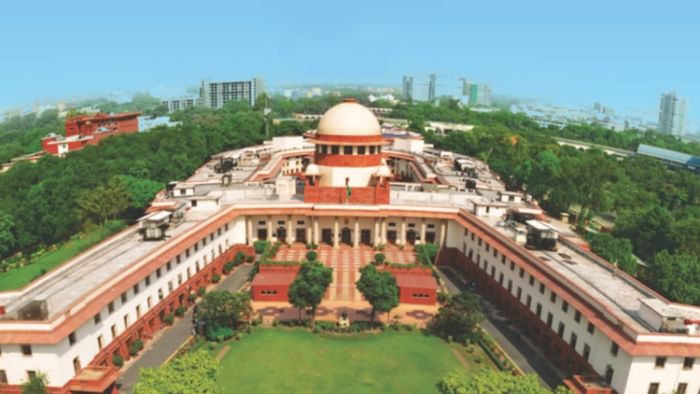
- May 27, 2026,
- Updated May 27, 2026, 7:23 PM IST
The Supreme Court on April 27 upheld the constitutional validity of the Special Intensive Revision (SIR) of electoral rolls and affirmed the Election Commission of India’s (ECI) authority to undertake the exercise aimed at maintaining the integrity of voter lists.
A bench headed by Chief Justice Surya Kant and Justice Joymalya Bagchi ruled that the revision process, which began in Bihar in June last year, was legally valid and aligned with the constitutional objective of ensuring free and fair elections.
The court observed that the exercise was intended to strengthen the accuracy and integrity of electoral rolls, describing them as the foundation of India’s democratic process.
Importantly, the bench clarified that deletion of a person’s name from the electoral roll under the revision exercise does not automatically strip that individual of citizenship. It further held that competent authorities retain the power to independently examine citizenship issues under the Citizenship Act.
The court directed the Election Commission to provide, within four weeks, details of persons excluded from Bihar’s revised electoral roll to the competent authorities for examination under the Citizenship Act. If such persons are subsequently found to be Indian citizens, their names must be included in the fresh voter list.
With the ruling, the Supreme Court dismissed a batch of petitions challenging the Election Commission’s authority to carry out the Special Intensive Revision exercise. Petitioners had argued that the process lacked statutory backing and could lead to arbitrary exclusion of voters.
Rejecting these arguments, the court held that the SIR exercise falls within the existing legal framework and serves the legitimate objective of preserving electoral integrity.
The judgment examined four major legal questions and upheld the Election Commission’s position on all counts.
The bench ruled that the revision process satisfies constitutional proportionality standards, is not excessive in nature and includes adequate safeguards to prevent arbitrary exclusion.
Among safeguards cited by the court were opportunities for affected individuals to respond through show-cause notices, individual enquiries, reasoned orders for rejection and the right to appeal.
The court also upheld the Election Commission’s authority to verify citizenship status for the limited purpose of determining voter eligibility under the Representation of the People Act.
However, it clarified that such scrutiny does not amount to a final declaration on citizenship status.
“If material raises doubt regarding citizenship, the Election Commission may decline inclusion in the electoral roll. But that cannot be treated as a determination that the individual is not an Indian citizen,” the bench observed.
The case arose after multiple petitions challenged the Election Commission’s decision to begin the Special Intensive Revision in Bihar ahead of the 2025 Assembly elections.
Petitions were later filed against similar exercises in other states.
Among the petitioners were the Association for Democratic Reforms, political activist Yogendra Yadav and Members of Parliament Mahua Moitra, Manoj Jha, K.C. Venugopal and Supriya Sule.
Petitioners argued that the exercise effectively turned the Election Commission into a citizenship verification authority, a role they contended lies with the Union government and Foreigners Tribunals under citizenship laws.
They also raised concerns regarding documentation requirements and alleged that the process could disproportionately affect vulnerable communities.
In Bihar specifically, petitioners argued that flood conditions and time constraints could lead to disenfranchisement of eligible voters.
Defending the exercise, the Election Commission maintained that its authority flows from Article 324 of the Constitution and provisions governing universal adult suffrage.
The poll body argued that ensuring only citizens remain on electoral rolls is central to protecting democratic processes.
The Election Commission also maintained that the revision exercise was aimed at removing duplicate, deceased or ineligible entries and updating electoral rolls, noting that the last similar large-scale exercise had been conducted in 2003.
The Supreme Court had earlier declined to stay the Special Intensive Revision process, allowing it to continue in Bihar, Kerala, Tamil Nadu, Puducherry and West Bengal. Similar exercises are presently underway in several states, including Delhi and Uttar Pradesh.