‘Twin responsibility’: Supreme Court says demolition must also consider rehabilitation
The Supreme Court said authorities demolishing illegal structures must also consider affected families' rehabilitation. It declined a uniform national policy, saying states and Union Territories must address the issue through policy.
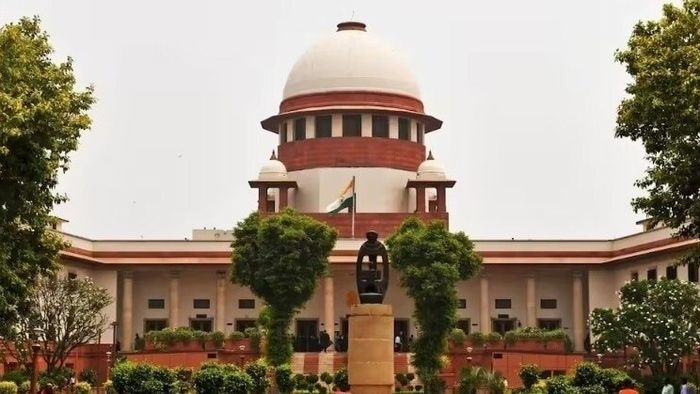
- Aug 12, 2026,
- Updated Aug 12, 2026, 4:15 PM IST
The Supreme Court on August 12 said authorities seeking to demolish illegal structures may have a “twin responsibility” — enforcing the law while also considering the rehabilitation of families who could be left without shelter.
A bench headed by Chief Justice of India Surya Kant and comprising Justices Joymalya Bagchi and V Mohana made the observation while hearing a plea by the Centre for Law and Good Governance, a non-political organisation, seeking a uniform policy on long-standing unauthorised constructions and rehabilitation of people affected by their demolition.
The court, however, declined to frame a common policy, saying circumstances differed from one state to another and the issue fell primarily within the policy domain of the Centre, states and Union Territories.
The bench disposed of the plea, while allowing the petitioner to submit a copy of it to the Union government, states and Union Territories and raise the issues for consideration while they formulate their respective policies.
The court said it appreciated the petitioner’s concern about people whose “right to shelter is adversely impacted” by demolitions, but noted that such matters required policy decisions.
During the hearing, the Chief Justice observed that once an authority decides to demolish an illegal structure, it must also consider what would happen to the family living there.
This, the court indicated, creates a “twin responsibility” for authorities — while illegal construction cannot be allowed to continue merely because people have been living there, the consequences of demolition for affected families also need to be considered.
The petitioner argued that the right to shelter was linked to human dignity and that demolishing long-standing colonies without rehabilitation could disrupt the livelihood and dignity of residents.
It also pointed out that several unauthorised colonies had existed for 30 to 40 years, during which authorities had, in some cases, collected municipal taxes and provided residents with water and electricity connections. Some properties in such colonies had also been granted on a freehold basis.
The organisation argued that authorities should not permit such settlements to continue for decades and then proceed with demolition without addressing the consequences for residents.
The plea sought the setting up of an expert committee to formulate and oversee the implementation of guidelines on demolition and rehabilitation. It also proposed temporary accommodation of around 15-20 square yards for families displaced by such action.
Justice Bagchi noted that the circumstances could vary significantly between states and that the issue would therefore require consideration at the state-policy level.
The bench ultimately held that it would be difficult for the Supreme Court to prescribe a uniform policy covering all states and Union Territories.
“We are hopeful that due consideration shall be given to all such issues,” the court said while disposing of the plea.