What makes Northeast a preferred travel destination for Union Tourism Minister Gajendra Shekhawat?
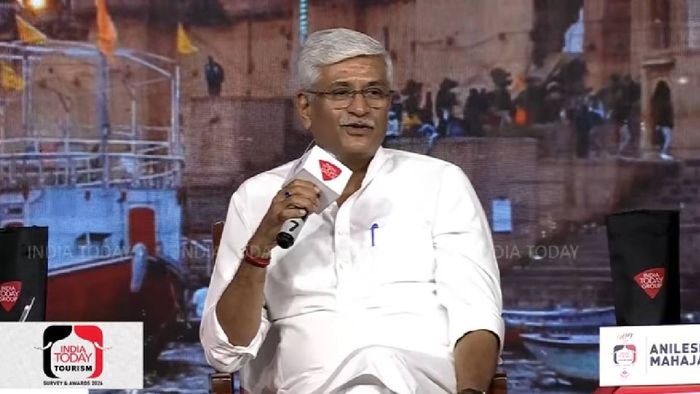
Union Minister for Tourism and Culture Gajendra Singh Shekhawat on June 15 shared his personal affinity to Northeast India and why he loves travelling across the region, while addressing the India Today Tourism Survey & Awards 2026 in Goa.
- Jun 15, 2026,
- Updated Jun 15, 2026, 11:40 PM IST
Union Minister for Tourism and Culture Gajendra Singh Shekhawat on June 15 shared his personal affinity to Northeast India and why he loves travelling across the region, while addressing the India Today Tourism Survey & Awards 2026 in Goa.
Referring to his personal connection with the Northeast, the Union Minister said every destination in India holds equal importance, but described the northeastern region as a preferred travel destination for his family. He said they have travelled extensively across the region over the years and expressed a desire to undertake a long road journey through the Northeast.
Shekhawat noted that prior to 2014, he travelled extensively across India and recalled making multiple journeys from Jodhpur to Pangong and several visits to Nagaland. He added that given the opportunity for an extended vacation, he would choose to travel across the Northeast by road with his family.
Addressing India’s position in global tourism, the Minister said direct comparisons with countries such as France require context due to France’s geographic and economic advantages as part of the European Union and its status as an international hub for fashion and related industries.
He stated that India’s more relevant tourism comparisons lie with regional destinations such as Thailand, Sri Lanka and Dubai. According to Shekhawat, India records around 20 million international travellers annually, though the figure for core international tourists becomes lower after excluding Non-Resident Indians.
The Minister emphasised that India’s tourism profile differs significantly from competing destinations because of the scale of domestic travel and the duration of international visitor stays. He noted that destinations such as Maldives, Dubai and Thailand often attract short-duration visits, whereas international tourists in India typically stay longer, creating greater economic impact per visitor.
Shekhawat said India’s tourism sector possesses substantial untapped potential and expressed confidence that the country’s global tourism appeal is strengthening. He reiterated the government’s target of attracting 100 million foreign tourists by 2047 and increasing tourism’s contribution to India’s Gross Domestic Product from six per cent to ten per cent.
Discussing challenges in attracting greater international tourist volumes, the Minister outlined three broad categories of international travellers — luxury travellers, backpackers and budget travellers — with the budget segment accounting for the largest share.
He observed that India’s rising economic growth, increasing disposable incomes among middle-class households and rapid expansion in domestic tourism have contributed to higher travel costs across destinations in the country.
According to Shekhawat, international budget travellers often seek destinations that allow lower daily expenditure, while travellers in India increasingly expect higher standards of accommodation, transport and overall travel experience, making India comparatively more expensive for cost-sensitive international visitors.
To address this, the Minister said the Centre has worked with states to strengthen investment in the hospitality sector. He stated that infrastructure status has been extended to hospitality investments under the guidance of Prime Minister Narendra Modi, which has helped accelerate sectoral growth.
Shekhawat added that after assuming responsibility for the ministry in 2024, he reviewed state tourism and investment policies to encourage greater participation and expand hospitality infrastructure across the country.