Beyond the Spotlight: The Uncertain Future of Assam’s Mobile Theatre
For decades, Assam’s mobile theatre has carried stories, emotions and entertainment from one corner of the state to another. But as digital platforms reshape the way people consume entertainment, this unique cultural institution faces a difficult question: how can a tradition survive in a rapidly changing world?
- Oct 10, 2026,
- Updated Oct 10, 2026, 4:26 PM IST
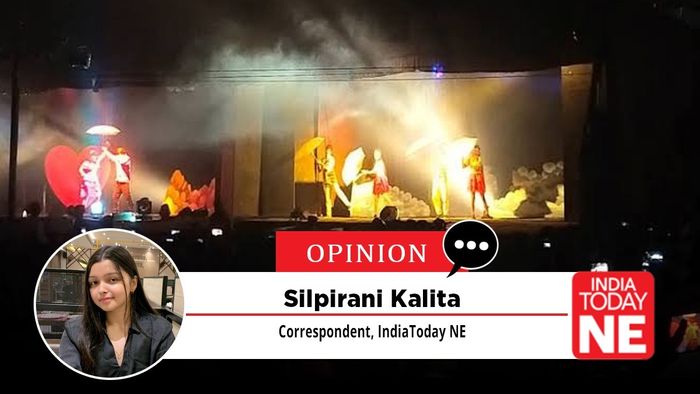
On a winter evening in a small town in Assam, a familiar scene unfolds. Colourful lights illuminate a temporary theatre, music fills the air, and audiences gather in anticipation of a live performance. Behind the curtain, actors prepare for their roles while technicians make final adjustments to the stage. For the audience, it is an evening of entertainment. For the people behind the scenes, it is the result of months of preparation, hard work and collective effort.
This is the world of Bhramyaman, Assam’s mobile theatre industry — a cultural tradition that has travelled through villages, towns and cities, bringing theatrical performances closer to people across the state.
Yet behind the applause and elaborate productions, the industry faces mounting challenges. Rising costs, changing audience preferences, competition from digital entertainment and concerns over financial management have put pressure on several theatre groups. For some, sustaining the show has become as difficult as staging it.
A tradition that transformed Assamese entertainment
The modern mobile theatre movement in Assam is widely associated with Achyut Lahkar, who founded Nataraj Theatre in Pathsala in 1963. Often regarded as the father of Assamese mobile theatre, Lahkar helped shape a format that combined theatrical storytelling with a travelling production system.
Unlike conventional theatre, which depends on a permanent venue, Bhramyaman carries much of its world with it. Actors, directors, musicians, technicians and other workers travel together, setting up temporary performance spaces at different locations. Theatre companies transport stages, lighting equipment, sound systems and, in many cases, tents and seating arrangements.
The format allowed professional theatre to reach audiences across Assam, including communities far from major urban centres. Over time, mobile theatre developed its own identity, blending Assamese literature and folklore with mythology, contemporary social themes and adaptations of stories from other parts of the world.
Its productions also became known for elaborate stage designs, dramatic lighting, costumes and technical effects. For generations of audiences, attending a mobile theatre performance has been more than watching a play; it has been a shared cultural experience.
From Nataraj to Awahan, Kohinoor and beyond
Achyut Lahkar’s pioneering work helped create space for other theatre companies to emerge and establish their own identities. Among the prominent names associated with Assam’s mobile theatre tradition are Awahan Theatre, Kohinoor Theatre, Hengul Theatre, Brindaban Theatre and Rajtilak Theatre.
Each represents a part of a wider theatrical landscape that has entertained audiences across the state. These companies, along with several others, have helped sustain the tradition through changing productions, new storytelling approaches and evolving stage techniques.
The industry has repeatedly demonstrated a willingness to experiment. Productions have moved beyond familiar folklore and mythology to explore contemporary social themes, literary adaptations and stories inspired by cinema from India and abroad.
That spirit of innovation helped mobile theatre distinguish itself from conventional stage productions. But innovation also comes at a cost. Elaborate sets, advanced lighting, sound systems and special effects require substantial investment, making financial planning increasingly important.
The digital challenge
The rise of online streaming platforms, social media, television and short-form video has transformed entertainment habits. Audiences can now watch films, web series and other content from home, often at relatively low cost.
For mobile theatre, this has created a new kind of competition. A theatre ticket involves travelling to a venue, following a fixed performance schedule and committing time to a live show. Digital entertainment, by contrast, is available almost anywhere and at any time.
Younger audiences, in particular, have access to an enormous range of content through their phones. Theatre groups must therefore find ways to remain relevant without losing the qualities that make live performance distinctive.
Yet digital platforms have not made mobile theatre irrelevant. The immediacy of actors performing before an audience, the shared excitement of a packed venue and the emotional connection created by a story unfolding in real time are difficult to replicate on a screen.
The challenge is to communicate that difference while reaching new audiences. Digital promotion, behind-the-scenes videos, interviews with performers and online ticketing could help theatre companies connect with younger viewers and expand their reach.
The people who depend on the show
The future of mobile theatre is not only a cultural concern. It is also a livelihood issue.
Every production depends on a network of people, including actors, directors, singers, musicians, costume designers, makeup artists, electricians, sound engineers, stage workers, drivers and other support staff. Their work begins long before the first performance and continues as the company moves from one location to another.
For many, the theatre season provides an important source of income. When a production struggles financially or a company shuts down, the consequences extend beyond its owners and lead performers.
Families that depend on seasonal earnings may face uncertainty, while experienced technicians and artists may find it difficult to secure comparable work. Local businesses can also benefit from theatre performances, as visiting audiences and touring groups generate activity around performance venues.
An estimate cited in discussions of the industry suggests that around 150–200 families may depend on mobile theatre for their livelihoods. This figure requires independent verification, but it points to a broader reality: the survival of Bhramyaman matters to the people whose working lives are built around it.
When the show cannot go on
The closure of a theatre group is rarely just the end of a name or a season. It can mean the loss of an established creative team, years of accumulated experience and opportunities for artists and technicians.
Financial difficulties, inadequate planning, rising production and transportation costs, and uncertainty over ticket revenue can place considerable pressure on theatre management. Investments in elaborate sets and technical equipment may improve a production, but they also increase financial risk.
When expenses exceed revenue, even a well-known theatre company can struggle to continue. However, the reasons behind each closure may differ, and financial difficulties should not be attributed to a single cause without examining the circumstances of the individual group.
The situation raises an important question for the industry: how can theatre companies preserve their creative ambitions without allowing production costs to become unsustainable?
Tradition needs sound management
Protecting mobile theatre cannot mean relying on nostalgia alone. Cultural significance may attract public affection, but it does not automatically guarantee financial stability.
Theatre companies need transparent budgeting, realistic production planning and a clearer understanding of ticket sales, travel expenses and other operating costs. Investment in stage technology must be balanced against what a production can reasonably earn.
Collaboration could also help. Theatre groups may explore shared technical resources, partnerships with cultural institutions, sponsorships and coordinated promotional campaigns. Digital tools could make it easier to announce performance schedules, reach audiences and sell tickets.
At the same time, government bodies, cultural organisations and educational institutions could help preserve the industry's artistic and technical heritage. Documenting landmark productions, creating training opportunities for young performers and technicians, and recognising the contribution of people working behind the scenes would strengthen the sector.
Such measures would need to respect the creative independence of theatre companies while helping them adapt to changing economic realities.
Keeping the curtain open
From Nataraj and its pioneering experiments to the continuing journeys of Awahan, Kohinoor, Hengul, Brindaban and Rajtilak, Assam’s mobile theatre has built a legacy through storytelling, innovation and collective effort.
The pressures facing the industry are real, but its story need not be one of decline. Audiences continue to value live performance, and Bhramyaman retains the potential to bring generations together through Assamese language, storytelling and shared cultural experiences.
The way forward will require more than grand stages and technological spectacle. It will depend on sustainable financial practices, relevant storytelling, new audiences and a serious commitment to the people who make each production possible.
When the lights come on and the curtain rises, the audience sees the finished performance. What it does not always see is the collective effort required to bring that moment to life.
For Assam’s mobile theatre, the next act will depend on whether the industry can protect its cultural legacy while adapting to a new era of entertainment. The curtain need not fall — but keeping it open will require careful planning, fresh ideas and collective responsibility.