Captainless Ship: Tussle Between Manipur’s Two Dy CMs Exposes the Danger of Communalisation of Government
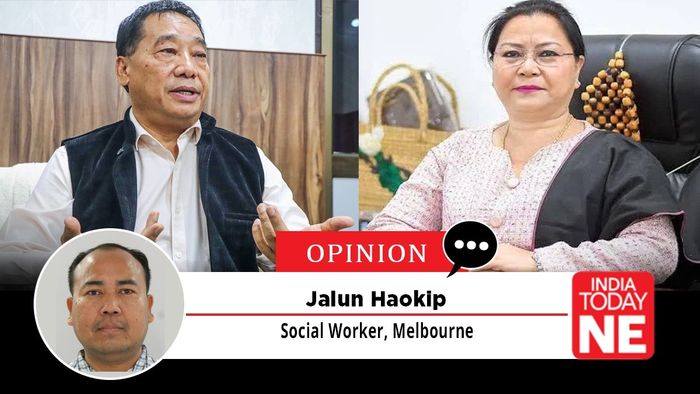
The growing public confrontation between Manipur’s two Deputy Chief Ministers, Losii Dikho and Nemcha Kipgen, is no longer merely a disagreement between two senior politicians. It reflects a deeper crisis of governance: a government increasingly divided along ethnic lines, competing centres of political authority, and a Chief Minister increasingly perceived by the public as favouring the interests of Kuki armed militant groups while unable to impose a coherent direction on his administration.
- Sep 08, 2026,
- Updated Sep 08, 2026, 12:12 PM IST
The growing public confrontation between Manipur’s two Deputy Chief Ministers, Losii Dikho and Nemcha Kipgen, is no longer merely a disagreement between two senior politicians. It reflects a deeper crisis of governance: a government increasingly divided along ethnic lines, competing centres of political authority, and a Chief Minister increasingly perceived by the public as favouring the interests of Kuki armed militant groups while unable to impose a coherent direction on his administration.
Six months after its formation, the Khemchand government still does not have a full Council of Ministers and has struggled to ensure the regular physical presence of ministers and MLAs in the Assembly. Security concerns cannot become a permanent justification for weakening democratic institutions. Two MLAs, L. M. Khaute and Ngurlansanglur Sanate, from Churachandpur and Pherzawl districts respectively, were able to attend the swearing-in ceremony of the new government at Lok Bhavan in Imphal on 4 February 2026.
If elected representatives can travel to Imphal for a government ceremony, why can they not regularly attend Assembly proceedings and cabinet meetings in person instead of participating online? Security challenges are real and must be addressed, but they cannot be selectively invoked to justify the weakening or non-functioning of constitutional institutions.
A Government Without a Clear Centre of Authority
Deputy Chief Minister Losii Dikho’s observation that the limited cabinet has affected the sharing of responsibilities is revealing. If a government with the capacity for 12 ministers has only five, and is in practice functioning as a 3-member government, the problem goes far beyond administrative understaffing. It points to an unhealthy concentration of political authority and raises serious questions about whether the government can function as a genuinely collective cabinet. A state facing a profound political and security crisis cannot afford a government in which responsibility and authority remain concentrated in so few hands.
At the centre of this crisis is Chief Minister Yumnam Khemchand Singh, who bears the primary responsibility for ensuring that his Cabinet functions as a coherent and unified government. When differences spill into the open and are framed in ethnic terms, they weaken governmental authority and deepen the perception that the state is being governed through competing ethnic interests.
The question increasingly being asked across Manipur is simple: Who is actually in charge?
That question becomes particularly serious amid Manipur’s unresolved security crisis. Persistent allegations suggest that Kuki militant organisations and their networks exercise influence over territory, civilian affairs, movement and political space in parts of the state, including areas associated with groups operating under the Suspension of Operations (SoO) framework and their proxy non-SoO armed groups. Their political influence and electoral significance as a “vote bank” cannot be ignored when examining the government’s approach to the crisis. Whether or not every allegation is substantiated, the government cannot afford ambiguity over who exercises legitimate authority. The elected government must ensure that no armed organisation is allowed to emerge as an alternative centre of power alongside the constitutional state.
When Government Becomes Ethnicised
Manipur has already suffered devastating ethnic violence, displacement, fear and institutional breakdown. The confrontation between the two Deputy Chief Ministers risks turning the cabinet itself into an arena of ethnic competition.
The deeper problem lies in the idea that governance itself should be organised around ethnic representation. Concerns were raised when the government came to be structured around Meitei, Naga and Kuki representation through the Chief Minister and two Deputy Chief Ministers. Thadou Inpi Manipur opposed this approach because reducing Manipur’s political structure to three ethnic blocs risks institutionalising communal politics within the government itself. Governance should represent citizens as equal stakeholders, not distribute political authority according to ethnic identity.
The Chief Minister and all concerned must recognise that Manipur is home to numerous communities, including Thadou, Kom, Paite, Vaiphei, Gangte, Simte, Hmar and Mizo, who are not Kuki, as well as Meitei-Pangal and others. If political representation at the highest level becomes an entitlement of ethnic blocs, every community could eventually demand its own minister or Deputy Chief Minister.
An inclusive government is not one where ethnic groups merely occupy political positions; it is one that protects every citizen equally. Ministers may come from different communities, but their constitutional responsibility is to the entire state. Representation is not ethnic ownership.
The 13 May Killings
The 13 May 2026 twin attacks, including the killing of three Thadou Christian leaders and six Naga civilians in the same area dominated by Kuki militant groups, Kuki Revolutionary Army (KRA), under the Kuki National Organisation (KNO), and the Kuki National Front (KNF), under the United People’s Front (UPF) remain deeply troubling. This demands a credible, impartial and thorough investigation.
Official public statements by the Kuki-Zo Council on 25 June 2026, acknowledging that members of their community were responsible for the killing of the six Naga civilian men and expressing an apology in a manner perceived as boastful, have further intensified concerns about responsibility. Given the reported brutality of the killings—including mutilation, dismemberment and beheading, as well as allegations that the victims’ flesh was cooked and served to their wives—the possibility of involvement by organised armed actors cannot be dismissed.
The absence of arrests of suspected armed militant leaders or cadres in connection with the case demands a clear explanation from the government and a credible, impartial investigation into those responsible.
Public anger has also been fuelled by perceptions that those suspected of involvement may be protected by political connections. Concerns have been raised over reported links between the families of senior Kuki militant leaders and the present political establishment, including claims that the wives of the heads of two Kuki militant organisations allegedly connected to the attacks are associated with the state government, with one serving as a Deputy Chief Minister. One of these legislators has also reportedly held a position within the Kuki National Organisation (KNO).
The Chief Minister and Home Minister’s recent Assembly statements on the 13 May killings were perceived by affected communities as prematurely clearing those suspected of involvement. Rather than resolving doubts, the statements have deepened public mistrust and worsened the situation. In protest, nine Naga MLAs abstained from the 7 September Assembly session and demanded the removal of Deputy Chief Minister Nemcha Kipgen and the abrogation of the SoO agreements with Kuki militant groups, alleging their involvement in the killing of six Naga civilians.
These alleged connections do not establish criminal responsibility or government complicity by themselves, but they create a serious perception of conflict of interest. They must therefore be tested through credible investigation and due process.
Communalisation of Politics and Government Must Stop—Once and for All
The current political arrangement was deliberately constructed, choosing an architecture in which ethnic representation became an important component of political accommodation. The present confrontation between the two Deputy Chief Ministers demonstrates the inherent danger of that approach.
A government model built around competing ethnic identities is not a formula for lasting stability. It risks turning ministers into representatives of particular communities, encouraging political disputes to be interpreted as ethnic contests and creating incentives for communities to compete endlessly for political influence and institutional power. This is precisely the cycle Manipur must break.
The communalisation of politics and government must stop—once and for all. Manipur needs a political system based on constitutional responsibility, equal citizenship and good governance, not one that continually pits one community against another in a competition for political power. The government must unite Manipur, not reproduce its divisions within the institutions of the state.
The Unanswered Question of Armed Influence
The government’s credibility is further weakened by persistent allegations concerning the influence of Kuki militant organisations. The central issue is not their ethnicity but whether armed groups are exercising authority that constitutionally belongs to the state.
Questions remain about who controls movement and highways in areas where militant organisations operate, who protects civilians, whether elected representatives and government officials can function freely, and whether armed organisations are being effectively monitored.
A democratic government cannot permit armed organisations to exercise authority alongside the elected state. If such influence exists, the responsibility for addressing it lies with the government.
A Captainless Ship
The crisis is not simply a clash between two Deputy Chief Ministers; it exposes a government weakened by ethnic fragmentation and competing loyalties. Manipur needs one government, one cabinet, one constitutional chain of command and one standard of accountability. Ministers may belong to different communities, but their duty is to the entire state. The ruling party leadership must take responsibility for the political architecture it created, while Chief Minister Khemchand must restore authority, unity and constitutional governance. Manipur cannot afford ethnic camps, competing centres of power or armed groups exercising authority alongside the state. The question remains: Who is steering Manipur?
The writer, Jalun Haokip (MSW), is a Melbourne-based native of Manipur with professional experience in social work across mainstream and Indigenous Australian communities. He currently works as a social worker in a family violence program within the Victorian Government in Melbourne.