Champions crowned at the India Open 2026, But the Real Test Lies Beyond the Podium
India Open 2026 crowning worthy champions while raising serious concerns over venue conditions, hygiene and organisation. Player feedback, official responses and upcoming World Championships frame a larger question about India’s readiness beyond on-court excellence.
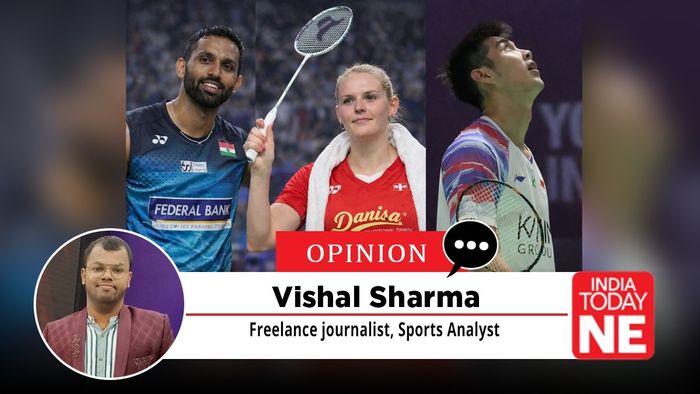
Vishal Sharma
- Jan 20, 2026,
- Updated Jan 20, 2026, 6:51 PM IST
The Yonex India Open 2026 concluded with champions crowned, crowds applauding, and the sport doing what it always does best delivering elite competition. Yet once the medals were handed out and the final rallies replayed in memory, the conversation around the tournament quietly shifted. Beyond the brilliance on court, questions began to surface about whether the event truly reflected the standards expected of a Super 750 tournament and more importantly, a venue preparing to host the World Championships.
Throughout the week, several international players voiced discomfort that went beyond competitive pressure. Concerns around venue hygiene, cleanliness of practice areas, bird droppings on court, winds around the court, and air quality emerged not as isolated grumbles but as recurring themes. Matches were interrupted, warm-up routines disrupted, and athletes openly spoke about conditions that affected both focus and safety. While elite players are accustomed to adapting, the expectation is not to compromise on basic playing conditions.
During third day of tournament, an unexpected curtain‑raiser cast a bizarre shadow over elite sport: bird droppings fell onto the court during Loh Kean Yew’ssecond‑round match against HS Prannoy, halting play twice and leaving even seasoned commentators puzzled. Officials stopped play to wipe the mess, and while Prannoy bluntly labelled it “bird shit” in the mixed zone, Loh chose not to directly dwell on it. Instead, he spoke frankly about struggling with Delhi’s conditions, saying the city’s air quality and weather had sapped players’ energy and left “everyone’s stamina dropped like two levels.”
The incident snowballed across social feeds, drawing sharp reactions from fans, fellow athletes and commentators globally. For many, it epitomised broader organisational issues at a marquee event, prompting both humour and serious debate about facility standards at top‑tier badminton tournaments. Public conversation from casual fans to international players has turned the odd stoppage into a symbol of how elite sport and environmental realities can collide.
Lighting too entered the conversation, less dramatically perhaps, but persistently. Some players and observers noted uneven visibility and shadows during rallies — a subtle issue, but one that can impact reaction time at the highest level. These are details that often escape the casual viewer but matter deeply to professionals who operate on fine margins.
From what has emerged, the lighting issue this year appears less like a structural flaw and more a case of poor calibration. Delays in installing the lights had a domino effect, pushing back the Hawkeye setup required for line-call challenges. Recalibrating mid-event would only have worsened the disruption. That said, the problem seems entirely fixable. With proper calibration, the venue should be well-prepared for the World Championships in August.
The Danish star Mia Blichfeldt took it to social media platforms like meta and Instagram regard her bad experience during India Open 2026 spoke out more than once about poor conditions, describing the environment as problematic for athlete health and questioning readiness for future top events like the World Championships.
“The past few days in India have been extremely tough—far tougher than I had honestly anticipated. I prepared myself mentally for difficult conditions, but what we experienced has been unacceptable and highly unprofessional. We come here to perform and stay focused on our preparation, both on and off the court, yet these circumstances make that very difficult. Everyone is stressed and frustrated at a World Tour Super 750 event. At first, you try to laugh it off, but it’s neither fair nor acceptable. I hope this finally leads to better conditions and stronger protection for players in the future.”
Lakshya Sen's coach Vimal Kumar defends the association stating that “We have to get better. We have world-class stadiums, but basic issues like cleanliness, especially toilets, must be addressed before venues are handed over to BAI. Organisers shouldn’t be blamed for poor infrastructure. If airports can stay clean with heavy footfall, stadiums can too.”
“Cold conditions were another concern — providing heating for players is important and something that should have been taken care of. If there are good conditions and shuttles, the players will perform. It is a big event, and we are looking to make it a 1000-event in the coming years."
The official responses, however, left room for unease. The Badminton World Federation acknowledged “seasonal challenges” and admitted that hygiene and animal control required attention, while maintaining that the venue met international standards. The Badminton Association of India, on the other hand, took a more defensive stance, at times framing criticism as unfair or damaging to the country’s image. What was notably missing was a detailed, transparent explanation addressing each concern head-on — especially with journalists repeatedly seeking clarity.
India Open Has Its Champions — But Are We Ready for the Bigger Questions Ahead?
That gap between acknowledgment and accountability is where the real concern lies. With the World Championships scheduled at the same venue, the India Open was always going to be seen as a dress rehearsal. In that context, player complaints were not acts of disrespect, but feedbacks and remarks offered early enough to act upon.
India has the ambition, the audience, and the sporting pedigree to host the world. But ambition demands introspection. The India Open 2026 succeeded in crowning deserving champions. Whether it succeeded as a statement of readiness is a question that still lingers — and one that deserves honest answers before the world returns.
Finals day at the Yonex India Open 2026 had a familiar champion and a fresh story sharing the spotlight. In women’s singles, An Se-young once again proved why she sets the standard in modern badminton, while the men’s singles crown went to Lin Chun-yi, who played with freedom, confidence and perfect timing when it mattered most. By Sunday night in New Delhi, the trophies felt well-earned one through dominance, the other through daring.
An Se-young’s victory came with control written all over it. Facing China’s Wang Zhi Yi, the world No. 1 took charge early and never let the final drift into uncertainty. She dictated rallies, chose when to attack, and made sure the pressure stayed firmly on the other side of the net. The straight-games win was less about the scoreline and more about how decisively she shut the door whenever Wang tried to push back.
“Today, I was focused on playing more attacking as she is a difficult player to beat. I am happy that I could execute the plans and win another title,” said An Se-young.
That quote captures the essence of her game right now. Once celebrated mainly for her defence, An has evolved into a player who controls matches through intent. This title marked her third India Open crown, a telling statistic that reflects both her consistency and her comfort on this stage. The crucial rallies in the final came when exchanges stretched longer moments where Wang hoped to draw errors, but An instead accelerated, finishing points with precision and calm authority.
If An’s final was about control, the men’s singles decider was about release. Lin Chun-yi entered the final against Jonatan Christie with little baggage and played exactly that way. From the outset, Lin’s approach was fearless: quick movement, sharp angles and a refusal to slow the tempo. The opening game slipped away from Christie rapidly as Lin imposed himself on the rallies.
The second game tested him more. Christie, using his experience, dragged points longer and briefly edged ahead late. But it was here that Lin’s composure stood out. Rather than retreat, he trusted his attacking instincts, winning five consecutive points to seal the title not through caution, but conviction.
“Today I think I played well. I didn’t feel the pressure in the final. I wanted to enjoy the match, and play in the moment. I got a leg injury in Malaysia, and hence I was not at my best but my injury healed well, and I did well here,” said Lin Chun-yi.
For a player lifting his first Super 750 title, that lack of visible pressure was striking. Lin played the final like an opportunity rather than an obligation. The injury he referenced only adds context, not excuse, a reminder that this win was built on resilience as much as rhythm.
Together, the two singles finals offered contrasting yet complementary stories. An Se-young showed how champions stay ahead by constantly refining their edge. Lin Chun-yi showed how belief, when paired with fearless execution, can redefine a career in one evening. The Yonex India Open 2026 concluded not with spectacle, but with purpose, a tournament that ultimately rewarded players who executed their plans with precision and clarity when it mattered most.
Now, this overall scenario shifted the spotlight to what comes next? Public and fans across the nation and supporters of Mia Blichfeldt and other overseas shutters are showing deep concerns on social media being flooded with several discussions.
Once will have more information on the same from the association, will update the keen fans and audience here.
MORE NEWS
Read more!