Everybody Loves a Champion. Nobody Wants to Build One
The moment an athlete wins, the sport suddenly becomes everyone's pride. Before that, it is mostly the athlete's petrol bill, equipment bill, hotel room, flight ticket, repair, missed training, and polite emails that vanish into government inboxes with Olympic-level efficiency.
- Jul 09, 2026,
- Updated Jul 09, 2026, 6:25 PM IST
Every state wants champions. Very few want the inconvenience of building them.
The moment an athlete wins, the sport suddenly becomes everyone's pride. Before that, it is mostly the athlete's petrol bill, equipment bill, hotel room, flight ticket, repair, missed training, and polite emails that vanish into government inboxes with Olympic-level efficiency.
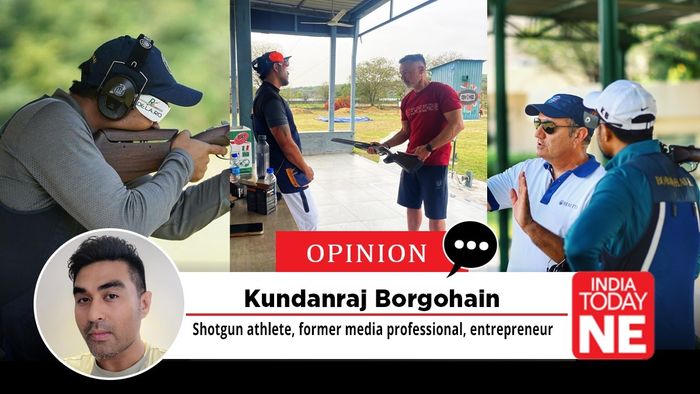
I shoot Olympic Trap. It is one of those sports that looks glamorous from far away. There are shotguns, clay targets, blazers, flags, foreign ranges, medals, photographs, and people assuming you must be either very rich, very dangerous, or both. From close range, it is less glamorous. It is discipline, repetition, travel, money, losses, loneliness, and a surprising amount of time spent asking whether the range will function today.
The Sport Looks Fancy. The Grind Is Not
Shotgun shooting is not a sport you can practise in your backyard with enthusiasm and a motivational
playlist. To train in Olympic Trap or Skeet, you need a proper range. You need machines. You need clay targets.
You need ammunition. You need trained operators. You need electricity. You need maintenance. You need safety discipline. You need a schedule that people respect. Remove one of these and training suffers.
It Was Never a Small Sport
Trap shooting did not begin as a hobby invented between two WhatsApp groups and a government
notification. The sport has old roots. It evolved from live-bird shooting, where birds were released from boxes called
traps. Over time, live birds were replaced by glass balls and then clay targets, turning an aristocratic field
sport into a modern competitive discipline. The sport even carried some of its old language with it. We
still call the machine a trap. We still call the target a bird.
There is a reason shotgun shooting has always had a certain old-world aura. It came from the world of estates, gun rooms, hunting parties, discipline, etiquette, and controlled danger. In Britain and Europe, shooting was long associated with royalty, landed families, and formal sporting culture. Today, of course, Olympic Trap is not about privilege. It is about precision, nerve, rhythm, and repetition.
That is what makes the neglect more ironic.
A sport that historically required land, safety, equipment, discipline, and maintenance is being treated as if
it can survive on enthusiasm alone.
The Good Part Is Real
I will not pretend this sport has not given me beautiful moments. It has taken me to ranges across India and outside India. It has introduced me to serious athletes, coaches, armourers, range staff, and people who understand that one missed target can ruin your day more efficiently than a bad stock market.
There is a strange beauty in shotgun shooting. You stand still, call for a target, and then everything happens in less than a second. If your mind arrives late, the clay is gone. If your body arrives early, the shot is gone. The sport is simple only to people who have never tried it.
Last year, I won silver at the Thailand Championship 2025 in the International Men's Individual Olympic Trap event. It was a proud moment, but not a fairy tale. It came through self-funded training, travel, failure, and the stubborn need to find preparation wherever preparation was still possible.
The Bad Part Is Also Real
There is a special kind of irony in representing a place while being unable to train properly in that place. In Assam, shotgun athletes face a problem that is not dramatic enough for headlines but serious enough to
kill a sport quietly: the basics do not work reliably.
The Kahilipara Shooting Range is the only meaningful shotgun facility available to us. Yet, for serious
preparation, athletes like me often have to train outside the state because the local ecosystem is either
unavailable, unreliable, or simply not maintained like an Olympic discipline requires.
The problems are not luxurious demands. They are basic:
● Machines need regular servicing.
● Clay targets need to be available.
● Ammunition needs to be accessible.
● The range needs electricity.
● Technical staff need to know what they are doing.
● Usage needs a clear schedule.
● Safety needs authority.
● Maintenance needs ownership.
In many places, these are called systems. Here, they sometimes feel like wishes.
We Fund Winners. We Rarely Fund the Making of Winners
Indian sport has a habit. We like supporting athletes after they have already done the impossible.
Win something, and doors open. Get selected, and people notice. Reach a final, and everyone remembers
your phone number. Stand on a podium, and suddenly your journey becomes an inspiring story. Before that, you are mostly just inconvenient.
This is a strange model of sports development. It rewards survivors, not systems. It celebrates the athlete
who made it despite the structure, then uses that athlete as proof that the structure is fine. Apparently, the best way to qualify for support is to first prove that you can succeed without it
Grassroots Cannot Grow Without Ground
Every sports department loves the word grassroots sports development. It is a beautiful phrase. It sounds
humble, inclusive, and visionary. But the grassroots need ground. If a sport has no working entry point, low participation is not a mystery. It is the expected result.
Shotgun shooting has a difficult barrier to entry. A beginner cannot simply buy a shotgun and start
practising. Arms laws are strict, ammunition is expensive, equipment is specialised, and training must
happen under supervision in a controlled environment. So when authorities say, "There are not enough shotgun athletes in Assam," the correct reply is: of course.
Where would they come from?
Without functioning facilities, available clays, accessible ammunition, loaner equipment, coaches, and
structured beginner pathways, new athletes do not emerge. They disappear before they begin.
Maintenance Is Also Sports Policy
We often imagine sports policy as grand announcements, new schemes, large banners, selection trials, and
congratulatory messages.
But in Olympic sports, policy is also boring.
Policy is whether the machines are serviced.
Policy is whether the clays have arrived.
Policy is whether ammunition is available.
Policy is whether the range has power.
Policy is whether someone is responsible for opening, running, cleaning, securing, and maintaining the
facility. At a time when India is speaking seriously about the National Sports Governance Act, 2025, the most
basic question remains: can an athlete actually train where he lives?
A functioning range is not a favour to athletes. It is the minimum requirement for the sport to exist.
Assam Cannot Afford to Watch From the Gallery
The timing matters.
India is preparing to host the ISSF World Cup in 2027 and the Junior World Shooting Championships in 2028. The ISSF World Cup 2027 in New Delhi will also offer LA28 quota places. Closer home, the National Games in Meghalaya should make the Northeast more ambitious, not more comfortable with excuses. The Los Angeles Olympics are in 2028, but Olympic preparation does not begin in 2028. It begins years earlier, quietly, expensively, and often without applause. Other states are preparing. Their athletes are training under stronger systems, with better access and clearer support.
Assam should not wait for another athlete to leave, train elsewhere, win somewhere, and return with a medal before deciding the sport deserves attention. That is not development. That is outsourcing struggle and importing pride.
What Support Actually Means
Shotgun athletes are not asking for luxury. We are asking for the conditions required to train.
The state can make an immediate difference by doing a few practical things:
● Restore and maintain the Trap and Skeet range.
● Ensure regular supply of clay targets.
● Facilitate access to sports ammunition.
● Appoint trained range operators.
● Create a clear SOP for booking, safety, maintenance, and usage.
● Include all Olympic shooting disciplines in athlete schemes.
● Support competition exposure for serious athletes.
● Create supervised beginner access through equipment and safety training.
None of this is impossible. Most of it is basic administration.
And sometimes, basic administration is the difference between a medal and a missed generation.
Build Before You Celebrate.
I have seen the good side of this sport: travel, discipline, friendships, competition, pressure, silence before
the call, and the pride of standing on a podium. I have also seen the other side: losing by one target, paying for everything yourself, training away from home, explaining the same problems again and again, and wanting to practise in your own city but not being able to do so properly. Every athlete accepts pain. That is part of sport. But avoidable neglect should not be part of the training program. Assam does not need to wait for perfect athletes to appear. It needs to build the conditions in which imperfect, hungry, disciplined athletes can become dangerous. Everybody loves a champion. The serious states build one before the medal photo.
About the author: Kundanraj Borgohain is an Assam-based shotgun athlete competing in Olympic Trap. A former media professional and entrepreneur, he writes on the realities of pursuing Olympic sport from
India’s Northeast, with a focus on infrastructure, athlete support, and the gap between ambition
and ground reality.