Fortifying India’s Eastern Frontiers: The Strategic Imperative for a Kuki-Chin-Mizo Supra-State
India’s eastern frontiers, stretching across Myanmar and Bangladesh, are not merely lines on a map but a pulsating, porous, and perilous zone of vulnerability. As 2026 approaches, these borders are witnessing a perfect storm of geopolitical threats: a resurgent ISI exploiting political flux in Bangladesh, and an emboldened China deepening its military and economic stranglehold on Myanmar.
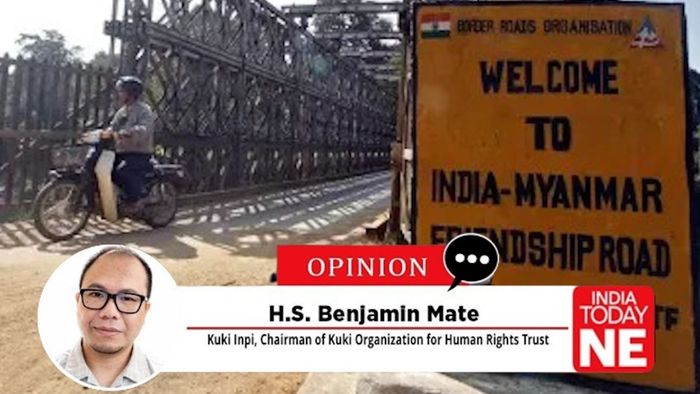
- Jan 11, 2026,
- Updated Jan 11, 2026, 7:44 PM IST
India’s eastern frontiers, stretching across Myanmar and Bangladesh, are not merely lines on a map but a pulsating, porous, and perilous zone of vulnerability. As 2026 approaches, these borders are witnessing a perfect storm of geopolitical threats: a resurgent ISI exploiting political flux in Bangladesh, and an emboldened China deepening its military and economic stranglehold on Myanmar. The result is a relentless proxy war that bleeds into India’s Northeast, manifesting in endless counter-insurgency operations, stunted development, and tragic loss of life. Conventional security responses—fencing, increased troop deployments—are necessary but insufficient. They treat symptoms, not the cause. A transformative, proactive strategy is required. It is time for India to champion the creation of a unified, autonomous Kuki-Chin-Mizo (Zo) Supra-State as a strategic buffer, securing its frontiers by empowering the region’s most natural and aligned stakeholders.
The Uncontested Vulnerability
The statistics are stark, but the reality is starker. Intelligence consistently confirms that Pakistan’s ISI, leveraging networks within Bangladesh, continues to fuel insurgent groups in Assam, Nagaland, and Manipur. Simultaneously, China’s “Three Warfares” doctrine finds fertile ground in Myanmar’s chaos, providing arms, training, and political cover to factions that keep the region destabilized, thereby undermining India’s Act East Policy and the critical Kaladan Multimodal Transit Transport Project. This dual-front proxy assault turns our borderlands into a playground for adversaries, with local populations caught in the crossfire, as tragically evidenced by the ongoing violence in Manipur.
The Zo Nation: A Fragmented Homeland, A Unified Solution
The proposed solution lies not in imposing an external framework, but in recognizing and resurrecting an inherent geographical and ethnic reality. The Zo peoples—comprising the Mizo, Kuki, Chin, and related tribes—share an unbroken ethnic, linguistic, and cultural heritage. Their contiguous highland homeland was arbitrarily dissected by the colonial Radcliffe Line and the India-Myanmar border. Today, they exist as marginalized minorities in four separate political arenas:
India: Mizoram state and the Kuki-Zo hill districts of Manipur.
Myanmar: The Chin Hills (core of Chin State) and the Kuki-Chin tracts of Western Sagaing beyond the Chindwin River, including the strategic Kabaw Valley.
Bangladesh: The Kuki-Chin areas of the Chittagong Hill Tracts.
This fragmentation is the root of the instability. It creates pockets of grievance, statelessness, and vulnerability that are exploited by external actors. Conversely, their unity presents a monumental strategic opportunity.
Why a "Supra-State," and Why Now?
A buffer zone is only as strong as its depth and the allegiance of its people. A narrowly drawn buffer is a band-aid; a unified Supra-State—conceptualized as a special autonomous supra-regional entity within India’s constitutional framework, with mechanisms for cross-border coordination—is a comprehensive cure. This enhanced vision offers decisive advantages:
1. Strategic Depth and Terrain Mastery: A unified entity stretches the buffer zone from deep inside Myanmar’s Sagaing Division, through the Chin Hills and Mizoram, into Manipur’s highlands and the CHT. Zo communities, with their innate knowledge of this rugged terrain, become the primary stewards of border security, providing unparalleled intelligence and grassroots monitoring capability.
2. Loyalty Through Comprehensive Agency: Granting genuine autonomy over land, culture, and development across their entire ancestral homeland addresses the core grievance of alienation. It transforms a scattered demographic into a cohesive, India-aligned political entity, decisively undercutting recruitment grounds for any insurgent or Chinese proxy narrative.
3. Geopolitical Disruption: This structure directly severs key enemy logistics. It secures the Kaladan corridor’s flanks, denies the ISI potential sanctuaries in the CHT, and cripples China’s ability to manipulate factions in Myanmar’s Chin and Sagaing regions. By addressing the ethnic fragmentation that fuels refugee and insurgent spillover, it tackles the crisis at its source.
The aspiration for such unity is not a fiction; it is documented history (the 1892 Chin-Lushai Conference) and a living political aspiration championed by cross-border organizations like the Zo Reunification Organisation (ZORO).
A Call for Courageous Statecraft
Implementation would require a phased, diplomatic tour de force: internal dialogue with Zo leadership across borders, robust security integration, and nuanced engagement with Myanmar and Bangladesh, framed within the discourse of indigenous rights and regional stability. The challenges are significant, but the cost of inaction is catastrophic.
Reactive tactics have preserved a fragile status quo at an exorbitant human and strategic price. As Myanmar fractures, Bangladesh navigates political uncertainty, and China advances, India must pivot from reaction to vision. Championing the creation of a Kuki-Chin-Mizo Supra-State is not mere ethno-political accommodation; it is an act of high strategic realism. It would convert a chronic vulnerability into a formidable asset, right a historical wrong, and finally secure the eastern frontier. The moment for decisive, creative statecraft is now. In 2026, India must choose whether its eastern border will be a bleeding wound or a bastion of security, forged through the empowerment of its most steadfast natural allies.