From Cricket Fields to Algorithms: What Vaibhav Sooryavanshi Reveals about India’s Sustainable Future
A teenager's century may have captured the nation's imagination, but the larger story lies in what made such a rise possible. As India celebrates exceptional talent, a deeper question emerges: can AI and digital platforms turn individual success stories into a system that discovers and nurtures potential wherever it exists?
- Jun 19, 2026,
- Updated Jun 19, 2026, 11:22 AM IST
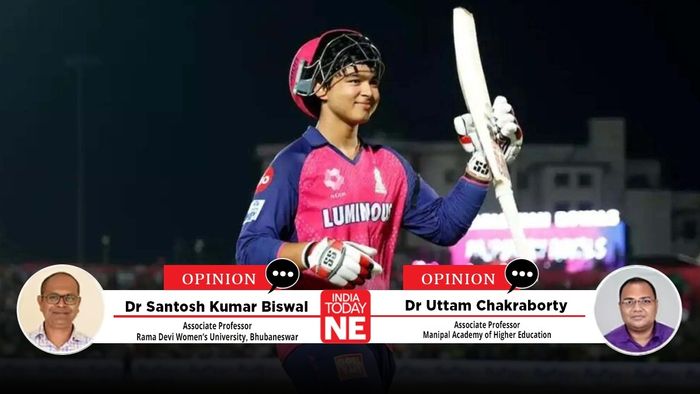
At the centre of national attention, a 15-year-old cricketer finds himself an object of celebration. Indian cricket is in the center of spotlight again because of the sensational performances of Vaibhav Sooryavanshi at a tender age. He achieved his IPL best career score at the age of 14, capping it off with the fastest Indian Century in T20 cricket. Highlights get repeated on television; social media are awestruck, and pundits are looking for precedents and comparisons. Yet, the rise of Vaibhav offers a story that extends far beyond cricket. It is a glimpse into the future of AI, digital technologies and inclusive talent ecosystems in India.
With no surprise, today’s journey on how to take raw talent to the national level is dependent on platform, data, technology-enabled and algorithm-driven discoverability. Now-a-days, if a young athlete is successful, he or she is not only a brilliant player but a brilliant system. There was a time, young players had the benefits in metropolises in terms of the quality of their sporting facilities, coaching and visibility and networking. Nevertheless, it was not ability when it comes to smaller towns; it was only a lack of access. Sometimes, destiny was determined by the location. Now, technology is beginning to be a danger to that.
The traditional barriers are being broken down in unprecedented ways by the AI tools and digital platforms. Now, coaches can review and analyse performance via video. Training can be personalized through the data-driven feedback system. More to that there are measurable indicators where talent is identified, beyond a personal networks. Popular websites like Twitter and Facebook enable the promising individual to be seen regardless of their backgrounds. What is the outcome? Gradual democratization of opportunity!
This transformation has significant implications with regards to Sustainable Development Goal 10 with the theme of reducing inequalities. Inequalities remain, but with the power of technology, people marginalized in the past now have the chances to connect to an opportunity that once belonged to a select few. Selectors, coaches, sponsors and audiences can now be attracted to a talented teenager from a small town, who is now present across digital ecosystems and beyond physical boundaries.
This is especially important in India as the population is in a dynamic demographically changing environment. So far, the nation has one of the world’s biggest youth populations. This is sometimes referred to as a “demographic dividend.” However having a large young population can only be a positive when talent is identified, developed and linked to opportunities. If these systems are not effective, demographic dividends can turn into demographic challenges. The potential of AI as one of the most significant enablers of sustainable development comes where it does.
In the past, evaluation of talent was largely subjective and based on the evaluator’s eyes, ears, nose, and other senses. Experience is always precious but AI has the potential to open up a whole new avenue of possibilities for finding patterns which you may have missed with experience. Algorithms can be used to analyse performance measures, movement patterns, reaction times, etc., and progression trajectories in sports. The same strategies are now being adopted in education, in health and welfare and in training and education in the working world. The overall theme of the lesson is that AI is not just a productiveness tool. It should also be considered as a human development instrument.
This view is similar to the SDG 4 (inclusive and equitable quality education). The twenty-first century approach to education takes place outside of the classroom. Learning is on digital platforms in the virtual world through simulation systems and in individual ecosystems. AI powered personalized learning paths, tailored to each student’s strengths and drawbacks. Specific supports, feedback and recommendations can be given to students at a point in time and tailored to the individual child, something that was not possible at scale before.
The same reason holds true of sports and talent development. Each person is unique in learning. Every performer will have specific strengths and the need for development. By leveraging AI, coaching and mentorship can be tailored to each participant, making it more effective and accessible. However, technology is not enough to make something excellent.
There are different kinds of success is one of the largest fallacies associated with exceptional performers. However, in substance sustainable success is very human. All the great artists have numerous parents, mentors, teachers, coaches, institutions that guide, discipline, encourage and support them emotionally. AI can see patterns but not more than wisdom of humans. While performance analysis can help give granular insights into algorithm performance, resilience training can only be done by algorithms.
Suffice to say, information brings strengths, data does not bring strengths. It is not a battle of man versus machine it's a battle of man and machine. Ideal talent ecosystems will consist of a combination of technology and humans mentoring. They will use AI to address demands for greater opportunities and will retain the importance of human contact and relationships to building. It's even more critical in an era of hyper-visibility!
Today’s young achievers are faced with different pressures. Social media makes success many times magnified! All achievement is caught up with. All setbacks are made public. These days, the act of perception is a form of money and in a certain sense, has opportunities and reveals susceptibilities. This is one special challenge for young performers. Recognition can help to motivate but also set up false expectations. What works for public appreciation is that you can build trust, and at the same time, anxiety. Errors in reputations designed on precisely the identical sort of online platforms may be magnified!
With the rise of AI and digital technologies in today’s societies, there is a need to pay the same attention to mental health and responsible development. This brings an increased relevance to Sustainable Development Goal 3 – health and well-being. A degree of progress should be recognized not only in terms of achievement but also for the way that individuals develop in their psychological and emotional well-being.
The topic of AI typically comes with discussions of work automation, efficiency, and economic growth. These themes are worth considering, but are not comprehensive. The more illumination question is how AI can help in inclusive and sustainable human development.
The tale of Vaibhav, a teenager cricketer seems quite a distant one from the topic of AI and SDGs. However, it is a testimony for some principle of the future. Technology is not the replacement for man’s ability. Its aim is to make it more widely known. The algorithms and infrastructure may be a future strength, but what could be a bigger strength of India in future is its hands-on practice and experience. It may be the amalgamation of Technology and Human development which expands space for skilful individuals, irrespective of their background, geographical location and their condition.
(Chakraborty is an Associate Professor in TAPMI Bengaluru Campus, Manipal Academy of Higher Education. Biswal is an Associate Professor, Department of Journalism and Mass Communication, Rama Devi Women’s University, Bhubaneswar)