From Cruel Taunts to Commonwealth Glory: The Unstoppable Rise of India's Glasgow Heroes
India’s athletes defied challenges at the 2026 Commonwealth Games, winning 15 medals despite key sports being removed. Para-athletes and weightlifters led the success, showcasing remarkable resilience and strength.
- Jul 30, 2026,
- Updated Jul 30, 2026, 4:15 PM IST
Out of the shadow of axed sports and truncated squads, India’s athletes at the 2026 Commonwealth Games are scripting a masterclass in raw human resilience. This is not just a sports story; it is a receipt of survival.
When the Indian contingent touched down in Glasgow for the 2026 Commonwealth Games, the mood in the sports fraternity was one of anxious calculation. With heavyweight, medal-churning disciplines like wrestling, badminton, hockey, and shooting completely axed from a heavily streamlined roster, the spreadsheets looked bleak. Critics openly wondered: where would the silverware come from?
They forgot to account for the single most potent variable in Indian sports: the sheer, weaponised grit of the athlete who has already survived life’s worst before stepping onto the turf.
As of late July, with a tight 122-member squad clinching a gritty haul of 15 medals, Glasgow has transformed from a structural crisis into a theatre of redemption. The podiums here aren't just rewarding athletic excellence; they are validating individuals who have stared down destitution, societal cruelty, and career-ending trauma.
Chanting the Name That Was Meant to Break Him
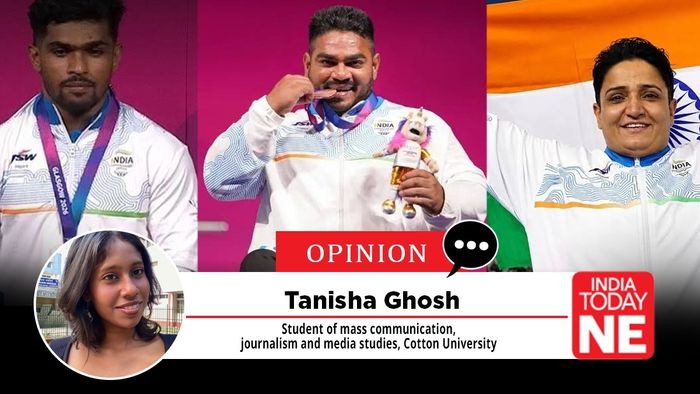
Nowhere is this trial by fire more evident than in the story of para-powerlifter Jhandu Kumar. Contracted with polio at the age of five in rural Nalanda, Bihar, Kumar’s childhood was defined by poverty and societal apathy. His parents exhausted their meagre life savings on futile medical treatments. The response from the local community was a masterclass in casual cruelty. Neighbours mocked the child, whispering that he had completely ruined—"jhandu कर दिया"—his family’s future.
Instead of letting the word break his spirit, Kumar weaponised it. He legally adopted the insult as his name, wearing his scar like a badge of honour.
When Kumar wheeled himself onto the Glasgow stage in the Men’s Heavyweight category, he was lifting far more than the 190 kg loaded onto the iron bar. He was hoisting the crushing weight of decades of systemic humiliation. As the lift was white-flagged, securing India’s opening medal of the Games, a billion people back home chanted his name in celebration. It was the ultimate, poetic comeuppance.
The Leap of Faith at 40: life does not end after trauma, sometimes, it begins at forty.
If Kumar’s story is about conquering social stigma, Sharmila Dhankar’s journey is a masterclass in mid-life defiance. Struck by polio at age two, Dhankar’s early life read like a tragic domestic melodrama, marred by a deeply abusive first marriage and crippling financial vulnerability. In a country where athletes are often considered past their prime by their late twenties, Dhankar didn't even pick up a shot put until she was 34.
After a devastating, heartbreaking fourth-place finish at the Birmingham 2022 Games, conventional wisdom suggested her window had closed. Dhankar chose to ignore conventional wisdom.
At the age of 40, under the grey Glasgow sky, she stepped into the throwing circle and unleashed a spectacular, season-best 9.81m throw in the Women's Shot Put F57. The result? India’s first-ever Commonwealth Games para-athletics gold medal. As tears rolled down her face on the podium, Dhankar sent a roaring message to every woman back home, "We have seen a lot of hardships in the family but all that has made me strong and only motivated me to keep the fire in the belly burning.”
Shattering the Psychological Barrier
Even in the able-bodied segments, the narrative remains fiercely psychological. Weightlifter Muthupandi Raja’s elite career was left hanging by a thread in 2019 following a catastrophic elbow ligament tear. For a lifter, a shredded elbow joint is the equivalent of a death sentence. His agonisingly slow rehabilitation was derailed by pandemic lockdowns, and subsequent reshuffling of Olympic weight classes saw him displaced by poster-boy Jeremy Lalrinnunga.
To stand on a global platform and test a surgically repaired elbow under maximum, bone-crushing load requires a terrifying level of mental fortitude. Raja delivered exactly that. Moving into the new 65kg division, he hoisted a combined total of 286kg to snatch a brilliant silver medal. It was a visceral reminder that an iron will cannot be broken by a fractured bone.
While the personal sagas of Jhandu, Sharmila, and Raja capture the emotional heartbeat of the nation, Team India’s collective surge in Glasgow is fueled by a relentless assembly line of talent across weightlifting and track and field.
The weightlifting arena continues to be India's trusted golden goose. Spearheading the charge is the incomparable Mirabai Chanu, who hoisted a masterclass performance to secure her historic third consecutive CWG gold medal hat-trick. Following her lead, Rishikanta Singh set the tone early by smashing a new Games record in the snatch to claim a roaring silver in the men’s 60kg category. The momentum was furiously sustained by Gyaneshwari Yadav (53kg), Harjinder Kaur (69kg), and Ajaya Babu (79kg), all capturing hard-fought silvers, while the iron-willed Bindyarani Devi chipped in with a gritty bronze in the women's 58kg division.
Simultaneously, the track and field contingent is redrawing the boundaries of Indian athletic capability. Para-athletics witnessed an unforgettable, historic 1-2 finish in the Men's 100m T47 sprint, where Dilip Gavit blazed to a golden, Games-record finish of 10.71 seconds, closely flanked by compatriot Mohammed Basil who locked in the silver. In a beautiful symmetry, Shilpa K. Shyla flanked Sharmila on the podium by snatching the F57 shot put bronze.
Meanwhile, on the able-bodied tracks, Gulveer Singh scripted an epoch-making moment by capturing a gritty silver in the men's 10,000m—marking India's first-ever podium finish in the grueling distance event. Not to be outdone, field maestros Sarvesh Kushare (high jump) and Murali Sreeshankar (long jump) soared through the Scottish air to seal two spectacular silvers, ensuring that even in a highly condensed format, the Indian flag continues to fly dominant and high.
Long after the final medal standings of Glasgow 2026 are archived, these are the stories that will define the legacy of this contingent. In an altered, hostile competitive landscape, India's athletes didn't just adapt, they conquered. They remind us that the true measure of Indian sport isn't found in the cold metal of a trophy, but in the fiery soul of the survivor wearing it.