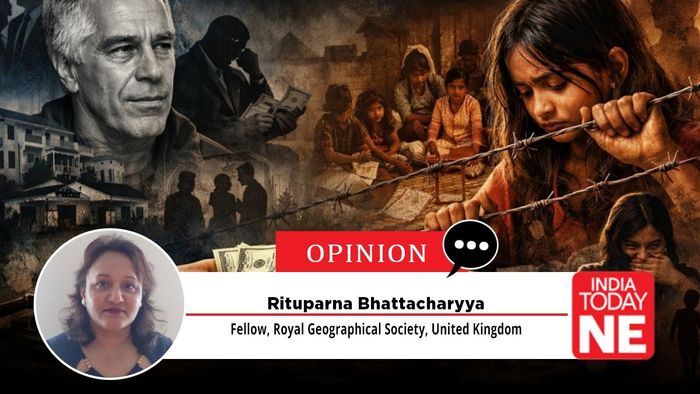
From Epstein to India: What global sex-trafficking revelations mean for our own backyard
India does not need a billionaire predator to confront this reality. Our crisis is quieter, more dispersed, and vastly larger. Every year, thousands of Indian girls are trafficked internally and across borders for sexual exploitation, forced labour, and early marriage. Many are recruited through deception, promises of work or education, before being absorbed into informal economies that offer neither protection nor visibility.
- Jan 31, 2026,
- Updated Jan 31, 2026, 6:48 PM IST
The latest release of documents linked to convicted sex offender Jeffrey Epstein has once again exposed how trafficking networks thrive when wealth, power, and silence intersect. The files, running into millions of pages, detail how underage girls were recruited, transported, and abused over the years, often in the shadow of influential figures, while victims struggled to be heard. However, the lesson is not merely American. It is universal.
Behind every headline-grabbing scandal lies a deeper truth: sexual exploitation survives because systems fail victims. The Epstein files show patterns painfully familiar to India—delayed investigations, intimidated survivors, powerful enablers, and institutions more concerned with reputation than justice.
India does not need a billionaire predator to confront this reality. Our crisis is quieter, more dispersed, and vastly larger.
Every year, thousands of Indian girls are trafficked internally and across borders for sexual exploitation, forced labour, and early marriage. Many are recruited through deception, promises of work or education, before being absorbed into informal economies that offer neither protection nor visibility.
Global agencies such as the United Nations Office on Drugs and Crime classify India simultaneously as a source, transit, and destination country for trafficking. UNICEF warns that poverty, migration, school dropout, and displacement sharply increase vulnerability among adolescent girls.
The Epstein files matter because they demonstrate how exploitation is rarely the work of lone criminals. It is sustained by networks, lawyers who delay cases, employers who look away, officials who underperform, and social cultures that shame victims into silence.
India’s own data echo this institutional fragility. Figures from the National Crime Records Bureau consistently show high registration of crimes against women, yet conviction rates remain low. Survivors often face hostile questioning, social pressure to withdraw complaints, and years-long legal battles that few can endure. This is precisely why the #MeToo movement was so transformative.
For the first time, women across professions publicly named abuse that had long been normalised. Like the Epstein survivors abroad, Indian women exposed how power shields perpetrators and isolates victims. #MeToo shifted cultural blame. For the first time, millions of women publicly shared experiences that had long been normalised or buried. In India, too, survivors from journalism, academia, entertainment, and the corporate sector spoke out, challenging cultures of impunity. While #MeToo did not dismantle patriarchy overnight, it achieved something profound: it shifted the burden of shame from survivors to perpetrators and institutions. But visibility alone is not enough.
India has laws on paper, from workplace harassment regulations to anti-trafficking provisions, but implementation remains inconsistent. Conviction rates for sexual crimes are low, survivor support systems are patchy, and investigations often retraumatise victims. Data from the National Crime Records Bureau consistently show high reporting of crimes against women, yet these numbers likely represent only a fraction of reality, given widespread under-reporting.
But law and policy have struggled to keep pace.
Trafficking sits on the same continuum as workplace harassment and domestic violence: all emerge from unequal power structures. Rescue operations may free victims temporarily, but without long-term rehabilitation, education, livelihoods, trauma care, many are pushed back into exploitation.
The Epstein files remind us that visibility alone does not equal justice. Even overwhelming documentation does not automatically translate into accountability.
India now faces a choice.
We can treat trafficking and gender violence as episodic tragedies or recognise them as systemic failures demanding coordinated national action. The cost of inaction is measured not only in lost childhoods and broken lives, but in a development story that excludes half the population.
Until every girl can grow without fear and every woman can work with dignity, India’s growth remains incomplete.