Guwahati’s lost waterways: From a potential Venice of northeast to a city in ecological ruins
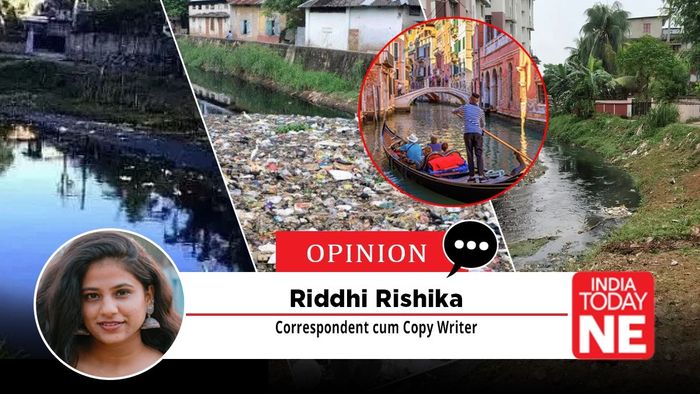
Guwahati, cradled by the mighty Brahmaputra and interlaced with natural channels like the Bharalu and the Bahini, once held the potential to become the “Venice of the Northeast.” These water channels were not just physical features but vital lifelines—regulating floodwaters, nurturing biodiversity, and sustaining community life.
- Jan 17, 2026,
- Updated Jan 17, 2026, 1:21 PM IST
Guwahati, cradled by the mighty Brahmaputra and interlaced with natural channels like the Bharalu and the Bahini, once held the potential to become the “Venice of the Northeast.” These water channels were not just physical features but vital lifelines—regulating floodwaters, nurturing biodiversity, and sustaining community life. Today, however, they symbolise systemic environmental neglect. What could have been an urban identity grounded in ecological harmony has become a cautionary tale of pollution and misgovernance.
The Bharalu and Bahini rivulets were historically the city’s natural drainage network, sustaining aquatic ecosystems and providing valuable ecosystem services. Yet unchecked urban expansion, inadequate infrastructure, and civic disengagement have transformed these vibrant streams into open sewers and clogged drains.
Alarming pollution levels define today’s reality. The Bharalu River, a tributary of the Brahmaputra flowing through the heart of Guwahati, is among the most polluted water bodies in the region. Its biochemical oxygen demand (BOD)—a key indicator of organic pollution—is recorded at about 52 mg/L, far exceeding the National River Conservation Directorate’s permissible limit of 3 mg/L. Such high BOD levels signal severe organic contamination that depletes dissolved oxygen and devastates aquatic life.
Guwahati generates over 150–154 million litres of sewage every day, with no comprehensive sewage treatment system in place. Much of this untreated wastewater is discharged directly into urban rivulets and ultimately the Brahmaputra, carrying toxic loads into critical ecosystems like Deepor Beel, a Ramsar wetland site whose biodiversity is already under stress due to pollution.
Solid waste dumping worsens the crisis. The city produces hundreds of tonnes of solid waste every day, an estimated portion of which finds its way into the Bharalu and Bahini waterways. Plastic waste, construction debris, and household garbage choke the river’s flow and worsen flood risks during the monsoon.
The physical capacity of these waterways has been severely compromised. Rivulets like the Bharalu (∼6.2 km) and Bahini (∼8.7 km) were once natural conduits for stormwater. Rampant encroachment over decades has narrowed their channels, reducing their flood carrying capacity and turning them into virtual drains. Households and business establishments routinely connect septic outlets directly into these streams, discharging untreated sewage without consequence.
Local residents are seeing the consequences firsthand. A viral video capturing waste accumulation in the Bharalu earlier this month triggered public outcry and renewed scrutiny of civic efforts. Meanwhile, residents near Mora Bharalu continue to protest unchecked garbage dumping, which blocks flow and creates unhygienic environments—especially dangerous during the monsoon season.
The result is a cycle of environmental degradation that impacts public health and quality of life. Polluted waterways contribute to waterborne diseases, foul odours, and mosquito breeding, affecting communities along the riverbanks—many of whom live in informal settlements with limited access to sanitation.
Flooding has become an annual ordeal for the city. Poor drainage, exacerbated by clogged rivulets and encroached wetlands, turns rainwater into chaos on city streets each monsoon. Residents from low-lying areas like Anil Nagar, Nabin Nagar, and Rajgarh have repeatedly demanded urgent action, including de-silting rivers and removing illegal encroachments—demands that remain only partially addressed.
The responsibility does not lie with the government alone. Citizens, too, have played a role—by normalising waste dumping, tolerating illegal constructions, and disengaging from civic accountability. The silence of the middle class, combined with political short-termism, has allowed irreversible damage to take root.
This decline was not inevitable. Other Indian cities have demonstrated that urban growth and river health can coexist with appropriate planning. Guwahati must adopt a similar vision—prioritising scientific river restoration, expanding sewage infrastructure, enforcing anti-dumping laws, and engaging citizens in stewardship.
Guwahati could have been the Venice of the Northeast—not as a mimicry of canals and gondolas, but as a city where waterways defined its character and resilience. The rivers may be polluted, but the underlying potential remains. What is required now is collective resolve—from citizens, civic authorities, and policymakers—to reclaim Guwahati’s water heritage before it runs completely dry.