Hormuz at boiling point: Global supply disruptions amid intensifying U.S.–Iran confrontation
In 2026, the world is witnessing what was once a theoretical "worst-case scenario" become a daily reality. The closure of the Strait, triggered by escalating hostilities between the United States and Iran, has moved beyond an energy crisis, evolving into a global emergency of food and medicine shortages.
- May 06, 2026,
- Updated May 06, 2026, 3:15 PM IST
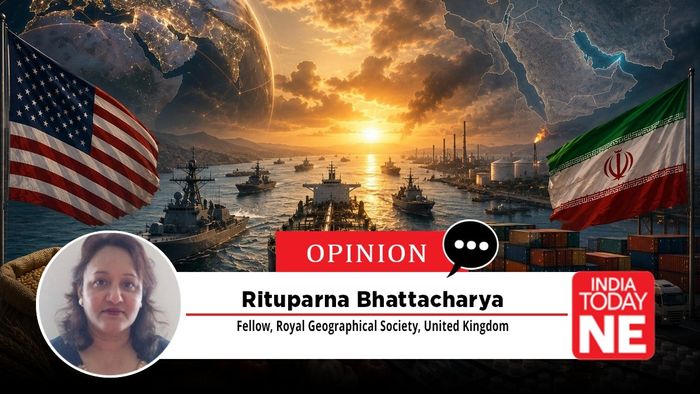
The current geopolitical landscape has reached a boiling point, centred on a 21-mile-wide strip of water that dictates the survival of millions: the Strait of Hormuz. In 2026, the world is witnessing what was once a theoretical "worst-case scenario" become a daily reality. The closure of the Strait—triggered by escalating hostilities between the United States and Iran—has moved beyond an energy crisis, evolving into a global emergency of food and medicine shortages.
At the centre of this storm is President Donald Trump, whose "no more a nice guy" stance has redefined American foreign policy, signalling a definitive end to the era of strategic patience with Tehran.
The Choke Point: Why Hormuz Matters Beyond Oil
While the Strait of Hormuz is famous for carrying 20% of the world’s oil, its role in the global "life-support" supply chain is often underestimated. It is the primary artery for the Middle East’s import-heavy economies and a critical transit hub for specialised commodities that feed and heal the world.
1. The Grocery Supply Emergency
The Gulf Cooperation Council (GCC) nations, including the UAE, Qatar, and Kuwait, rely on the Strait for over 80% of their caloric intake. When Iran effectively blocked the waterway in early 2024, the impact was instantaneous.
• The Price of Sustenance: In major cities like Dubai and Doha, the price of staples—flour, rice, and fresh produce—surged by 40% to 120% within weeks.
• The Fertiliser Ripple Effect: The Strait is a corridor for 30% of the world’s ammonia-based nitrogen fertiliser. Without these shipments, global crop yields—particularly in Asia and parts of Europe—are projected to fall, threatening to push an additional 45 million people into extreme hunger by the end of 2026.
2. The Pharmaceutical Crisis
The blockade has disrupted more than just tankers; it has stalled container ships carrying life-saving medicines. The region acts as a massive transhipment hub for pharmaceuticals moving between Europe and Asia.
• Cold Chain Interruption: Many essential medicines, including insulin and vaccines, require strict temperature-controlled shipping. With vessels idling in the Arabian Sea or being diverted around the Cape of Good Hope, the "cold chain" is breaking, leading to localised shortages of critical drugs.
• Chemical Feedstocks: The closure has choked the supply of petrochemicals used to manufacture everything from medical-grade plastics (syringes, IV bags) to the active pharmaceutical ingredients (APIs) found in everyday antibiotics.
"No More a Nice Guy": The Trump Doctrine in 2026
Since returning to the Oval Office in 2025, President Trump has abandoned the nuanced diplomacy of his predecessors. His administration has characterised the Iranian blockade as an "act of international piracy," meeting Tehran’s aggression with a policy of unapologetic strength.
The End of Strategic Patience
The "no more a nice guy" persona isn't just rhetoric; it is backed by the most aggressive naval posture in decades. Under Operation Epic Fury, the Trump administration has made it clear that the U.S. will no longer "wait and see" while global trade is held hostage.
"Iran thinks they can starve the world to get what they want," Trump stated during a recent briefing. "They’re wrong. We aren't playing games anymore. The Strait belongs to the world, and if they won’t open it, we will."
The Dual Blockade
In a move that shocked international observers, the U.S. responded to Iran's closure of the Strait by implementing its own naval blockade of Iranian ports. This "maximum pressure 2.0" aims to completely decouple Iran from the global economy. By stopping the flow of all goods—not just oil, into Iranian harbours, the U.S. is betting that the internal economic pressure will force the regime to capitulate or face total collapse.
The Human Toll: A World in Flux
The standoff between Washington and Tehran has created a "bifurcated" global economy. While the U.S. remains relatively insulated from the food crisis due to its domestic agricultural surplus, other regions are not so lucky. The following table gives an overview:
| Region | Impact Level | Primary Concern |
| Middle East (GCC) | Critical | 70% of food imports disrupted; reliance on airlifting staples. |
| South Asia | High | Loss of energy and fertiliser; surging inflation in India and Pakistan. |
| East Asia | High | Massive energy shortfalls in Japan and South Korea; industrial slowdown. |
| United States | Moderate | Increased shipping costs and "tit-for-tat" inflation on imported goods. |
The Desalination Threat
Perhaps the most harrowing aspect of the 2026 crisis is the threat to water. Most Gulf nations rely on desalination plants powered by the very energy infrastructure that Iran has threatened to target. A disruption here doesn't just mean higher prices; it means a total lack of potable water for millions, turning a trade dispute into a humanitarian catastrophe.
Conclusion: The New Reality of Global Trade
The Strait of Hormuz crisis of 2026 serves as a stark reminder of the fragility of our globalised systems. The "just-in-time" supply chain for food and medicine cannot survive in a world where major maritime arteries can be severed by geopolitical ego.
As President Trump continues his hardline stance, the world watches with bated breath. The "no more a nice guy" approach has certainly changed the calculus for Iran, but it has also raised the stakes to an unprecedented level. In this high-stakes game of chicken, the collateral damage isn't measured in barrels of oil, but in the availability of a loaf of bread or a vial of medicine.
The question for 2026 is no longer if the world can survive without the Strait of Hormuz, but how long it can hold its breath before the pressure becomes unbearable.
In sum, the closure of the Strait of Hormuz has become a multidimensional crisis, choking off food and medicine supplies, destabilising global markets, and deepening geopolitical tensions. The world’s dependence on this narrow waterway has never been more starkly exposed, and the hardening U.S. posture toward Iran has added a volatile political edge to an already fragile situation.
(The views expressed in this article are those of the author and do not necessarily reflect the views of India Today NE or its affiliates.)