India’s BrahMos Missile Consignment: Strategic Ambition, Economic Promise and the Need for Balance
India’s recent consignment of the BrahMos missile system marks far more than a routine defence export. It reflects the country’s growing ambition to position itself as a major strategic, technological, and economic power in the global order.
- May 17, 2026,
- Updated May 17, 2026, 5:08 PM IST
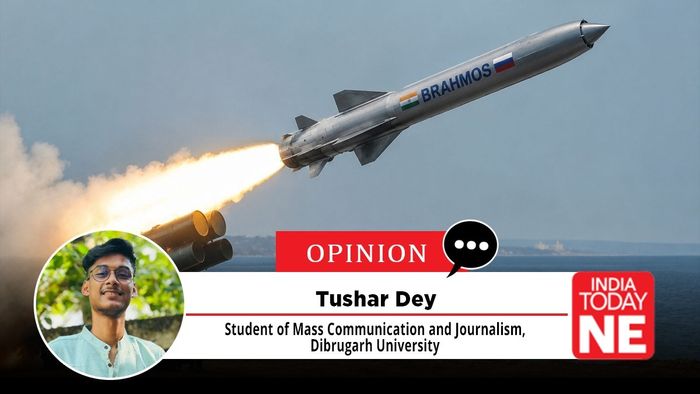
India’s recent consignment of the BrahMos missile system marks far more than a routine defence export. It reflects the country’s growing ambition to position itself as a major strategic, technological, and economic power in the global order. Developed as a joint venture between India and Russia under BrahMos Aerospace, the BrahMos missile has become one of the most prominent symbols of India’s defence modernisation and indigenous capability. Its successful export to Philippines signals a turning point in India’s transition from being one of the world’s largest arms importers to an emerging defence exporter.
For decades, India depended heavily on foreign defence equipment despite possessing immense scientific and industrial potential. The BrahMos project demonstrates how international collaboration, when combined with domestic innovation and strategic vision, can produce globally competitive technology. The missile’s reputation for speed, precision, and versatility has generated interest from countries such as Vietnam and Indonesia, particularly in the Indo-Pacific region where maritime security concerns continue to grow. This rising international demand reflects increasing confidence in India’s technological standards and reliability as a strategic partner.
From an economic standpoint, the implications are substantial. India has long struggled with high defence import bills that place pressure on foreign exchange reserves and limit domestic industrial growth. Expanding defence exports can partially reverse this trend. Large-scale missile production stimulates manufacturing, creates skilled employment, strengthens supply chains, and encourages investment in research and development. Engineers, technicians, software experts, metallurgical industries, transport sectors, and private manufacturers all become part of a wider defence economy. In this sense, the BrahMos project is not merely a military achievement; it is also an industrial and economic opportunity.
The export of advanced defence systems also aligns with the government’s broader “Make in India” and “Aatmanirbhar Bharat” initiatives. India’s aspiration to become self-reliant in defence production cannot succeed without building an internationally competitive export market. Countries that dominate the global defence industry today have done so not only through military strength but also through sustained investment in innovation, manufacturing infrastructure, and international partnerships. If India can maintain quality standards and expand production capacity, the defence sector could emerge as an important contributor to economic growth in the coming decades.
At the geopolitical level, the BrahMos consignment carries equal significance. By supplying advanced missile systems to friendly nations, India strengthens its diplomatic influence and strategic presence in the Indo-Pacific region. In an era marked by rising geopolitical tensions and shifting alliances, defence partnerships increasingly shape international relations. Nations purchasing military systems often enter long-term relationships involving training, maintenance, intelligence cooperation, and strategic coordination. Consequently, the BrahMos export enhances India’s soft power as well as its strategic leverage.
However, despite these achievements, there remains a need for careful reflection. National pride surrounding defence exports should not prevent public discussion on the broader direction of development. India continues to face serious challenges in education, healthcare, unemployment, environmental protection, and income inequality. While strengthening defence capabilities is necessary in a complex geopolitical environment, military advancement alone cannot define national progress. Excessive emphasis on arms production and strategic competition may risk diverting attention from equally urgent social priorities.
There is also the question of regional stability. As more countries in Asia modernise their military capabilities, the region could witness intensified arms competition. India must therefore ensure that its defence exports remain guided by responsible diplomacy, transparency, and long-term regional peace rather than purely commercial or strategic interests. True global leadership is measured not only by military exports but also by a nation’s contribution to stability, development, and humanitarian values.
India’s BrahMos missile consignment is undoubtedly a landmark achievement that reflects technological advancement, strategic maturity, and economic potential. Yet its true success will depend on how wisely India balances military ambition with inclusive development, social welfare, and responsible global leadership. If pursued with vision and balance, this moment could represent not just the rise of India as a defence exporter, but the emergence of a more confident and self-reliant nation on the global stage.