India’s cancer crisis needs district solutions, not distant hospitals
World Cancer Day on February 4 offers an opportunity to pause, not for symbolism, but for course correction. India does not suffer from a lack of intent on cancer care. What it has struggled with is bringing care closer to where people live. In that context, the Government of India’s decision to establish Day Care Cancer Centres (DCCCs) in district hospitals is not just another health initiative; it is a structural shift in how cancer care is imagined, delivered, and financed in the country.
M Biswanath Sinha
- Feb 04, 2026,
- Updated Feb 04, 2026, 3:41 PM IST
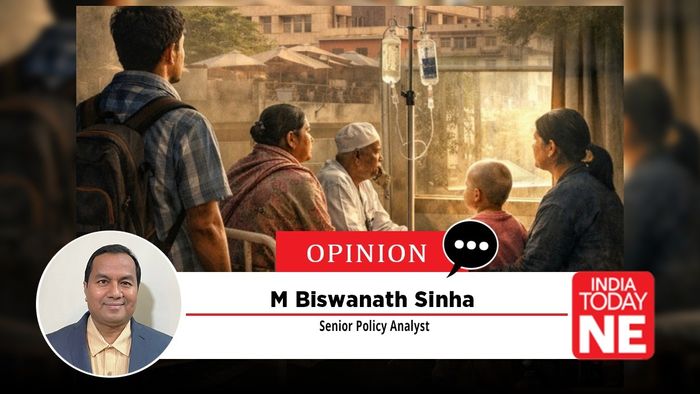
For many people from Manipur, places like Shanti Bhuvan Lodge in Parel East or Dr Tilak Hospital near Jambori Maidan in Mumbai’s BDD Chawls are familiar names. Walk into these modest lodgings on any given day and you will find dozens of Manipuri families camping there for weeks, sometimes months, while a loved one undergoes cancer treatment at the Tata Memorial Hospital. These are not tourists. They are patients and caregivers who have travelled hundreds of kilometres in search of care they could not access closer to home.
To put this distance in perspective: a cancer patient from Phungthar village in Kamjong district of Manipur travels nearly 3,100 kilometres across multiple states, languages, and health systems to reach Parel in Mumbai, where India’s premier cancer hospital is located. The journey is physically exhausting, financially draining, and emotionally isolating. Yet, for thousands of Indians, this is not an exception; it is the default pathway to cancer care.
World Cancer Day on February 4 offers an opportunity to pause, not for symbolism, but for course correction. India does not suffer from a lack of intent on cancer care. What it has struggled with is bringing care closer to where people live. In that context, the Government of India’s decision to establish Day Care Cancer Centres (DCCCs) in district hospitals is not just another health initiative; it is a structural shift in how cancer care is imagined, delivered, and financed in the country.
If implemented with seriousness, DCCCs could do for cancer what institutional deliveries did for maternal health: normalise access, reduce catastrophic costs, and save lives quietly, every day.
Cancer’s Growing Burden and Its Economic Weight
Cancer is now among the leading causes of death in India, with incidence steadily rising due to population ageing, lifestyle changes, environmental exposure, and better but still insufficient diagnosis. Current estimates suggest that over 15 lakh Indians are diagnosed with cancer every year, and nearly nine lakh die annually. More concerning than the numbers is where and how these deaths occur.
India’s cancer mortality-to-incidence ratio remains significantly higher than that of many middle- and high-income countries. This is not because treatments do not exist, but because patients reach the system too late, often at Stage III or IV, when outcomes are poorer and costs multiply.
The economic consequences are equally stark. Cancer is among the top causes of catastrophic health expenditure in Indian households. Treatment costs surgery, chemotherapy cycles, radiation, diagnostics, travel, and accommodation, can easily run into several lakhs of rupees, even in public facilities. Studies consistently show that a significant proportion of cancer-affected households either fall into poverty or experience long-term financial distress.
Productivity losses compound the problem. Cancer disproportionately affects individuals in their most economically productive years. Lost income, caregiver absenteeism, and premature mortality translate into macroeconomic losses that silently tax India’s growth story. For a country aspiring to reap its demographic dividend, ignoring cancer’s economic footprint is no longer an option.
What Governments, Private Players, and Civil Society Are Doing Right
India’s response to cancer has evolved considerably over the last decade. The National Programme for Prevention and Control of Cancer, Diabetes, Cardiovascular Diseases and Stroke (NPCDCS) has expanded screening for oral, breast, and cervical cancers at the primary care level. The Ayushman Bharat–PMJAY scheme has improved financial access to cancer treatment for millions, particularly for inpatient care.
At the tertiary level, the expansion of AIIMS-like institutions, regional cancer centres, and upgraded medical colleges has increased advanced oncology capacity. Several state governments, like Tamil Nadu and Kerala, have also launched dedicated cancer schemes, mobile screening units, and referral networks.
The private sector has played a significant role in expanding high-end diagnostics, radiotherapy, and specialised oncology services, particularly in urban centres. Meanwhile, civil society organisations (CSOs) have filled critical gaps by raising awareness, supporting patient navigation, funding diagnostics, and providing palliative care where the system falls short.
Yet, despite these efforts, a fundamental mismatch persists: most cancers do not require continuous hospitalisation, but India’s cancer infrastructure remains overly hospital-centric and metro-focused.
This is precisely where Day Care Cancer Centres matter.
Why Day Care Cancer Centres Are a Game Changer
A large proportion of cancer care, especially chemotherapy administration, follow-up consultations, symptom management, and supportive care, can be delivered safely on a day-care basis. Patients do not need ICU beds or tertiary facilities for every cycle of treatment.
Recognising this, the Government of India has announced plans to establish Day Care Cancer Centres in district hospitals across the country, creating decentralised nodes of cancer care within the public health system. The logic is simple but powerful:
• Reduce travel and out-of-pocket expenditure
• Decongest tertiary hospitals
• Enable early initiation and continuity of treatment
• Integrate cancer care with district-level health services
For patients, this means fewer overnight stays, lower indirect costs, and treatment closer to home. For the system, it means better resource allocation—tertiary centres focus on complex cases, while districts manage routine oncology care.
If aligned properly with medical colleges, regional cancer centres, and tele-oncology platforms, DCCCs can become the backbone of India’s cancer care delivery.
The Real Challenges: Capacity, Consistency, and Coordination
However, announcing DCCCs is the easy part. Implementing them well is where India’s health system will be tested.
First, human resources. Oncology-trained nurses, pharmacists, medical officers, and counsellors are in short supply, particularly outside metros. Without sustained investment in training and retention, DCCCs risk becoming under-utilised or unsafe.
Second, uneven state capacity. Health is a state subject, and district hospital readiness varies widely. Some states have strong public hospital systems; others struggle with vacancies, infrastructure gaps, and supply-chain weaknesses. A one-size-fits-all rollout will not work.
Third, referral and continuity of care. DCCCs must not function in isolation. Clear referral pathways to higher centres, access to diagnostics, and standard treatment protocols are essential. Without this, decentralisation can fragment care rather than strengthen it.
Fourth, financing and sustainability. Capital costs are only the beginning. Consumables, drugs, maintenance, staffing, and quality assurance require predictable funding. If states are left to absorb recurring costs without adequate support, centres may deteriorate over time.
Policy Recommendations: Making DCCCs Work
If Day Care Cancer Centres are to fulfil their promise, policy design must go beyond infrastructure creation.
1. Anchor DCCCs within a hub-and-spoke model
Each DCCC should be formally linked to a regional cancer centre or medical college for clinical oversight, referrals, and mentoring. Tele-oncology should be institutionalised, not optional.
2. Invest in oncology workforce at the district level
Short-term training, task-sharing models, and incentives for oncology nurses and pharmacists can rapidly expand capacity. Without people, buildings will not deliver care.
3. Integrate DCCCs with PMJAY and state insurance schemes
Day-care chemotherapy, diagnostics, and supportive care must be adequately reimbursed to ensure financial viability and patient protection.
4. Standardise protocols and quality assurance
Uniform treatment guidelines, drug safety protocols, and monitoring systems are essential to maintain trust and outcomes across districts.
5. Use data, not assumptions
Strengthening cancer registries at the district level and linking them to DCCCs will allow real-time assessment of incidence, outcomes, and gaps, turning facilities into learning systems.
Cancer Care as District Governance
Cancer control in India will not be won in conference halls or tertiary hospitals alone. It will be won or lost in district hospitals, interconnected with primary and community health centres, where most Indians first seek care.
Day Care Cancer Centres represent a pragmatic, equity-oriented response to a complex challenge. They acknowledge a simple truth: bringing care closer saves lives and livelihoods. On World Cancer Day, the most meaningful commitment India can make is to ensure that these centres are not symbolic announcements, but fully functional lifelines for millions.
If Day Care Cancer Centres function as intended, the familiar trail from Manipur to Mumbai need no longer be a compulsory passage for survival. Places like Parel should remain centres of excellence, while districts across India shoulder the everyday burden of cancer care with competence and compassion.
Cancer does not wait. Policy cannot either.
(This is author's personal view)
MORE NEWS
Read more!