India’s Dangerous Economic Comfort Zone
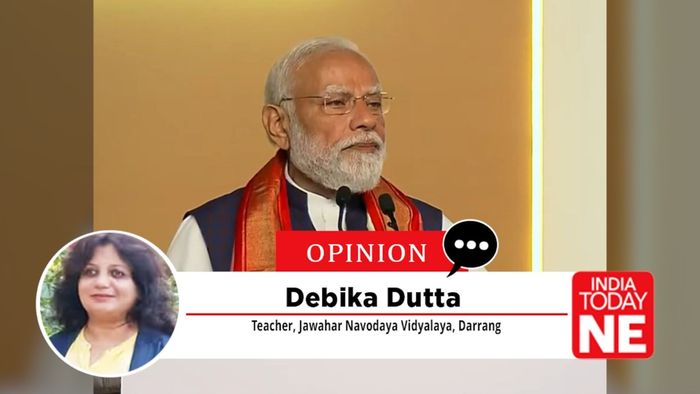
When Prime Minister Narendra Modi recently urged Indians to reduce unnecessary dependence on imported crude oil and moderate the country’s obsession with gold, sections of the opposition and urban commentariat reacted with predictable sarcasm. Governments, they argued, should solve structural economic problems instead of commenting on citizens’ consumption habits.
- May 13, 2026,
- Updated May 13, 2026, 2:26 PM IST
When Prime Minister Narendra Modi recently urged Indians to reduce unnecessary dependence on imported crude oil and moderate the country’s obsession with gold, sections of the opposition and urban commentariat reacted with predictable sarcasm. Governments, they argued, should solve structural economic problems instead of commenting on citizens’ consumption habits.
The criticism sounded fashionable. It was also profoundly unserious.
India today speaks the language of global power with growing confidence. It celebrates projections about becoming the world’s third-largest economy, demands a larger geopolitical role and seeks recognition as a leading voice of the Global South. Yet the same national discourse becomes visibly uncomfortable whenever conversations turn toward economic discipline, energy dependence or financially irrational social behaviour.
That contradiction lies at the centre of India’s larger economic dilemma.
No major power in modern history achieved strategic autonomy while remaining structurally dependent on imported vulnerabilities. India still imports nearly 85 per cent of its crude oil requirements. In 2023-24, the country’s crude oil import bill crossed $130 billion. During periods of geopolitical instability, the burden rises sharply. The Russia-Ukraine conflict demonstrated how quickly global disruptions can destabilise economies dependent on external energy supplies.
For ordinary Indians, these are not distant macroeconomic abstractions. Every rise in crude prices eventually reaches households through inflation, transportation costs, rising fertiliser prices and more expensive essentials. Fuel shocks do not remain confined to policy reports; they shape household budgets, business confidence and middle-class financial stability.
And yet India continues to behave as though extreme import dependence is merely an inconvenience rather than a structural weakness.
The gold question exposes an equally uncomfortable contradiction. India remains among the world’s largest importers of gold, spending tens of billions of dollars annually on a commodity that contributes little to productive economic expansion. During festive and wedding seasons, gold imports routinely surge, placing additional pressure on the trade deficit and foreign exchange outflows.
Defenders of this pattern frequently invoke culture and tradition. But cultural familiarity cannot erase economic consequences.
A nation cannot seriously aspire to industrial expansion while enormous household savings remain locked inside imported, non-productive assets.
Gold may provide emotional security for families, but it does not finance manufacturing competitiveness, technological innovation or infrastructure creation. Strong economies channel household savings into productive investment ecosystems — industries, capital markets, pension systems and long-term enterprise creation. India, however, still remains psychologically attached to a conservative savings instinct where physical possession is mistaken for economic security.
That instinct may appear individually rational. Collectively, however, it weakens national resilience.
Critics often argue that India’s per-capita energy consumption remains far lower than that of Western nations, making calls for restraint unfair or exaggerated. But strategic vulnerability is not measured through moral comparison with Europe or America. It is measured through dependence itself. Even relatively modest consumption becomes dangerous when a country imports the overwhelming majority of its energy requirements.
The world is no longer entering a temporary phase of instability; instability itself is becoming permanent. The Covid pandemic exposed the fragility of global supply chains. The Russia-Ukraine war destabilised food and energy markets across continents. Continued tensions in
West Asia threaten maritime routes crucial for Asian economies. Across the world, resource nationalism and geopolitical competition are intensifying simultaneously.
In such an environment, excessive external dependence is not merely an economic concern. It is a geopolitical liability.
What makes India’s debate particularly revealing is the selective morality of elite discourse. The same intellectual circles that enthusiastically celebrate “sustainable lifestyles” and “responsible consumption” in Europe suddenly become deeply uncomfortable when similar arguments emerge within India under the language of economic nationalism. Energy discipline abroad is praised as enlightened citizenship; domestically, it is dismissed as political messaging.
The contradiction is impossible to ignore.
India’s larger problem today is not scarcity of ambition but scarcity of seriousness. The country increasingly glorifies entitlement while treating restraint as regressive. Every discussion on responsible consumption is caricatured as moral policing. Every appeal for behavioural discipline is dismissed as political theatre.
Certainly, governments carry enormous responsibility. India must continue accelerating renewable energy expansion, strengthening public transportation, improving electric mobility infrastructure and deepening investment confidence among ordinary citizens. But the fantasy that governments alone can produce economic sovereignty while society continues unsustainable consumption patterns is intellectually dishonest.
Great powers are not built merely through diplomatic spectacle, election slogans or social-media nationalism. They are built through disciplined economic priorities sustained across governments, institutions and citizens alike.
The larger question, therefore, extends far beyond one speech or one political leader. It concerns whether India possesses the seriousness required for long-term strategic power. Nations do not weaken only because external adversaries challenge them. They also weaken when societies refuse to confront habits that quietly undermine their own economic future.