Kuki SoO Militancy: Vote Bank for Some, Mayhem for Society — Why It Must End
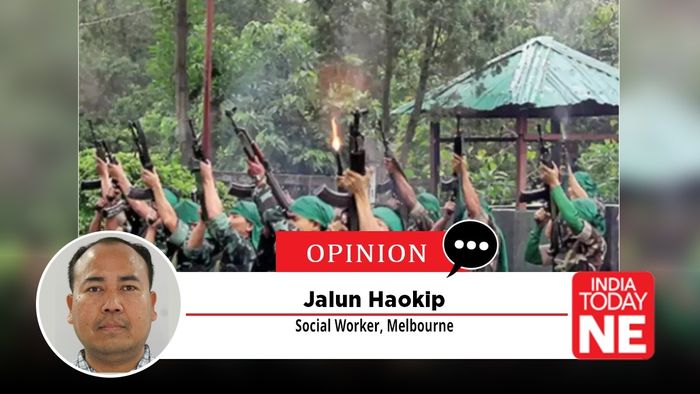
The Suspension of Operations (SoO) agreement, a peculiar government arrangement with armed militant organisations, was intended to suspend armed hostilities, bring Kuki, Zomi and Hmar armed militant groups into political dialogue, and create a pathway to a peaceful settlement, with cadres and weapons accounted for and agreed ground rules observed.
- Sep 30, 2026,
- Updated Sep 30, 2026, 3:00 PM IST
The Suspension of Operations (SoO) agreement, a peculiar government arrangement with armed militant organisations, was intended to suspend armed hostilities, bring Kuki, Zomi and Hmar armed militant groups into political dialogue, and create a pathway to a peaceful settlement, with cadres and weapons accounted for and agreed ground rules observed. Yet, after nearly two decades, the people of Manipur and the Government of India must ask whether the arrangement has delivered peace—or enabled Kuki militant groups to retain political influence, organisational structures and bargaining power while civilians continue to bear the consequences.
The question is particularly urgent for the Thadou community. The Thadou Inpi Manipur (TIM), its apex traditional body, demanded permanent and total abrogation of the SoO in its 31 August 2025 memorandum to the Government of India and the Manipur government, citing suppression and persecution of Thadou people and widespread violation of their human rights, electoral interference, intimidation, extortion, pressure on village authorities, interference in community affairs, factional violence and militant proliferation. The concern is especially acute because Kuki SoO groups operate extensively in Thadou-inhabited areas.
From Temporary Arrangement to Entrenched System
The SoO process began in 2005 and was formalised in 2008 through a tripartite arrangement involving the Government of India, the Manipur government, and the United People's Front (UPF) and Kuki National Organisation (KNO) armed militant groups. Its ground rules require adherence to the Constitution, Indian laws and Manipur's territorial integrity; renunciation of violence; and prohibition of killing, kidnapping, ambushing, extortion, intimidation, carrying arms in public, and imposing taxes or fines on civilians.
The revised agreement of 4 September 2025 reaffirmed Manipur’s territorial integrity and a negotiated solution within the existing framework, including the state’s territorial integrity, while strengthening provisions on designated camps, weapons, physical verification, and Joint Monitoring Group (JMG) oversight. Such an arrangement was inherently transitional, not a basis for granting armed organisations a permanent political role.
Yet successive extensions, concerns over fresh recruitment, and alleged proxy or associated formations raise questions about its effectiveness. These include the Kuki National Army–Burma (KNA-B), reportedly involved in cross-border terrorism and narco-terrorism and described as a proxy of the Manipur-based KNA/KNO and, allegedly, of the KNF too; the Kuki National Front (Nehlun), associated with the KNF; and the United Kuki National Army (UKNA), allegedly initially established as a KNO armed-wing proxy.
Jangboi Kipgen, Home Secretary of the SoO-affiliated KNF, also serves as Chairman of the Unified Command of Kuki armed groups comprising SoO and non-SoO organisations. Several other proxy groups have reportedly changed names over time. This raises a basic question: can the SoO fulfil its purpose if armed networks continue operating beyond the organisations formally covered by it?
An Interconnected System of Influence
What has emerged is not merely a collection of separate organisations but an interconnected ecosystem involving Kuki SoO militant organisations, political actors, civil-society bodies, religious institutions, clan and family networks, and influential individuals. At its centre are SoO militant organisations and alleged proxy bodies including the Kuki Inpi and Kuki Students’ Organisation (KSO), alongside church networks such as the Kuki Christian Church (KCC) and Kuki Worship Service (KWS).
These networks reinforce one another through community mobilisation, violence-glorifying Kuki supremacist ethnocentric and false genealogical narratives, political objectives, and ideological or moral legitimation through religious platforms and self-styled spiritual and cult figures. Their influence also extends into political circles, government departments and public institutions through patronage, financial leverage and institutional connections, including access to contracts, development and welfare funds.
When Ground Rules Exist Without Consequences
The central criticism of the SoO is not that it lacks rules, but that violations have occurred without consequences proportionate to their seriousness. The JMG exists to monitor compliance, and the revised 2025 agreement provides for firm action, including review of the SoO.
Monitoring, however, is not enforcement. Criminal offences must be investigated and prosecuted according to law, while systematic or repeated violations should prompt reconsideration of the arrangement. Otherwise, obligations exist formally while violations are absorbed into the political process.
In March 2023, the Manipur state government under then Chief Minister N. Biren Singh withdrew from the tripartite SoO arrangement with some groups, including KNO/KNA, signalling that violations should have consequences. The decision drew strong reactions, followed by escalation that culminated in the large-scale violence in Churachandpur on 3 May 2023. Armed, camouflaged militants belonging to the KNA/KNO SoO group were also reported to have participated in the violence that day.
When Militancy Enters the Ballot Box, Democracy Erodes
Democracy requires citizens to organise and vote freely, communities to function independently, government employees to work without intimidation, and businesses and households to operate without unlawful demands. TIM's memorandum describes Kuki militant involvement in electoral politics through candidate endorsements, village-level directives, voter intimidation, pressure on village chiefs, bloc voting and vote targets. It cites, for example, a 2019 diktat by KNA deputy commander Thahpi directing village-level compliance with KNO-supported parliamentary candidate Benjamin Mate.
This involvement continued across successive elections, with political alignments shifting with the prevailing context. KNO supported Congress during the Congress years and BJP during BJP rule. In 2022, KNO publicly backed BJP candidates in its operational areas, while UPF issued similar directives to chiefs, village authorities, community leaders and voters. During the April 2024 parliamentary election, KNO and KIM issued directives supporting Congress candidates and mobilised to enforce them. The recurring pattern raises an institutional question: have Kuki SoO groups become a convenient vote bank for political parties, giving armed militancy continuing political utility? The issue is not permanent loyalty to one party, but the ability of armed organisations to influence civilian voting.
I have personally witnessed and experienced incidents in which voters were denied their right to vote, mass booth capture and rigging occurred, voting machines were tied with bamboo and tape to favour a particular candidate or party, and citizens were punished for refusing militant diktats. Questions have also been raised about government stipends to SoO cadres, alleged unauthorised “tax collection gates” on roads and highways, percentage cuts from government contracts, and extortion from citizens' salaries and incomes.
Examples of alleged political links include Paolienlal Haokip (Saikot), openly supported by then KNO President P.S. Haokip; Kimneo Haokip Hangshing (Saikul), whose husband David Hangshing is Chief of the KRA/KNO; Nemcha Kipgen (Kangpokpi), Manipur’s Deputy Chief Minister, whose husband Sema Kipgen is Chairman of KNF/UPF; Letpao Haokip (Tengnoupal), who received support from UKLF/UPF and KNA/KNO; Haokholet Kipgen (Saitu), supported by KNF/UPF and a close relative of KNF Home Secretary Jangboi Kipgen; and Letzamang Haokip (Henglep), supported by KNO, including KNF (MC) leader Th. German Kuki, a close relative.
Political parties should seek votes directly from citizens; armed groups should not play a role in how civilians vote. Such relationships blur the boundary between armed influence and constitutional authority, eroding democratic institutions and the rule of law.
The Problem Extends Into Civilian Life
The allegations extend beyond elections to intimidation, coercion, interference with village authorities and pressure on community activities.
A complaint filed in October 2025 documented alleged coercive monetary collections in Motbung and K. Phoipi, including a collection directed by the Kuki Revolutionary Front (KRF). An NDTV report of 26 July 2025, “Exclusive: Blank Papers, Multiple Credits — Manipur’s Multi-Crore Highway Compensation Mystery,” alleged that Jangboi Kipgen, Home Secretary of the SoO-affiliated KNF, collected a significant percentage of land-compensation payments from beneficiaries, allegedly by forcing them to sign blank papers.
Kuki SoO armed groups have also obstructed Thadou-Meitei peace initiatives. A planned Thadou Inpi–COCOMI meeting in May 2023 was canceled after KNF, a Kangpokpi-based SoO group, opposed it and issued death threats against Thadou leaders.
Other incidents include the killing of Thadou literature leader and peace advocate Nehkam Jomhao by Kuki militants; the attack on the Thadou Students' Association office in Moreh; repeated attacks and assassination attempts targeting Thadou leader Michael Lamjathang Haokip; restrictions on Thadou organisations and community activities; and allegations that Thadou people have been pressured to abandon their Thadou identity in favour of a Kuki identity.
An earlier Moreh case also illustrates allegations of armed influence over civilians. On 23 July 2017, 18-year-old Nengneingah Khongsai was shot dead by Sasat Haokip, a KNA/KNO cadre. The criminal case was reportedly withdrawn following a customary settlement, allegedly under pressure from KNA/KNO.
Threats Following the Thadou Convention
The conflict over the peaceful assertion of Thadou identity became particularly visible after the Thadou Convention in Guwahati adopted its 10-Point Declaration on 1 November 2024, affirming distinct Thadou identity, separate from Kuki, and rejecting violent extremism.
On 4 November, the SoO-affiliated KNF condemned the declaration and threatened Thadou leaders, including with death. Thadou Community International (TCI) rejected the KNF's claims and condemned the threats as contrary to democratic principles, the Constitution and the SoO framework. Police registered an FIR, but the reported lack of arrests or prosecution has raised concerns about accountability.
Earlier, in July 2018, TSA-GHQ leaders filed a PIL before the Manipur High Court against KNO/KNA leaders, including P.S. Haokip and Thenkhothang Haokip, following the shooting at the TSA Moreh office and what they described as government inaction.
These incidents illustrate why SoO accountability cannot be confined to designated camps. Its real test is whether civilians are protected from armed interference in their political, social and community life.
Armed Groups Cannot Become a Parallel Government
The revised 2025 ground rules require designated camps to be relocated away from areas vulnerable to conflict. This is particularly relevant to former Chief Minister N. Biren Singh’s proposal of 24 September 2026. He proposed fresh physical verification of cadres covered by the SoO and other peace arrangements, comparing their numbers with the strength recorded when the agreements were signed. Since the ground rules do not permit fresh recruitment, this would establish whether cadre numbers have changed. He further proposed temporarily confining verified cadres and their weapons to designated camps for two to three months, with weapons securely locked and periodically verified.
The former Chief Minister’s approach contrasts with that of current Chief Minister Y. Khemchand Singh, whose position has been criticised as pro-Kuki SoO militant groups. His assertion that the SoO is not a state subject is particularly contentious, given that the Manipur government is an official party to the tripartite arrangement. As a signatory, the state government cannot easily distance itself from responsibility for implementing the agreement or addressing its consequences within Manipur.
Growing Demand for Abrogation
The demand for abrogation is not confined to the Thadou community. The Manipur Legislative Assembly adopted a resolution on 29 February 2024 urging the Government of India to abrogate the SoO pact with all militant groups under UPF and KNO.
In September 2026, 29 civil-society organisations in Manipur called on the Government of India and Manipur state government to abrogate the SoO agreements, citing ground-rule violations, violence and criminal activities by armed groups operating under the arrangement.
The demand gained further urgency following the killing of six Naga civilians in May 2026. Their bodies were reportedly found nearly a month later, dismembered and beheaded, amid allegations that their remains had been cooked and served to their families while they were held captive by Kuki militants. These killings and other incidents allegedly involving militants belonging to a Kuki SoO group have intensified calls to end an arrangement criticised for failing to protect civilians and for alleged perpetrators not having been brought to justice.
How Kuki SoO Militancy Differs From Other Insurgent Groups
Unlike many other insurgent groups, which are either proscribed or operate under government ceasefire or peace arrangements with restrictions on their activities, Kuki SoO armed militant groups have been operating openly within civilian communities, often with apparent impunity, while retaining access to weapons. While many insurgent groups boycott government-run elections or refrain from electoral involvement, Kuki militant organisations have, by contrast, been openly interfering in elections, directing voters, and facilitating or participating in electoral malpractice and mass rigging. An armed organisation operating under a government-supervised SoO arrangement should have no role in determining how civilians vote or live their everyday lives.
The Kuki SoO militancy has been described as “state-enabled” or “state-sponsored” militancy and as part of Kuki appeasement politics. Whatever label is used, the fundamental institutional question remains: why should organisations bound by agreements prohibiting violence, extortion and intimidation retain the capacity to exercise political and economic influence over civilians?
Political Settlement: Autonomy Without Armed Power
Reports suggest a political settlement could involve greater autonomy and powers for existing Autonomous District Councils (ADCs), while retaining them within Manipur's territorial integrity and administration. Former Chief Minister N. Biren Singh spoke publicly about such an approach in August 2023, expressing willingness to end SoO militancy while rejecting demands for a separate administration. There have also been suggestions that militant leaders could receive positions such as chairmanships of upgraded councils as part of a settlement.
If such a settlement can help end militancy, so be it. But any settlement must address weapons, armed structures and coercive power over civilians. Peace cannot mean that militant organisations retain weapons and political leverage indefinitely, or that elections and community life remain under their influence.
A Bridge Cannot Become the Destination
If the SoO was intended as a bridge from armed conflict to political dialogue and ultimately a peaceful settlement, Manipur and the Government of India must ask where that bridge has led. If political influence, civilian interference and repeated ground-rule violations continue without meaningful consequences, the arrangement risks undermining the democratic and peaceful order it was intended to facilitate.
Demanding SoO abrogation does not necessarily mean ending political dialogue. Political grievances can be addressed through negotiation, but without armed influence over civilian life or democratic processes. Militant organisations cannot govern civilians, determine political representation or exercise authority simply because they operate under a government arrangement.
The government’s first duty is to protect unarmed citizens, not armed militants. No militant organisation should intimidate voters, dictate political choices, control communities or claim authority over civilians. Political power belongs to the people; legitimate authority belongs to constitutional institutions.
The SoO was meant to lead from the gun and violence to dialogue, and from dialogue to a peaceful settlement—not to make armed organisations permanent political stakeholders. Ground rules without enforcement are merely words. The Constitution must prevail over the gun, and civilian authority over militant power.
The SoO arrangement was meant to end armed militancy, not institutionalize it. After nearly two decades, that transition must now be completed. Kuki SoO militancy must end.
The writer, Jalun Haokip (MSW), is a Melbourne-based native of Manipur with professional experience in social work across mainstream and Indigenous Australian communities. He currently works as a family violence practitioner within the Victorian Government in Melbourne.