Manipur is not an “Ethnic Conflict” — It is a test of India’s Democracy
The violence that began in India’s northeastern state of Manipur in May 2023 has routinely been described, both domestically and internationally, as an “ethnic conflict.”
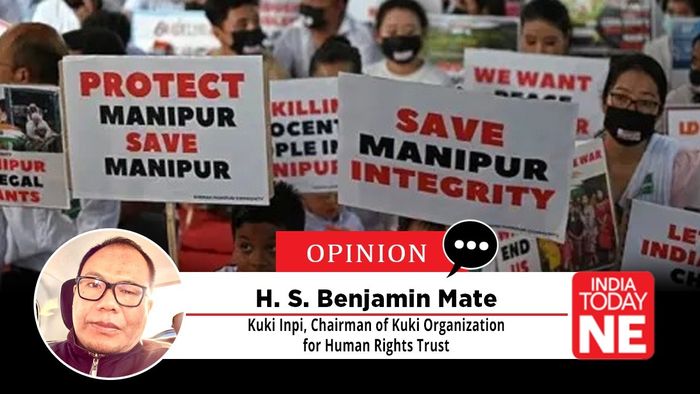
- Dec 07, 2025,
- Updated Dec 07, 2025, 1:30 PM IST
The violence that began in India’s northeastern state of Manipur in May 2023 has routinely been described, both domestically and internationally, as an “ethnic conflict.”
That is a mistake—and a dangerous one.
An “ethnic conflict” suggests rivalry between roughly equal communities, driven by historic tensions or mutual hostility. What unfolded in Manipur was not that. It was prolonged, asymmetric, and deeply structural. It was not the failure of coexistence; it was the failure of institutions.
When Imbalance Is Rebranded as Conflict
The Meitei community forms a demographic majority in Manipur and dominates political and administrative structures in the capital, Imphal. The Kuki-Zo community is a minority, largely residing in the hill districts.
In conflicts where one group controls the state apparatus and the other does not, violence is not symmetrical by default. It becomes structural.
Thousands of Kuki-Zo civilians were forcibly displaced from their homes. Entire villages disappeared from maps. Churches were burned. Families fled to relief camps that still do not resemble anything close to normal life. These are not the outcomes of a “clash.” These are the markers of forced removal.
Language matters. When persecution is reduced to “tension,” international attention softens. Accountability dissolves. And victims become invisible.
Governance by Silence
What has distinguished Manipur is not only the scale of violence but the scale of official inaction.
Weapons disappeared from government armories. Armed groups moved in open daylight. Arrests remained minimal. Recovery efforts slowed. Segregation deepened.
International human-rights law recognises that responsibility arises not only from what states do but from what they fail to prevent. When authorities have the capacity to intervene and do not, the law does not treat that as neutrality. It treats it as culpability.
In Manipur, omission became policy.
Culture as Cover for Power
Another feature of the crisis has been the elevation of obsolete royal symbolism into active political identity.
Manipur’s former monarchy has no constitutional authority. Yet royal imagery and cultural revivalism have been woven into present-day governance as instruments of emotional legitimacy. This shift is not about preserving heritage. It is about manufacturing consent through symbolism.
Political systems often turn to tradition when institutions falter. And when ritual is asked to replace justice, communities burn in their shadows.
Security, Selectively Enforced
In any democracy, security laws should apply equally. In Manipur, they did not.
Extraordinary legal powers were imposed in minority-dominated hill districts while being removed from valley areas dominated by the majority population. One region experienced normalisation; the other experienced militarisation.
This is not a technical choice. It is political discrimination.
Under international law, selective policing of populations based on identity is a form of persecution.
When Courts Speak and the Ground Remains Silent
India’s judiciary expressed concern early and often. It monitored investigations. It sought explanations. It demanded accountability.
But courts do not command police forces. They issue instructions.
If those instructions fail to produce outcomes, something greater than legal failure is at work. It is executive paralysis.
Journalism’s Defining Moment
Perhaps the most global failure is narrative failure.
Much of the press has insisted on treating this tragedy as a “conflict between communities,” rather than an accountability crisis.
Balanced reporting without structural analysis becomes fiction. True neutrality is not silence—it is courage.
History does not judge journalism by whether it avoided offense. It judges journalism by whether it exposed power.
And About the Word Many Fear
The term “genocide” is not about emotion but intent. Only courts can determine it.
But when a group is singled out, displaced, demonised, and denied protection, international law demands inquiry—not avoidance.
At minimum, Manipur already satisfies the criteria for:
• persecution,
• forced displacement,
• discrimination,
• crimes against civilians.
If genocide is not yet declared, then investigation—not euphemism—is the obligation.
A Democracy Under Examination
Manipur is not just a regional tragedy. It is a national mirror.
The question is not whether two communities fought.
The question is whether India’s institutions held their ground when it mattered.
History will remember not the classifications we used but the lives we protected and those we did not.