Mini kingdoms on the brink: Manipur’s assault on Kuki chieftainship risks a northeastern uprising
The Kuki-Zo Council’s (KZC) December 1 thunderbolt—objecting to “renewed attempts” to activate the Act—isn’t tribal intransigence; it’s a firewall against cultural genocide. In a state where 4,700 homes and 386 churches lie in ashes from May 2023’s inferno, forcing chiefs to relinquish lands without consent could detonate a revolution unseen in India’s delicate Northeast frontier.
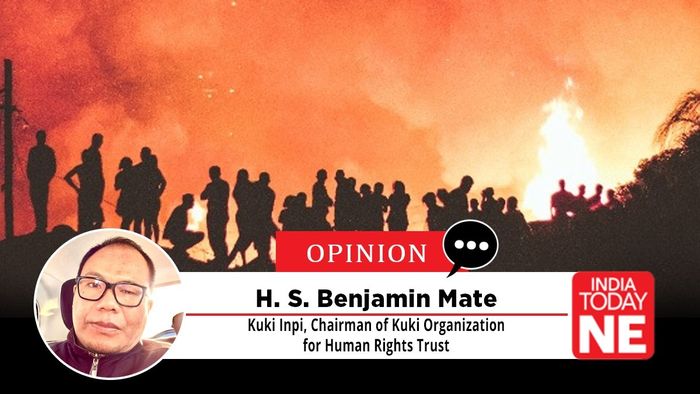
- Dec 12, 2025,
- Updated Dec 12, 2025, 10:49 PM IST
As Manipur reels from President Droupadi Murmu’s December 12, 2025, visit—hailed in Imphal as a beacon of unity but boycotted in Kangpokpi as a slap to 60,000 displaced Kuki-Zo souls—the state’s valley elite are dusting off a 58-year-old relic: the Manipur Hill Areas (Acquisition of Chiefs’ Rights) Act, 1967. This dormant law, meant to “democratize” tribal lands by vesting hereditary chiefs’ rights in the state with nominal compensation, was unanimously passed amid post-merger euphoria but shelved for decades due to fierce hill resistance. Now, amid ethnic partition and militia shadows, its revival smells of a scorched-earth strategy: not reform, but erasure of tribal custodianship over 92% of Manipur’s 22,327 square kilometers of hill terrain, home to just 40% of the state’s 2.85 million people.
The Kuki-Zo Council’s (KZC) December 1 thunderbolt—objecting to “renewed attempts” to activate the Act—isn’t tribal intransigence; it’s a firewall against cultural genocide. In a state where 4,700 homes and 386 churches lie in ashes from May 2023’s inferno, forcing chiefs to relinquish lands without consent could detonate a revolution unseen in India’s delicate Northeast frontier. History whispers warnings: from Nagaland’s 1950s insurgency to Tripura’s 1980s tribal revolts, tampering with customary institutions has always backfired spectacularly.
Roots in Resilience: Chieftainship as the Northeast’s Democratic DNA
Tribal chieftainship isn’t a feudal anachronism—it’s the Northeast’s pre-colonial bedrock, practiced by Nagas, Mizos, Garos, Kukis, and others long before British “pacification” or Indian accession. Post-1947, independence didn’t bulldoze these systems; it hybridized them, layering grassroots democracy atop custom through the Sixth Schedule (1950), which empowers Autonomous District Councils (ADCs) in Assam, Meghalaya, Tripura, and Mizoram to codify traditions while electing representative bodies. By 2025, Nagaland’s 60-member Legislative Assembly—born of 1963 statehood—balances 16 tribal councils with modern governance, resolving 70% of disputes via customary courts. Mizoram’s Village Councils Act (1953) elects heads while honoring chiefs as advisors, slashing land conflicts by 40% since 2000.
Meghalaya exemplifies this evolution. In the Khasi and Jaintia hills—mini-kingdoms where Syiems (chiefs) once owned all village lands, wielding judicial and allocative power akin to medieval lords—the 1972 statehood birthed ADCs under the Sixth Schedule. Chiefs weren’t guillotined; they transitioned via compensation akin to privy purses—monetary settlements for relinquishing proprietary claims, with lands vesting in community dorbar shnongs (elected councils). Today, over 7,000 Khasi villages operate hybrid models: 60% of land decisions are made by elected bodies, while 40% are guided by customary heirs, per a 2023 Meghalaya High Court ruling upholding the balance. The result is stability: Meghalaya’s ethnic flare-ups number under 50 annually, versus Manipur’s 200-plus since 2023.
Kuki-Zo Mini-Kingdoms: The Eldest’s Burden, the Council’s Wisdom
Enter the Kuki-Zo, whose 500 plus hill villages (spanning Churachandpur, Kangpokpi, and Tengnoupal and Chandel) mirror this ethos but with sharper edges forged by exclusion. The Haosa (chief)—always the eldest male of the founding clan—inherits not just a title but trusteeship over communal lands, jhum fields, and water sources, embodying Zo oral epics where leadership is duty, not dominion. No divine right here: the Haosa governs with a “cabinet” of Semang (chief functionary, overseeing welfare), Pachong (defense chief, managing security), Lhangsam (speaker, facilitating assemblies), and Thihpu (judges, enforcing customs through fines or exile). Selected from non-founding clans, this council ensures equity—resolving 80% of disputes internally, per a 2022 Kuki Inpi study, without court queues.
Land is communal, but Haosa-held. In Kuki lore, soil is an ancestral debt, allocated through galmu (assembly) consensus. This structure shields against outsiders—vital in hills where 70% of arable land is jhum-dependent, sustaining 274,000 people in Churachandpur alone. Unlike Naga systems, where communities own land outright, Kuki chiefs’ “supreme authority” blocks state overreach—explaining why the 1967 Act, promising Rs 500–5,000 per chief (paltry by today’s standards), was never enforced. Only 10% were compensated by 1971, sparking boycotts that froze implementation.
Manipur’s original sin lies in its post-1949 merger settlement: only the Meitei maharaja pocketed a privy purse (Rs 3 lakh annually until its abolition in 1971), while over 300 tribal chiefs received nothing—leaving hill lands untouchable without consent. Contrast this with Meghalaya, where Syiems received transitional stipends (equivalent to up to Rs 10,000 monthly in the 1970s), easing the shift to dorbar rule. In Manipur, this asymmetry festers. Valley lobbies decry “feudal” chiefs as poppy barons, ignoring how the Act’s revival now—after the 2023 pogroms—targets Kuki lands for “development,”
Revolution’s Shadow: No Purse, No Peace
Enforcing the 1967 Act without safeguards would be catastrophic. With 10 Kuki MLAs demanding a Union Territory (echoing the 2012 Sadar Hills agitation) and CorCom shutdowns paralyzing the valley, abolition could mobilize 500,000 Kuki-Zo into armed defiance—dwarfing Nagaland’s 1956 revolt (10,000 insurgents) or Assam’s ULFA at its peak (3,000). The Supreme Court, decrying Manipur’s “lawless” partition, has urged Sixth Schedule expansion—yet the BJP-led government stalls, fearing Meitei backlash.
The solution is clear: mirror Meghalaya. Grant the Kuki-Zo a Union Territory with legislative teeth or a Separate State, offer privy purse-style settlements (Rs 50,000–2 lakh annually per chief, indexed to inflation), and hybridize governance through elected village councils under ADCs. This approach honors Article 371C’s hill safeguards and UNDRIP’s principle of free, prior, and informed consent—averting balkanization while democratizing without decapitation.
Manipur’s chieftains aren’t dinosaurs; they are democratic dyke-breakers, holding back floods of injustice. Sideline them without equity, and the hills won’t whisper—they will roar, redrawing India’s map in blood. New Delhi, learn from Meghalaya: Separate State/Administration form Manipur and purse first, peace follows.