Neither giveaways nor shocks: What Budget 2026 means for the Indian Household
Union Budget 2026 emphasises fiscal discipline and steady growth without new direct benefits for households. It focuses on infrastructure and social sector improvements while keeping tax slabs unchanged.
- Feb 04, 2026,
- Updated Feb 04, 2026, 4:08 PM IST
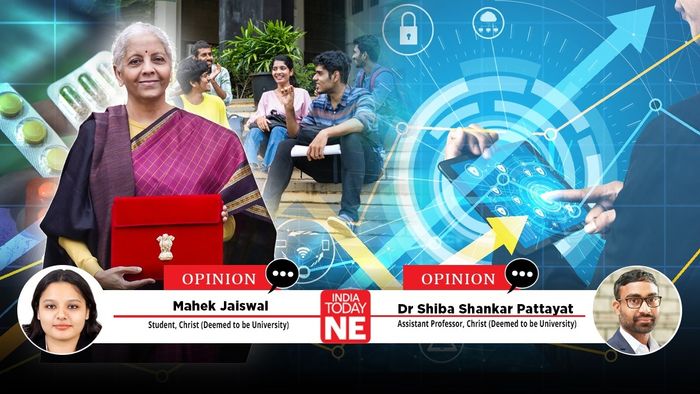
The Union Budget 2026-27, presented by Nirmala Sitharaman on 1st February 2026, may not offer dramatic tax cuts or subsidies, but it carries important implications for everyday Indian consumers. At present, when households continue to struggle with high living costs and global uncertainty, the Budget reflects a cautious approach of prioritising stability, creating employment and long-term growth over immediate consumption stimulus.
For most middle-income households and salaried individuals, direct tax rates remain unchanged. However, the government has introduced the new Income Tax Act, effective from April 2026, intending to simplify compliance and reduce litigation. While this does not directly increase disposable income, it lowers the time and financial costs associated with filing taxes. For millions of taxpayers, especially first-time filers and young professionals, a simpler system could translate into greater predictability and ease of planning finances.
Some targeted relief has been provided. The Budget reduces Tax Collection at Source (TCS) on overseas education, medical expenses and tour packages to 2 per cent. This is significant for families increasingly spending on foreign education and healthcare. According to official estimates, outward remittances under the Liberalised Remittance Scheme have crossed USD 25 billion annually in recent years, indicating that such relief will benefit a growing section of urban households.
Healthcare costs are another area of limited but meaningful consumer relief. Custom duty exemptions on several critical medicines, including drugs used in cancer treatments and rare diseases, are expected to reduce prices. This is particularly relevant in India, where out-of-pocket expenditure still accounts for nearly 60 per cent of total healthcare spending, placing a heavy burden on household incomes.
In terms of prices and inflation, the Budget avoids broad customer subsidies on fuel or food. Instead, it relies on supply-side measures, especially infrastructure investment. Capital expenditure has been increased to ₹12.2 lakh crore in 2026–27, up from ₹11.2 lakh crore the previous year, which is around 8 per cent growth. Improved transport, logistics and urban infrastructure are expected to reduce the cost of moving goods, which could eventually stabilize price for consumers. However, these benefits are likely to impact gradually rather than immediately. While revenue expenditure has increased at a growth rate of 6.21 per cent. But in absolute term capital expenditure is lagging behind the revenue expenditure. To compensate for the revenue expenditure government borrows 24 per cent, and 20 per cent is paid for the interest. It indicates that only 4 per cent benefit is obtained from the government borrowing, which is very negligible.
On the other hand, the budget is also focused on employment and income prospects, and there is a clear emphasis on linking education, skills and job creation. The government’s focus on infrastructure, manufacturing, MSMEs and services is aimed at generating employment in Tier II and Tier III cities where new industrial growth centres are being developed. The Budget prioritises capacity-building through education and skill development. Proposals such as universities near industrial corridors, expanded vocational and professional training and creation of the High-Powered Education to Employment and Enterprise Standing Committee seek to ensure that education translates into employment. Over time, it is expected to strengthen job prospects and wage stability, especially for young workers entering the labour market.
The Budget’s commitment to fiscal discipline also has indirect benefits. By keeping the fiscal deficit at 4.3 per cent of GDP, the government signals stability to financial markets. This helps contain interest rates, which affect the cost of home loans, vehicle loans and consumer credit. For households already managing EMIs, macroeconomic stability matters as much as direct tax reliefs.
Overall, the Budget 2026-27 reflects a strategic choice to support households through stable prices, job creation and predictable policies rather than short-term giveaways. For an average Indian, the gains may be gradual, but if growth and employment improve as intended, the real impact will be felt in secure incomes and better economic opportunities over time.