No Lasting Peace Without Ending Armed Militancy in Manipur
Peace in Manipur cannot be achieved merely by reducing the intensity of violence. Nor can it be secured through temporary ceasefires, Suspension of Operations (SoO) agreements, political declarations, or arrangements that allow armed organisations to retain their weapons, cadres, and command structures while using armed power to expand their political, social, and territorial influence—advancing supremacist agendas, vote-bank politics, personal wealth, and vested interests.
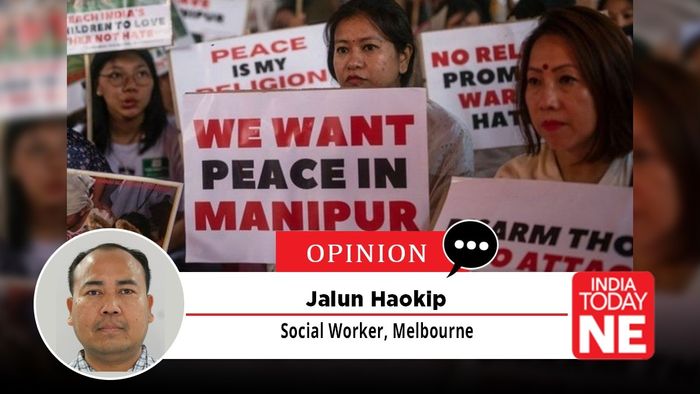
- Aug 29, 2026,
- Updated Aug 29, 2026, 2:39 PM IST
If It Was Possible in Kashmir and Other Parts of India, Why Not in Manipur?
Peace in Manipur cannot be achieved merely by reducing the intensity of violence. Nor can it be secured through temporary ceasefires, Suspension of Operations (SoO) agreements, political declarations, or arrangements that allow armed organisations to retain their weapons, cadres, and command structures while using armed power to expand their political, social, and territorial influence—advancing supremacist agendas, vote-bank politics, personal wealth, and vested interests.
With more than 50 armed militant groups operating in Manipur to pursue competing demands—including around 40 Kuki-branded groups (both SoO and non-SoO)—armed militancy and its associated violence have become an entrenched reality for the people of Manipur for decades.
The latest incident of the killing of four Naga civilians on 27 August by suspected Kuki militants under the Suspension of Operations framework with the Government of India and the Government of Manipur is yet another grim reminder of this unresolved crisis. There is little reason to believe such violence will be the last unless the machinery sustaining armed violence is dismantled. When weapons remain in circulation, armed cadres remain organised, and coercive power stays outside effective civilian control, killings, retaliation, and counter-retaliation will continue indefinitely, with innocent civilians repeatedly paying the price.
If Manipur is to move from conflict to genuine and lasting peace, armed militancy must ultimately end.
This is not a call to ignore the grievances, fears, or aspirations of any group. On the contrary, durable peace requires legitimate grievances to be heard and addressed through democratic and constitutional means. But there must be an unequivocal distinction between political dialogue and armed coercion. No democratic society can build lasting peace when political demands are backed by the threat or use of violence.
For decades, armed insurgency and militant movements have fuelled instability in Manipur. Their activities have produced insecurity, displacement, extortion, intimidation, economic disruption, and deep inter-communal mistrust. The present crisis has demonstrated with devastating clarity how quickly armed mobilisation can turn political and social disagreements into communal conflict.
Guns and Violence Cannot Be the Foundation of Peace
A ceasefire or suspension of operations can temporarily stop the shooting, but it does not end the conflict. If armed organisations continue to possess weapons, maintain cadres and command structures, and retain the capacity to mobilise violence, renewed conflict remains inevitable—as Manipur has experienced repeatedly. This is why every serious peace process must ultimately confront the essential questions: who possesses the guns, who controls them, and under whose authority they are allowed to remain?
A meaningful peace process cannot legitimise or institutionalise a parallel system in which armed organisations exercise influence over territory, communities, or civilian institutions. Nor should civilians be expected to live indefinitely under the shadow of armed groups. Peace requires a decisive transition from the politics of the gun to the politics of dialogue, elections, law, and constitutional institutions. Political differences may be negotiated, but they must never be enforced through violence.
Disarmament Is Not Surrender—It Is the Path to Normalcy
Ending armed militancy should not be portrayed as the humiliation or surrender of any community. It must be understood as a collective step towards restoring normal life, democratic governance, and the rule of law. Disarmament, demobilisation, political negotiation, settlement, and rehabilitation can provide a structured pathway for combatants to leave armed organisations and return to civilian life. Former cadres should be offered education, vocational training, employment, and reintegration opportunities, while those responsible for serious crimes must remain subject to due process.
Such a process would remove one of the principal obstacles to rebuilding trust. When civilians know political disputes will no longer be settled through armed confrontation, the space for dialogue expands. When communities are confident their security does not depend upon maintaining armed formations, reconciliation becomes achievable. A gun may impose silence, but it cannot create peace.
What Happens to Communities That Have No Armed Group?
This question cannot be ignored. Communities such as the indigenous Thadou are particularly vulnerable when armed groups—especially Kuki militant groups accused of pursuing deeply anti-Thadou agendas and seeking to suppress or eliminate Thadou identity—are allowed to operate with impunity or exercise coercive influence over civilian life. An unarmed community cannot reasonably be expected to defend itself indefinitely against organised armed groups while state institutions, whose fundamental responsibility is to protect citizens, appear unable or unwilling to provide effective protection. This creates a profound and unacceptable imbalance: those who possess guns acquire greater power, while those who refuse to militarise are left exposed and vulnerable.
That cannot be the basis of a just peace. If Manipur is allowed to descend permanently into a confrontation between armed groups—with communities trapped behind competing lines of coercion and civilians paying the price—the state cannot simply stand by and manage the consequences. The Government of India and the Government of Manipur have a responsibility to break this cycle. They must listen to victims of violence, displaced people, the intimidated, and communities that have suffered, rather than allow the voices of armed organisations and their proxies—including so-called civil society organisations—to carry greater weight simply because they possess guns.
The state must first and foremost protect the unarmed, the vulnerable, and the victims of violence—not accommodate or shield those who wield guns or perpetrate crime. No peace process is credible if the price of peace is borne disproportionately by unarmed civilians while those responsible for violence retain coercive power. A peaceful and democratic society cannot be built by placing one foot in democracy and the other in armed coercion.
Peace Requires One Law and One Security Framework
Another essential condition for lasting peace is the restoration of the rule of law. A functioning democracy cannot accommodate multiple armed authorities operating alongside the state. Every citizen must be free to identify according to their own ethnic identity without coercion, intimidation, or interference. They must be able to travel, work, trade, farm, and return to their homes without negotiating competing armed jurisdictions. No individual or armed organisation should have the power to dictate how another citizen identifies, where they live, or how they exercise their fundamental rights.
The state must possess the legitimate and effective capacity to protect every citizen, regardless of ethnicity, political affiliation, or residence. This does not mean security measures alone can solve Manipur's problems—military and police action cannot substitute for political reconciliation, economic development, and social healing. But the reverse is equally true: reconciliation cannot succeed while civilians remain vulnerable to armed violence. Security and dialogue are not mutually exclusive; Manipur urgently needs both.
The International Lesson
Conflicts around the world demonstrate a recurring principle: while armed movements may begin with political grievances, prolonged militarisation creates new grievances and entrenched cycles of violence. Weapons empower hardliners, weaken moderates, silence ordinary civilians, and make compromise difficult. They render political moderation dangerous and create incentives for escalation. Every killing creates another wound, every displacement another grievance, and every retaliatory attack another layer of mistrust. Eventually, communities become trapped in a conflict that bears little resemblance to the original dispute. This is precisely the danger Manipur now faces, and it must not allow such conditions to become permanent.
If Ending Armed Militancy Was Possible in Kashmir, Why Not in Manipur?
This question must be asked openly: if India has been able to confront, reduce, and in some cases end armed insurgencies in Kashmir—including those sustained with foreign support—and in other parts of the country, why should Manipur remain trapped indefinitely in a system where armed organisations retain military structures and political influence? Why should the people of Manipur be expected to accept a situation that would be considered unacceptable anywhere else in India?
The question is particularly grave regarding Kuki-branded armed militant groups operating under the Suspension of Operations (SoO) framework with the Government of India and the Government of Manipur since 2008. It raises fundamental questions about the consistency of the state's approach. While Meitei militant groups are outlawed by the Government of India and do not operate openly within civilian communities, and Naga insurgent groups are either outlawed or subject to ceasefire arrangements, the SoO framework has allowed Kuki-branded militant groups to maintain a substantial presence in civilian areas while retaining their organisational structures and access to firearms and weapons. Allegations concerning proxy armed groups and influence over government institutions, state machinery, and civilian affairs are profoundly difficult to reconcile with democratic governance and the rule of law.
The SoO arrangement was intended to facilitate dialogue and create conditions for a political settlement within the territorial integrity of Manipur, subject to periodic review and ground rules governing signatories' conduct. Yet serious concerns have repeatedly been raised regarding violations and enforcement failures. These include allegations of community coercion; unauthorized taxation and extortion; electoral interference (including candidate selection and vote manipulation); intrusion into social, political, religious, and church affairs; the assertion of parallel authority; and other practices that target civilians—particularly members of the Thadou community—and constrain their ability to freely assert, preserve, and protect their distinct identity.
When an arrangement permits armed organisations to retain military capacity while infringing upon the political, civil, and human rights of civilian population, the issue extends far beyond conventional security concerns. It becomes a question of constitutional governance, democratic accountability, and the state's fundamental duty to protect its citizens. The SoO should therefore not be assessed merely by whether its signatories refrain from attacking government security forces. It must also be judged by whether it protects civilians, preserves legitimate civilian authority, prevents intimidation and coercion, upholds fundamental rights, and provides a credible, time-bound pathway toward disarmament, demobilisation, and lasting peace.
Repeated violations of the SoO ground rules without meaningful consequences, combined with a failure of the parties, including the Central and State governments and militant groups, to adequately acknowledge and address them, risk turning the SoO from a peace mechanism into one that preserves armed power and entrenches impunity. An arrangement that permits persistent insecurity and coercive authority cannot be presented as a durable peace process. True peace requires more than the absence of open conflict: it demands the restoration of civilian authority, equal protection under the law, accountability, freedom from intimidation, and the dismantling of structures that enable armed groups to exercise power over civilian life.
No Government Should Outsource Democratic Authority to Armed Groups
Even more disturbing are allegations of political patronage and electoral influence involving armed groups and their networks. If armed organisations are used to influence elections, support political interests, intimidate voters, interfere with polling, manipulate outcomes, or otherwise undermine the democratic process, ordinary citizens are effectively denied their fundamental right to exercise their franchise freely. No citizen should have to cast a vote under the shadow of a gun, nor should anyone have their vote suppressed or rendered meaningless through force or coercion. No armed organisation should have the power to determine who governs or whose political interests prevail.
No political party—Congress, BJP, or any other—should treat armed organisations as electoral assets or political vote banks. The gun must never become an instrument of democratic politics. Democracy cannot coexist with political power exercised through armed coercion, intimidation, or fear. Nor can any government credibly claim to restore peace while allowing armed actors to retain the capacity to dictate to communities or influence political outcomes.
The larger question is unavoidable: Is the continued political accommodation of armed groups genuinely serving the interests of the people of Manipur, the state, and India as a nation? If such accommodation allows armed militant organisations to retain coercive power, undermine civilian authority, interfere with democratic processes, and perpetuate insecurity, then it is fundamentally incompatible with democratic governance, the rule of law, and the rights and freedoms of citizens. The authority to govern must come from the people through their free and fearless choice—not from the barrel of a gun.
Political Aspirations Must Have a Democratic Pathway
Ending militancy does not mean suppressing political aspirations. People and communities have every right to preserve their identity, culture, land, traditions, and legitimate political interests. They have the right to organize, petition governments, contest elections, form civil society organisations, and demand constitutional protections. But these aspirations must be pursued through peaceful, democratic mechanisms.
The moment an armed organisation claims the right to determine political outcomes through force, ordinary citizens lose their freedom to disagree. Democracy weakens, civil society shrinks, and communities become increasingly dependent upon armed actors claiming to speak on their behalf. No community's future should be held hostage by the gun.
Peace Must Also Mean Justice and Accountability
The call to end militancy must go hand in hand with accountability. There can be no durable reconciliation if victims believe violence has been rewarded, ignored, or forgotten. At the same time, collective blame must be firmly rejected. Individuals and organisations must be held accountable for their actions; entire communities must not be punished for crimes committed by specific actors.
A credible peace process should combine disarmament with justice and legal accountability, truth and formal acknowledgment of victims' suffering, comprehensive rehabilitation and reintegration programmes, fair compensation and support for victims, the safe and dignified return of displaced persons alongside the restoration of homes, livelihoods, and property, and genuine, sustained reconciliation between communities. Peace without justice is fragile, while justice without reconciliation perpetuates resentment. Manipur requires both.
The Choice Before Manipur
Manipur faces a fundamental choice. One path is continued militarisation: more weapons, more armed formations, heightened territorial competition, deeper insecurity, and another generation raised in fear and mistrust. The other path is challenging, but necessary: lay down the guns, restore the rule of law, protect civilians, address legitimate grievances, hold perpetrators accountable, and resolve political differences through constitutional and democratic means.
Ending armed militancy will not, by itself, solve every problem in Manipur. The causes of the conflict are complex and require sustained political, social, and economic engagement. But one truth remains clear: no political settlement can be durable if armed coercion remains an accepted instrument for pursuing political objectives.
The ultimate objective should therefore not be another ceasefire, another Suspension of Operations, or yet another extension that merely postpones resolution while armed organisations retain their weapons, cadres, and structures. The objective must be a comprehensive and irreversible transition from armed conflict to democratic politics. Manipur cannot build a peaceful future on the foundations of armed coercion. It must build that future on the rule of law, equal citizenship, justice, dialogue, democratic institutions, and mutual respect.
The guns must fall silent—not merely because another ceasefire or Suspension of Operations has been signed, but because violence is no longer accepted as a legitimate instrument of power, control, electoral influence, or vote-bank politics. Armed coercion must give way to democratic choice, and the gun must never again be allowed to dictate the lives of citizens or determine the future of Manipur. That is not surrender. That is peace.
About the author: The writer, Jalun Haokip (MSW), is a Melbourne-based Manipur native with professional experience in social work across both mainstream and Indigenous Australian communities in various parts of Australia. He currently works as a family violence practitioner within the Victorian Government in Melbourne. He can be reached at jalunhaokip@gmail.com.