Raja's journey from Assam to Vantara: The law and logic
Raja's proposed journey from Assam to Vantara must follow statutory transfer procedures. The injured calf's lasting medical needs make specialised lifelong care central to the decision.
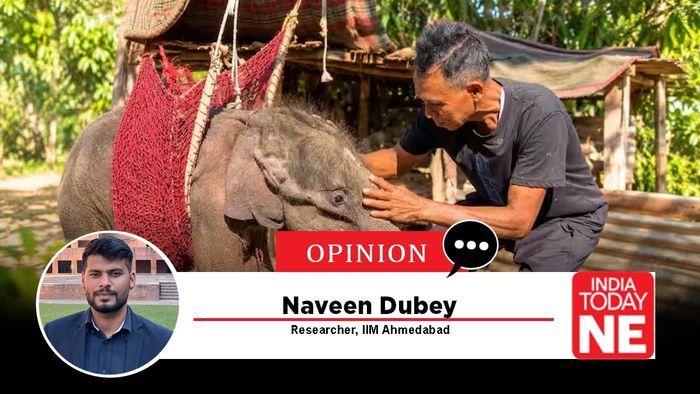
- Nov 21, 2026,
- Updated Nov 21, 2026, 1:39 PM IST
An explainer on the Captive Elephant (Transfer or Transport) Rules, 2024, the importance of an owner's request and statutory approvals, and why specialised, lifelong care is essential for a captive-born calf like Raja, whose fracture may leave him with a permanent deformity.
Moving a captive elephant is not simply a matter of transportation. It involves legal compliance, animal welfare, veterinary assessment and the responsibility to ensure that the animal's long-term needs are met. In India, the Captive Elephant (Transfer or Transport) Rules, 2024, notified by the Ministry of Environment, Forest and Climate Change on 14 March 2024, establish procedures for transferring and physically moving captive elephants within and across states. The framework ensures that such decisions are examined through the appropriate authorities, keeping the animal's welfare at the centre.
The 2024 Rules distinguish between the transfer of an elephant and its transportation. Under Rule 3, a transfer application must be submitted in Form I to the Deputy Conservator of Forests (DCF), or an officer not below that rank, having jurisdiction over the area where the elephant is registered. The application includes details of the existing owner, the elephant's identity and microchip number, its present facility, the proposed recipient facility and the purpose of the transfer.
The importance of this framework becomes particularly evident in the case of Raja, a young elephant calf born on 2 October at Gogamukh, Assam.
His life began with a serious injury. On his first day, his young and frightened mother kicked him, resulting in a complete fracture of his femur. He also did not receive colostrum, the first milk that provides newborns with essential immunity. Since then, Raja has battled an infection, repeated severe blood-sugar crashes, liver stress, pressure sores, an umbilical hernia, and severe blood-sugar crashes. His condition remains fragile, requiring continuous monitoring and intensive medical attention.
Since 8 October, a team of 11 people at Pohumara, Assam, comprising three veterinarians, two paravets, five mahouts, and one supervisor, has been involved in his care. Their contribution has been central to managing his condition and addressing his daily needs. Raja's medical needs extend beyond immediate treatment.
Given that he was born in captivity and the severity of his fracture may leave him with a permanent deformity, he requires an environment where his condition can be managed throughout his life. His future must be assessed not just in terms of immediate recovery, but also in terms of sustained veterinary supervision, appropriate nutrition and long-term rehabilitation. For an animal with such complex medical requirements, the suitability of a specialised wildlife care facility becomes central. Vantara has developed dedicated veterinary infrastructure for elephants, including the world's largest elephant hospital, supported by approximately 80 wildlife veterinarians and a population of more than 260 rescued elephants.
Access to specialised infrastructure, experienced professionals and continuous medical supervision can make a meaningful difference to an animal like Raja. His care requires veterinarians, paravets and mahouts to work together, managing existing complications while anticipating future medical challenges.
Lifelong care is not simply about treating an injury. It is about recognising that certain conditions can have lasting consequences and ensuring that an animal receives appropriate treatment, nutrition, a suitable living environment and consistent attention throughout its life. Vantara's efforts for Raja reflect this responsibility. Its commitment extends beyond stabilising his immediate condition to providing a safe environment, continuous medical attention and lifelong care, recognising that his fracture may leave him with permanent physical limitations.
Raja's story also forms part of a wider year of elephant rescue and care in Assam in 2026. From Maniki and Joymoti to the Tezpur tusker and now Raja, these cases highlight the different circumstances in which elephants require human intervention. They also bring attention to the mahouts, caregivers, veterinarians, and field teams whose work often remains outside the public spotlight.
Ultimately, moving an elephant the right way is not just about securing permissions or completing a transfer. It is about ensuring that the animal's needs are met long after the movement has taken place. For Raja, the question is not simply where he should be housed today, but where he can receive the specialised attention he may need for the rest of his life. That is the responsibility that should guide every decision concerning his future.