Selective Skepticism
In a functioning democracy, suspicion is not a vice; it is a safeguard. Electoral processes must be questioned, scrutinised, and stress-tested—not to weaken them, but to reinforce public faith. Yet there is a thin but consequential line between principled scepticism and convenient cynicism.
- Dec 18, 2025,
- Updated Dec 18, 2025, 12:24 PM IST
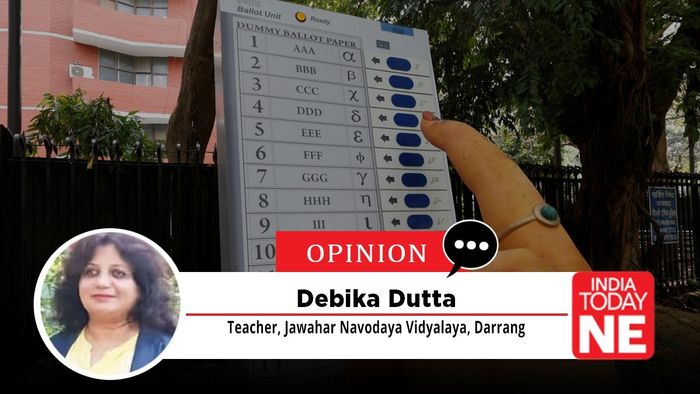
In a functioning democracy, suspicion is not a vice; it is a safeguard. Electoral processes must be questioned, scrutinised, and stress-tested—not to weaken them, but to reinforce public faith. Yet there is a thin but consequential line between principled scepticism and convenient cynicism. When doubt emerges only after defeat and vanishes after victory, it ceases to be vigilance and begins to look like expediency. Rahul Gandhi’s recent remarks casting aspersions on Electronic Voting Machines (EVMs), contrasted sharply with Nationalist Congress Party (SP) leader Supriya Sule’s firm rejection of such doubts, expose an uncomfortable paradox within India’s Opposition: institutions are trusted only when outcomes align with expectations.
The EVM debate itself is hardly new. It reappears with ritual predictability after electoral reverses and recedes quietly when results favour those who question the system. Rahul Gandhi’s renewed insinuations about EVM “rigging” fit squarely into this familiar cycle. The issue is not that questions are being raised—democracies thrive on inquiry—but that they are raised without evidence, without consistency, and without recourse to constitutional remedies. In a country of India’s size and diversity, where elections are conducted by a constitutionally empowered Election Commission and routinely examined by the judiciary, such allegations carry consequences that extend well beyond partisan rhetoric.
It is in this context that Supriya Sule’s intervention assumes significance. Having won four Lok Sabha elections through the very EVMs now under suspicion, she articulated what many in opposition politics prefer to avoid acknowledging. If the machines are systematically compromised, how does one account for repeated victories across parties, ideologies, regions, and election cycles? Her defence was not of a ruling dispensation, but of the electoral architecture itself. In doing so, she underlined a distinction the Opposition increasingly blurs—the difference between challenging a government and corroding faith in the Republic’s institutions.
The empirical record is stubbornly resistant to conspiracy. Since the nationwide adoption of EVMs, power at the Centre has changed hands more than once. At the state level, governments led by the Congress, the BJP, the Left, and a host of regional parties
have alternated with striking regularity. Electoral outcomes have been fragmented, not uniform; volatile, not scripted. If EVMs were manipulable at scale, such political diversity would be not merely unlikely, but mathematically implausible.
Judicial scrutiny has been equally unequivocal. Courts, including the Supreme Court of India, have repeatedly examined challenges to EVM integrity and found no evidence of tampering. The introduction of the Voter Verifiable Paper Audit Trail (VVPAT) system further strengthened transparency, allowing physical verification of electronic tallies through random audits. These safeguards were not cosmetic concessions extracted through street pressure; they emerged from institutional review and legal deliberation.
Yet rhetoric often overwhelms record. Rahul Gandhi’s critique resonates with a global mood of mistrust, where losing parties across democracies increasingly flirt with delegitimising outcomes rather than confronting organisational or ideological failure. But India’s Opposition cannot afford such shortcuts. Unlike many populist movements elsewhere, the Congress claims a legacy rooted in institution-building. To question outcomes without submitting evidence, petitions, or technical audits is not merely politically imprudent—it is historically incongruous.
There is also a glaring strategic contradiction. The same Opposition that questions EVMs at the national level celebrates victories secured through them in state elections. When results favour non-BJP parties, the verdict is hailed as the people’s voice; when they do not, the machinery is suspect. This asymmetry does not escape public notice. It breeds a corrosive cynicism—one that suggests democracy is acceptable only when it delivers agreeable outcomes.
Supriya Sule’s position exposes this hypocrisy with disarming clarity. She does not argue that EVMs are infallible—no electoral system is—but insists, rightly, that allegations of rigging demand evidence commensurate with their gravity. Elections are not opinion polls to be dismissed when inconvenient; they are constitutional events whose legitimacy rests on restraint as much as scrutiny.
At a deeper level, the controversy reflects an Opposition struggling with narrative and self-assessment. Electoral defeat demands introspection—about leadership, messaging, alliances, and ground-level engagement. It is far easier to fault the machine than to confront uncomfortable truths. But politics conducted through alibis rarely
produces renewal. When leaders signal to supporters that defeat is manufactured, they absolve themselves of responsibility and deprive their cadres of the hard discipline reform requires.
There is, moreover, an institutional cost to such rhetoric. Repeated, unsubstantiated allegations weaken public trust in the Election Commission, demoralise polling personnel, and cast suspicion on the millions of ordinary citizens who ensure elections run smoothly. In sensitive regions—border states or conflict-prone areas—this erosion of trust can have consequences far more serious than electoral disappointment.
None of this is an argument for silence or submission. If Rahul Gandhi or any political leader possesses credible evidence—documented irregularities, forensic inconsistencies, or technical breaches—the Constitution offers ample avenues for redress. Courts are open, audits can be demanded, expert committees can be engaged. What weakens democracy is not dissent, but the replacement of proof with performance.
Ironically, some of the Opposition’s own voices have articulated a more responsible path. Supriya Sule is not alone. Several regional leaders have cautioned against the casual delegitimisation of electoral outcomes, recognising it as a dangerous habit. Their stance reflects political maturity: defeat the ruling party through ideas, organisation, and credibility—not by sowing doubts that ultimately rebound.
India’s democracy has endured because contests have been fierce but acceptance graceful. From the Emergency to coalition churn, from sweeping mandates to humbling reversals, the sanctity of the ballot has remained common ground. To gamble with that consensus for short-term mobilisation is to invite long-term damage.
Ultimately, this debate is not only about EVMs. It is about whether political leadership is willing to respect outcomes it cannot control. Skepticism, when principled, strengthens democracy. When selective, it indicts its practitioners. The Opposition must decide whether it wishes to rebuild trust with voters—or merely rationalise their verdict.
Democracy does not demand blind faith. It demands honest doubt—and the courage to accept defeat when doubt fails.