Shared River, Uneven Stakes: The Challenges of Transboundary Teesta Management
The Teesta is no longer just a river shared by India and Bangladesh; it is becoming a fault line shaped by dams, diversions, politics and a changing climate. With water reaching downstream communities in shrinking quantities and China entering the conversation, the question is no longer whether the river needs a deal, but how long both sides can afford to wait.
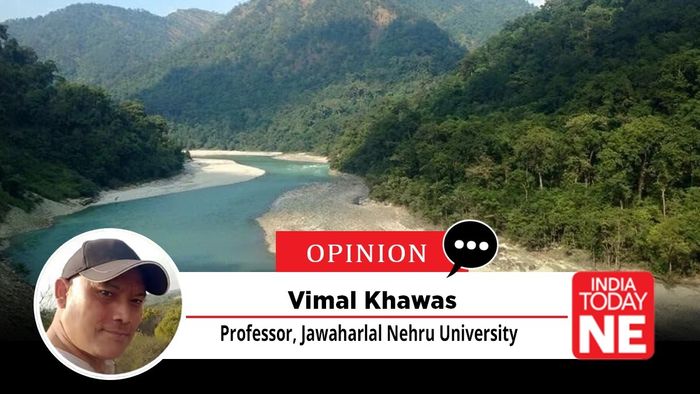
Vimal Khawas
- Aug 20, 2026,
- Updated Aug 20, 2026, 4:21 PM IST
The Teesta River originates in the Eastern Himalayas and winds through Sikkim and West Bengal before entering Bangladesh and joining the Jamuna (Brahmaputra). It stands as a stark emblem of South Asia’s unresolved water dilemmas. As the fourth major river in the eastern South Asian region after the Ganges, Brahmaputra and Meghna, it sustains livelihoods, agriculture and ecosystems across a basin of roughly 12,159 square kilometres, with around 17 per cent lying in Bangladesh. The basin’s population distribution further underlines the stakes: Sikkim accounts for only 2 per cent, while West Bengal accounts for 51 per cent and Bangladesh 47 per cent, highlighting an uneven demographic distribution across the basin. Yet decades of unilateral upstream interventions, stalled negotiations and mounting environmental pressures have turned this shared resource into a source of friction. Drawing from analyses of hydropower dynamics, declining flows and recent diplomatic signals, it is clear that transboundary Teesta management demands urgent, cooperative solutions that prioritise equity, sustainability and regional stability over short-term national gains.
At the heart of the challenge lies the stark asymmetry of control and impact. Roughly 83 per cent of the basin falls within India and gives upstream actors decisive influence over downstream flows. In Sikkim and the Darjeeling hills, a cascade of existing and proposed hydropower projects, part of India’s broader 50,000 MW hydroelectric initiative, has altered the river’s natural regime. Diversion of water through closed tunnels, reservoir impoundment and flow regulation have reduced peak discharges dramatically: from around 5,000 cumecs in the early 1970s to roughly 2,200–3,500 cumecs in later decades at key points in Sikkim and Darjeeling hills. Lean-season flows have plummeted further, with minimum discharges recorded as low as 86 cumecs and mean annual figures at Anderson Bridge declining sharply in the dry months.
Compounding this is the Teesta Barrage [https://maps.app.goo.gl/ea7Wyc3BmTsfjowm8] at Gajoldoba in Jalpaiguri, West Bengal, which diverts almost the entire Teesta flow into artificial canals to irrigate thirsty North Bengal districts covering hundreds of thousands of hectares, while leaving little for downstream Bangladesh. Bangladesh’s own Teesta Barrage [https://maps.app.goo.gl/TSiqZXLYohATw2ko9] was designed to support irrigation over 630,000 hectares in northern districts but receives only a fraction of the needed water. Joint River Commission data have shown Bangladesh receiving as little as 6.5 per cent of Teesta water in recent lean periods, the lowest ever recorded. During droughts, flows into Bangladesh have dropped from an expected 5,000 cusecs to around 400–500 cusecs.
These hydrological shifts translate into profound human and environmental insecurities. Studies of communities in Lalmonirhat and Kurigram of Bangladesh reveal that 35 per cent of river-dependent people have lost ancestral livelihoods as boatmen and farmers over two decades; 75 per cent have become day labourers; and many have been displaced multiple times by erosion and water scarcity. Agriculture, fisheries and related activities that once thrived across the “Teesta Eco-region” are under severe stress. The basin’s rich biodiversity that is part of the Eastern Himalayan hotspot faces threats from habitat destruction, flow modification, pollution and invasive species often amplified by dam engineering. Landslides in the geologically fragile Sikkim-Darjeeling catchment, already numbering over 10,000 in a century in Darjeeling alone, risk further destabilisation from reservoir-induced slope weakening and potential reservoir-induced seismicity. Climate change compounds these pressures: altered glacial melt, monsoon patterns and snowmelt run-off including GLOFs introduce greater unpredictability making historical flow data unreliable for future planning.
The political architecture of management has proved equally fraught. An ad hoc 1983 arrangement allocated 39 per cent of water to India and 36 per cent to Bangladesh, leaving 25 per cent unallocated. A more refined 2011 draft proposing roughly 42.5 per cent for India and 37.5 per cent for Bangladesh in the dry season came close to signing but collapsed under opposition from West Bengal which cited risks to its own farmers. India’s federal structure means that central government intentions must navigate state-level concerns. After Narendra Modi assumed office in 2014, the government pursued its “Neighbourhood First” policy with renewed vigour and maintained close engagement with Bangladesh through the Joint Rivers Commission. In 2017, Prime Minister Modi publicly assured an early solution to the Teesta issue during Sheikh Hasina’s visit. In June 2024, India offered to send a technical team and provide assistance for the conservation and management of the Teesta inside Bangladesh, partly as a constructive alternative amid Chinese interest. However, the formal water-sharing agreement remained elusive, primarily due to persistent reservations from West Bengal. Bangladesh, as the lower riparian, has consistently sought equitable sharing, arguing that upstream withdrawals and diversions violate principles of no significant harm and equitable utilisation. Neither country has ratified the 1997 UN Watercourses Convention, which emphasises sovereign equality, mutual benefit and good-faith cooperation. Ratification could provide a normative framework currently missing.
Recent developments highlight both the urgency and the complexity. Bangladesh’s new government has intensified efforts toward a Teesta River Comprehensive Management and Restoration Project aimed at addressing floods, erosion and dry-season shortages in five to six northern districts. China has offered technical and feasibility support following high-level visits, adding a strategic layer that concerns India given the project’s proximity to the sensitive Siliguri Corridor. Yet Bangladeshi Water Resources Minister Shahiduddin Chowdhury Anee has emphasised that Dhaka does not want the dispute to damage friendly ties with India. “The neighbouring country is a friendly country. They have to think that while they have their interests, we also have ours,” he stated recently, adding that “a friend should protect the interests of a friend.” India has responded by stressing that water cooperation must proceed through established bilateral mechanisms, notably the Joint Rivers Commission, and that all stakeholders including West Bengal and Sikkim must be consulted.
The challenges on the table are multi-dimensional. First, the absence of a binding, data-driven water-sharing agreement perpetuates uncertainty and resentment. Upstream hydropower and irrigation expansion continue without adequate downstream impact assessments or real-time information sharing. Second, environmental degradation- deforestation, siltation, pollution of once-majestic channels now carrying sewage, and loss of traditional water-harvesting systems- threatens long-term basin resilience. Third, inter-state tensions within India (Sikkim-West Bengal water releases causing downstream floods, for instance) risk escalating into larger disputes if unaddressed. Fourth, external involvement, while potentially beneficial for infrastructure, risks internationalising what should remain a bilateral matter and complicating trust. Finally, climate uncertainty demands adaptive, basin-wide planning rather than project-by-project interventions. This brings us to the idea of ‘Integrated River Basin Management’ covering the entire Teesta Basin.
An opinion grounded in these realities must insist on several critical priorities. Equitable sharing requires transparent hydrological data, realistic command areas that avoid excessive conveyance losses, and prohibitions on inter-basin transfers that further deplete the Teesta. Hydropower development in the upper catchment should incorporate strict environmental safeguards, including minimum environmental flows, and independent assessments of seismic and landslide risks. Both countries would benefit from ratifying the UN Watercourses Convention and strengthening the Joint Rivers Commission with technical capacity for joint monitoring and dispute resolution. Bangladesh’s restoration project deserves serious engagement from India, not as a rival to Chinese assistance, but as an opportunity for collaborative basin management that addresses erosion, flooding and lean-season shortages while securing India’s strategic interests. West Bengal’s legitimate concerns about water availability must be met through efficiency measures, alternative sources and compensatory mechanisms rather than indefinite vetoes.
The people of the Teesta basin -Lepcha, Bhutia and Nepali communities in the hills, agrarian populations in North Bengal and northern Bangladesh- cannot afford prolonged deadlock. Their livelihoods, food security and cultural ties to the river depend on flows that are increasingly contested. Cooperative federalism within India and genuine neighbourhood diplomacy with Bangladesh offer the only sustainable path. Unilateralism, whether through unchecked dams or external partnerships that sideline the upstream neighbour, will only deepen insecurity. As climate pressures mount and political windows open and close, comprehensive Teesta agreement whether framed as a treaty, integrated master plan or joint management framework is need of the hour. Failure to act on time risks converting a shared river into a permanent fault line undermining the very human and environmental security the basin has historically provided. The principles of mutual respect highlighted by Bangladesh’s water minister point the way: true friendship requires recognising that upstream interests and downstream needs are inextricably linked.
(The views expressed in this article are those of the author and do not necessarily reflect the views of India Today NE or its affiliates.)
MORE NEWS
Read more!