Silted Democracies: Wangchuk, Cockroach Politics and the Architecture of Vested Interests
Sonam Wangchuk joined the Jantar Mantar agitation over alleged exam leaks and marking irregularities. The protests reignited questions over paper leak networks, political opportunism and whose grievances draw national attention.
- Jul 29, 2026,
- Updated Jul 29, 2026, 8:04 PM IST
In the summer of 1996, at the end of my MA viva at Banaras Hindu University, an external examiner from Jawaharlal Nehru University, New Delhi asked what I intended to do next. A PhD, I said, and the UGC-NET. He looked at me with something between amusement and pity and offered a proverb: “Nadi Dilli mein hi sukh jaati hai” (the river dries up in Delhi itself).
I was twenty-three, and I read it as prejudice. I hail from the North East, a region the Indian mainland has long filed under “backward”, and I assumed he was telling a girl from the periphery that her ambitions would evaporate the moment they met the gatekeepers of the capital. I was too young to understand the second meaning. He may also have been telling me that merit itself dries up in Delhi, that the river of talent flowing in from the provinces never reaches the sea, because somewhere along the way the examination has already been sold. In 1996, the leaking of question papers was a discreet cottage practice, spoken of in whispers and largely tolerated as a norm. It was perhaps restricted to a few competitive exams like UGC-NET, but as reported by a 2004 newspaper survey, the culture of paper leaks — especially linked to medical entrance exams — is recalled as far back as 1972, with further leaks through the 1980s and 1990s. Three decades on, it is an industry (see below):
1990s–early 2000s (the pre-digital record)
Recurrent leaks of medical, board and PSC papers through the 1990s, poorly documented.
Vyapam (Madhya Pradesh): irregularities in its entrance tests were reported from the mid-1990s, with the first FIR filed in 2000.
2003 — CAT (IIMs): CAT papers leaked in Mumbai and Delhi in November 2003; the leak sent shockwaves through the IIMs.
2003 — MD/MS entrance cancelled in December 2003 following leak reports.
2004 — AIPMT/CBSE-PMT: the All-India Pre-Medical Test conducted by CBSE was cancelled after papers were leaked. The same season saw an AIIMS controversy, a series of Kerala PSC leaks, and leaks affecting the Punjab, UP, Maharashtra board exams and Mumbai University.
2006–2012 (central and entrance exams)
2006 — CBSE Class 12 Accountancy leak.
2006 — AIIMS PG entrance: the CBI chargesheeted 52 people, including several doctors, for using a pen-sized “DocuPen” scanner to leak the post-graduate medical entrance paper.
2007 — AIEEE engineering entrance leak; CPT exam leak.
2008 — PMT and CBSE Class 12 Economics.
2010 — Railway Recruitment Board (Mumbai): the RRB Mumbai chairman and nine others were later sentenced to five years’ rigorous imprisonment for leaking the 2010 assistant loco pilot exam.
2011 — AIIMS PG entrance: a Bluetooth-based racket, with candidates allegedly paying ₹25–35 lakh; and AIEEE papers leaked in UP, reportedly sold for ₹6 lakh, forcing a postponement.
2013 — the Vyapam scam (the benchmark case)
Exposed in Madhya Pradesh in 2013, the Vyapam fraud affected 13 examinations involving nearly 32 lakh candidates annually between the mid-2000s and 2013, using impersonators, leaked answer keys and tampered sheets. By 2015 more than 2,000 people had been arrested, including politicians, officials and middlemen, and the Supreme Court transferred the case to the CBI; in February 2017 the Supreme Court cancelled the degrees of 634 doctors. Official records referred to at least 23 “unnatural deaths” linked to the scandal.
2014–2019
2014 — CBSE Class 10 Mathematics.
2015 — AIPMT: Haryana Police uncovered a multi-state racket using vests fitted with micro-SIMs and Bluetooth devices; the Supreme Court cancelled the exam for more than 6 lakh students and ordered a retest.
2015 — UPPCS preliminary paper.
2016 — NEET Phase II: an inter-state network using “safe houses” charged students ₹10–30 lakh for promised papers.
2017 — NEET-UG: organised cheating and leak attempts, with arrests in Patna including medical students.
2018 — CBSE: the Class 12 Economics and Class 10 Mathematics papers were leaked via WhatsApp and re-conducted; a Delhi coaching-centre owner was arrested.
2018 — SSC CGL: screenshots of questions and answers circulated online, triggering large protests outside SSC headquarters in Delhi and a CBI inquiry; the CBI alleged answer keys were leaked and some candidates’ computers remotely accessed, and cases were registered against 17 people.
2018 — Gujarat police recruitment: leaked from a printing press in Manipal, Karnataka. UPSSSC recruitment leaks the same year.
2020–2023 (the state-recruitment wave)
2021 — UPTET: cancelled hours before it began for nearly 21 lakh candidates after papers circulated on messaging apps.
2021 — REET (Rajasthan): about 16 lakh candidates sat it; amid protests and internet shutdowns, the Gehlot government cancelled the Level-2 exam in February 2022.
2021 — Rajasthan Police SI: leaked from a Jaipur exam centre. Army Soldier (GD) CEE: cancelled after a racket uncovered by Military Intelligence and Pune Police, with serving personnel arrested.
2022 — RPSC Senior/2nd-grade Teacher (Rajasthan): the GK paper leaked hours before the exam; 44 people were arrested and the exam cancelled; RPSC member Babulal Katara was later arrested, having allegedly received ₹60 lakh for the leak.
2022 — Rajasthan Police Constable; BPSC 67th Prelims (cancelled after papers surfaced on social media); BSSC CGL (Bihar).
2023 — Bihar Constable: leaked from a private warehouse in Patna. RPSC Revenue Officer/Executive Officer exams cancelled; TPSC (Tripura) Junior Engineer paper.
2024 — “the year of paper leaks”
NEET-UG: more than 24 lakh candidates; the NTA scrapped results and handed the matter to the CBI, amid a grace-marks row and the removal of the NTA chief.
UGC-NET (June): cancelled a day after being held, affecting 9.08 lakh aspirants, after the home ministry’s I4C flagged the paper on the darknet; the case went to the CBI.
CSIR-UGC-NET postponed days after the UGC-NET cancellation; NEET-PG cancelled the night before, citing logistical issues.
UP RO/ARO (UPPSC): leaked from an exam centre in Prayagraj. UP Police Constable: the paper for 60,244 posts was leaked from a transport company’s warehouse in Ahmedabad on 17–18 February.
BPSC Teacher (TRE-3): leaked in transit from Patna to Nawada. Jharkhand CGL; alleged CSIR SO/ASO leak from Dehradun.
Response: the Centre notified a stringent anti-malpractice law and set up a high-level panel headed by former ISRO chief R. Radhakrishnan — the Public Examinations (Prevention of Unfair Means) Act, 2024.
2025–2026
2026 — NEET-UG: cancelled over leak allegations, with more than 24 lakh candidates, a CBI referral and a re-exam on 21 June; the trigger for the Jantar Mantar agitation.
2026 — JEE (Advanced): a cybersecurity lapse in the results portal, alongside the CBSE On-Screen Marking irregularities that drove this year’s protests.
And thanks to social media, it is finally impossible to ignore. That, at least, is the charitable reading of what unfolded this summer at Jantar Mantar.
The cockroaches at the gate
From early June, a movement calling itself the Cockroach Janta Party (CJP) occupied Delhi’s designated protest ground. The name was deliberate satire: it reclaimed a slur — reportedly a judicial aside likening India’s restless youth to cockroaches — and wore it as a badge. Founded by the US-based digital strategist Abhijeet Dipke as an online provocation and hardened into a physical sit-in, the CJP drew students, aspirants, professionals and families, alongside campus outfits from across the ideological spectrum; within days its Instagram following was said to have overtaken the BJP’s. Its demands were specific: the resignation of Union Education Minister Dharmendra Pradhan; justice and compensation — a figure of one crore rupees — for the families of NEET aspirants who died by suicide; the release of activist Sonam Wangchuk; and a wholesale overhaul of how the country conducts its examinations.
The immediate provocations were the alleged 2026 NEET-UG paper leak and irregularities in the CBSE’s On-Screen Marking system, which left thousands of candidates in limbo over their results. None of the allegations has yet produced a definitive official finding, and that caveat must be honoured. But the pattern is not new. In 2024 the NEET-UG scandal saw the head of the National Testing Agency removed, a CBI investigation opened, and the matter argued before the Supreme Court, even as the government insisted the leak was confined to a single centre near Patna. The river, it seems, keeps drying at the same bend.
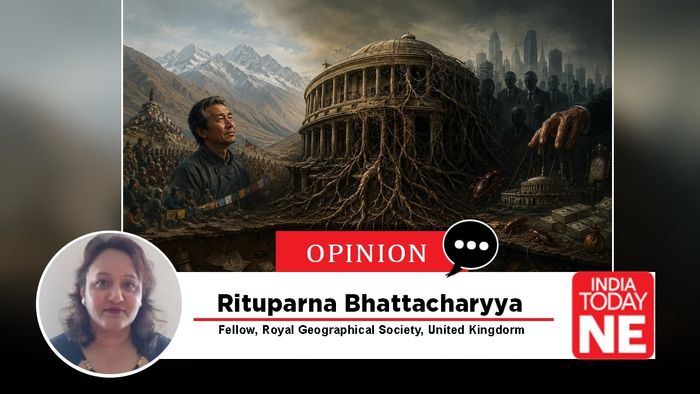
On 28 June, the agitation acquired a face the cameras could not resist. Sonam Wangchuk — the Ladakhi engineer, educationist and climate activist, freed only in March after roughly 170 days of preventive detention under the National Security Act — arrived at Jantar Mantar and began an indefinite hunger strike. Within weeks the movement could put tens of thousands on the street. And on 20 and 21 July, the state answered in the oldest grammar it knows: lathis, tear gas, batons and, by some accounts, pellet guns. By the police’s own count some 180 people were injured. Wangchuk was physically removed from the protest site.
And then, on 25 July, it was over. With the capital convulsed and images of injured students circulating, Dharmendra Pradhan submitted his resignation to the Prime Minister, writing that he did so partly to ensure that “anti-national forces” could not exploit the situation and that national unity held. Within hours the CJP declared victory — its spokesman announcing that the government had “accepted” the movement’s demands — and called off the agitation with immediate effect. Protesters celebrated at Jantar Mantar, some waving copies of the Constitution. A month-old satirical party had claimed a Union minister. It looked, briefly, like the cleanest victory Indian student politics had seen in a generation.
The fast that no one filmed
Here is where memory ought to intrude, and where the mainland’s conscience reveals its geography.
On 2 November 2000, soldiers of the Assam Rifles opened fire on civilians at a bus stop in Malom, near Imphal, killing ten — among them a sexagenarian woman and a teenage boy who had once received a national bravery award. A frail young woman named Irom Chanu Sharmila began a fast. She would not eat, she declared, until the Armed Forces (Special Powers) Act — the law that grants the security forces near-total impunity in “disturbed areas” — was repealed. She kept that vow for sixteen years.
For most of those years the Indian state held her in judicial custody, charged her annually with attempting suicide, and force-fed her through a tube in her nose to keep her alive for the next charge. The world’s longest hunger strike unfolded in a hospital ward in Imphal, and the mainland barely turned its head. There was no satirical hashtag, no crore-rupee demand, no procession of Members of Parliament in coordinated black. When Sharmila finally ended her fast in 2016 and stood for the Manipur Assembly in 2017, believing that power might achieve what suffering could not, the electorate she had bled for gave her roughly ninety votes.
Sixteen years of a woman starving for a constitutional principle earned a fraction of the national attention that a month at Jantar Mantar commanded. I do not say this to diminish the students. I say it because the contrast is the story. A body on hunger strike in Manipur is a regional curiosity; a body on hunger strike in Delhi is a national emergency. The North East is India’s constitutive outside — invoked in anthems, ignored in outrage.
The uses of a periphery
Notice, too, what it took for even Wangchuk to be heard. Ladakh’s demand for statehood and Sixth Schedule protection — the cause for which four young men died in police firing in Leh last September, and for which Wangchuk was jailed — had been drifting at the edge of national consciousness for years. It is only when it was welded to the pan-Indian grievance of the examination system that it re-entered the conversation. Ladakhi students marching in solidarity said as much, hoping that Wangchuk’s new prominence would drag the Sixth Schedule back into view. A charismatic leader from the Himalayan margin needed a “mainstream” vehicle to be legible to the mainland. Sharmila never found one. That is the difference between being seen and being used.
Were the students being used as pawns?
Which brings us to the uncomfortable question, and it deserves a candid answer rather than a partisan one.
Yes, the students were being instrumentalised. But by everyone.
The opposition arrived in force. Rahul and Priyanka Gandhi were detained during a sit-in outside the Prime Minister’s residence; Congress lawmakers, dressed in black, disrupted both Houses of Parliament in solidarity. Minister Pradhan’s rejoinder was to accuse the Leader of the Opposition of exploiting students as “political tools” and reducing them to props. There is force in that charge — and there would be even if Pradhan were not an interested party, since it is the government’s most convenient defence. But the hypocrisy is bipartisan, and it runs deeper than one press conference. The Aam Aadmi Party accused the Congress of “jugalbandi” with the ruling party — of staging a rival, camera-friendly dharna precisely to divert oxygen from the students’ own sit-in. When two opposition parties accuse each other of hijacking the same protest, the students may be forgiven for wondering whose future is actually at stake.
And the deeper hypocrisy is this: paper leaks have flourished under administrations of every colour. Rajasthan, Uttar Pradesh, West Bengal, Bihar — the map of leaked examinations does not respect party lines. The very leaders now demanding Pradhan’s head have presided over states where the river dried at the same bend. To weaponise the leak now, while treating one’s own record as ancient history, is opportunism, not conscience.
At the same time, instrumentalisation does not invalidate the grievance. That the opposition was using the students does not mean the students were wrong. The leaks are real, the suicides are real, the systemic rot of the National Testing Agency is real, and it long predates any leader’s photo-op. To dismiss a legitimate agitation merely because politicians attach themselves to it is to hand every incumbent a permanent alibi against accountability.
And yet the intent of the CJP itself demands the same unflinching scrutiny the movement demanded of everyone else. There is a darker reading, pressed hard by the government and its ideological family: that the movement was never really about examinations at all. BJP figures saw in it the choreography of a manufactured uprising — a “deep-state Trojan horse”, in senior advocate Mahesh Jethmalani’s phrase — and pointed to the movement’s own invocations of the Gen-Z revolts that had recently toppled governments in Nepal and Bangladesh, and to Arvind Kejriwal’s inflammatory rhetoric against the Prime Minister, as evidence that the true object was to bring down an elected government by the street rather than the ballot. The government went further and alleged a foreign hand: BJP MP Nishikant Dubey questioned who had financed founder Abhijeet Dipke’s travel to the United States and insinuated that the Soros Foundation might be paying his way — an extension of the now-familiar narrative that casts the financier George Soros as a sponsor of efforts to destabilise India, a narrative the party has previously attached to the Gandhis.
Honesty requires stating plainly where this stands. These are allegations, not findings. The CJP flatly denied them, dismissing the Soros-funding claim as a conspiracy theory and describing itself as a small, unfunded, leaderless and deliberately satirical outfit; no investigation has substantiated a foreign-money trail, and the wider Soros-destabilisation charge has itself drawn rebukes as far afield as the US State Department. To assert the funding as established fact would be to do to these young people precisely what we accuse the politicians of doing — using them. But the suspicion cannot simply be waved away either. A movement that built its entire moral authority on the demand to know “where the money went” in India’s examinations can hardly object when the same question is turned upon itself. The references to Nepal were real; the speed and sophistication of the mobilisation were real; the eagerness of every opposition formation to ride it was real. Whether that adds up to a conspiracy or merely to ordinary opportunism, the intent behind the cockroach — satire, or siege — deserves to be examined, not assumed.
A resignation is not a reform
And now the minister has gone — and almost nothing has been solved.
A resignation is a sacrifice, not a solution. It satisfies the theatre of accountability without touching the machinery of the offence. The paper-leak economy is not the handiwork of a single minister; it is a supply chain — printing presses and transport contractors, treasury custodians and examiners, commission insiders and coaching-centre mafias — that has survived governments of every colour, as the melancholy chronology above makes plain. Removing the man at the top of the ministry dismantles not one node of that chain. Tomorrow’s paper can leak from tomorrow’s warehouse under tomorrow’s minister.
If anything, the fixation on a scalp obscures the two things that might actually work. The first is institutional and unglamorous: hardened logistics, encryption, rotating question banks, secure computer-based testing, and genuine criminal consequences pursued to conviction rather than to the next news cycle — the drudgery of building a system that is difficult to corrupt. The Public Examinations (Prevention of Unfair Means) Act of 2024 and the Radhakrishnan committee were gestures in that direction; whether they harden into architecture or dissolve into announcements is the real test, and it will long outlast any one resignation.
The second is harder still, and it is the one we least like to name. We speak endlessly of the integrity of the system and almost never of the integrity of those who would game it. For every paper that is sold, there is a candidate — and a family — willing to buy it, willing to pay ten, twenty, thirty lakh rupees for a stolen advantage over a neighbour’s child. The leak has a demand side, and the demand side is us. No amount of institutional reform will hold if the culture continues to treat a cheated examination as a clever shortcut rather than a theft from the deserving. Building moral character — among the gatekeepers who sell the river, and among the recipients who would buy it — is slow, uncheerable, unmediagenic work. It wins no minister’s head and trends on no timeline. But a republic that will mobilise in a week to claim a resignation, yet cannot spare a generation to cultivate a conscience, is choosing the easier virtue.
Whose rivers reach the sea
So I return to that examiner in Varanasi, and to his proverb, which I now think was wiser than either of us knew. The river dries up in Delhi — and now in the examination centre, (in)directly implicating the private coaching industry too. It dries in the sold question paper and the rigged marking sheet. It dries in the selective conscience of a mainland that can mobilise in a week for an injury in the capital and cannot spare sixteen years of attention for an injustice in Manipur. It dries in the calculus of politicians, government and opposition alike, who love a protest only for as long as it photographs well.
A minister has resigned; the cameras have moved on; the silt remains. The question was never merely whether the opposition used the NEET students as pawns — it plainly did, and so, in its counter-messaging and its scalp-taking, did the government. Nor is it settled by asking whether a foreign hand stirred the water, though that question deserves an honest answer rather than a partisan reflex. The harder question — the one the mainland has never wanted to face — is whose rivers are permitted to reach the sea at all, and whose are left to silt up quietly, far from the cameras, in a hospital ward in Imphal.