The animal testing debate: Where should science draw the line?
As science advances and alternative technologies continue to evolve, the debate has shifted from whether animal testing should exist to how it can be conducted responsibly and whether one day it can be reduced or even replaced.
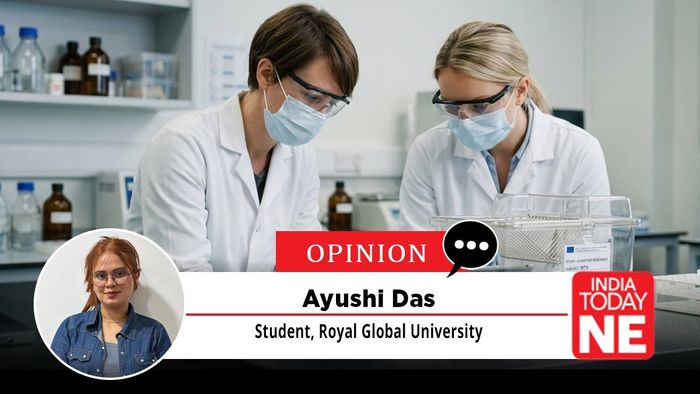
- Jul 11, 2026,
- Updated Jul 11, 2026, 1:29 PM IST
Behind every new medicine lies a difficult ethical question: How can researchers ensure human safety without causing unnecessary suffering to animals? For decades, animal testing has played a crucial role in developing vaccines, medicines and life-saving treatments. As science advances and alternative technologies continue to evolve, the debate has shifted from whether animal testing should exist to how it can be conducted responsibly and whether one day it can be reduced or even replaced.
Conversations with researchers, veterinarians, and conservationists reveal that while opinions differ on the future of animal testing, there is broad agreement on one point: scientific progress and animal welfare must go hand in hand.
Offering a laboratory research perspective, Rahul Kumar, a PhD scholar in Life Science, says animal testing remains an essential step before medicines reach human clinical trials. His research focuses on studying snake venom, understanding its effects in animal models and evaluating the effectiveness of commercially available antivenoms. According to Kumar, while in-vitro studies using cell lines are valuable, they cannot fully replicate the complex biological responses of a living organism. “Before any medicine is given to humans, we need to know whether it is safe or toxic. Results obtained in cell cultures do not always match what happens in a complete living organism,” he explains. He believes that when a medicine is ultimately intended for human use, testing in living animals remains necessary to better understand its safety and potential effects before it progresses to clinical trials.
The COVID-19 pandemic brought this debate into sharper focus. Before COVID-19 vaccines entered human clinical trials, they underwent preclinical studies, including research using animal models, to assess their safety and effectiveness. At the same time, the urgency of the pandemic accelerated efforts to develop alternative methods that could reduce dependence on animals in research. The challenge now is balancing scientific innovation with ethical responsibility.
Dr. Chandan Kumar Baruah, MVSc (Gynaecology), Retired District Veterinary Officer and a Life Member of the Indian Society for Study of Animal Reproduction (ISSAR) and the Indian Society for the Study of Reproduction & Fertility (ISSRF), believes animal testing remains necessary to ensure the safety of new medicines before they are approved for human use. However, he stresses that it should only be conducted when absolutely necessary and under strict ethical regulations to minimise suffering. Recalling the Diclofenac crisis, which caused a catastrophic decline in India’s vulture population after birds fed on cattle treated with the drug, he says scientific progress must always consider its ecological consequences. “Medical advancement should go hand in hand with compassion, ethical responsibility and ecological awareness,” he says.
From a wildlife conservation perspective, Anushka Saikia, Project Officer, Elephant Research and Conservation Division, Aaranyak, Guwahati, says her years of studying primates and human-wildlife interactions have reinforced the importance of considering animal welfare alongside scientific progress. She believes conservation is not only about protecting wildlife but also about understanding the complex relationship between people and animals. While recognising the value of animal-based research, she says scientists should continue developing and adopting alternative methods wherever possible to gradually reduce dependence on animal testing.
Echoing a similar view, Sagarika Mazumdar, a Zoology and Life Science scholar, believes animal testing should be carried out only when no reliable alternatives exist. While acknowledging its contribution to developing medicines and vaccines, she says research must follow strict ethical guidelines and ensure that animal suffering is minimised. “The conversation shouldn’t be about choosing science over compassion. It should be about finding the right balance,” she says, adding that greater investment in alternative technologies is essential for the future of biomedical research.
India has already taken significant steps to reduce unnecessary animal testing. The Prevention of Cruelty to Animals Act, 1960, along with the Committee for the Control and Supervision of Experiments on Animals (CCSEA) under the Ministry of Fisheries, Animal Husbandry and Dairying, regulates the use of animals in scientific research. Kumar explains that before any animal experiment begins, researchers must obtain approval from an Institutional Animal Ethics Committee by presenting the purpose of the study, justifying the use of animals and specifying the number required. Only after receiving ethical clearance can the research proceed. He also notes that scientific journals generally require researchers to provide ethical approval details before publishing studies involving animals, ensuring greater accountability.
Researchers are encouraged to minimise animal use by following the internationally recognised principles of Replacement, Reduction and Refinement (the 3Rs). During the conversation, Kumar noted that discussions in research ethics continue to evolve and referred to newer frameworks that build upon these principles. Regardless of the terminology, he emphasised that researchers should use fewer animals wherever possible and conduct experiments in ways that minimise animal suffering. India further strengthened animal welfare by banning animal testing for cosmetics in 2013 and prohibiting the import of cosmetics tested on animals in 2014.
Despite these developments, experts agree that there is no simple answer. While alternative methods continue to evolve, many complex diseases and biological processes still require whole-animal studies before treatments can safely move to human clinical trials. According to Kumar, animal testing enables researchers to optimise medicines, understand their effects and identify potential safety concerns before they are administered to humans. At the same time, he stresses that researchers should reduce the number of animals used wherever possible and conduct experiments in ways that minimise animal suffering. The debate, therefore, is no longer about science versus compassion; it is about ensuring that scientific progress never comes at the cost of unnecessary suffering.
As biomedical science continues to advance, researchers worldwide are exploring alternative methods that may one day reduce the need for animal testing. Although these approaches continue to evolve, many scientists believe they cannot yet replace animal studies in every area of medical research. Until reliable alternatives become widely available, the challenge is to ensure that animal testing is used only when scientifically necessary, under strict ethical oversight and with the highest standards of animal welfare.
The question, then, is no longer simply whether animal testing should continue. It is whether science can continue to save lives while causing the least possible harm that is an ethical balance that will shape the future of biomedical research.