The Cost of Not Counting
Assam has always been a state where numbers are not merely administrative details. They shape political debates, determine resource allocation, and often define how communities see themselves within the larger framework of the country.
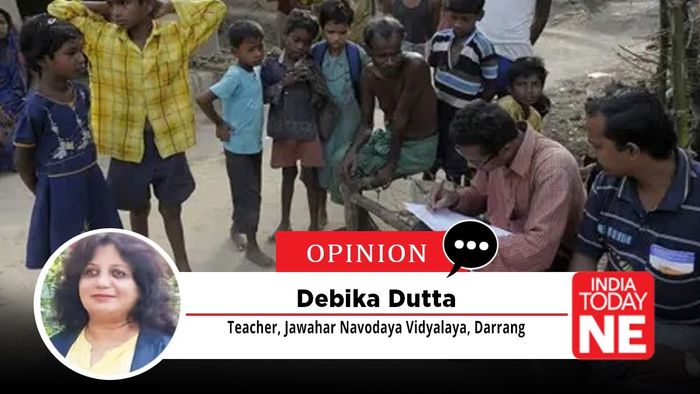
- Jun 06, 2026,
- Updated Jun 06, 2026, 2:08 PM IST
Assam has always been a state where numbers are not merely administrative details. They shape political debates, determine resource allocation, and often define how communities see themselves within the larger framework of the country. Yet much of this conversation still rests on demographic data from the 2011 Census, when Assam’s population was a little over 3.1 crore and urbanisation stood at just above 14 per cent. Since then, the state has changed in visible ways—its towns have expanded, migration patterns have shifted, and pressure on land, jobs, and infrastructure has increased—but the official demographic picture has remained frozen in time.
The same gap exists across India. The last Census, conducted in 2011, recorded the country’s population at about 121 crore. Since then, India has become the world’s most populous nation, according to international estimates, and has gone through a period of rapid demographic and economic transformation—declining fertility in several states, rising urbanisation, and large-scale internal migration reshaping both rural and urban landscapes. Yet planning continues to rely heavily on projections and sample surveys rather than a fresh, comprehensive enumeration. The forthcoming Census, delayed by more than a decade and a half, is expected to be India’s first fully digital exercise and one of the largest administrative undertakings in the world.
Not surprisingly, it has also drawn criticism.
Some argue that the Census has been delayed so long that its relevance has weakened, since governments now depend on alternative datasets and statistical models. Others express concern that caste enumeration may revive social divisions instead of helping address inequality. There are also serious questions around privacy in a fully digital system that will handle sensitive personal information at an unprecedented scale. And then there is the political sensitivity—demographic data inevitably feeds into debates on representation, resource distribution, and future delimitation, especially in states where population change is already a contested issue.
These concerns are not without substance. They reflect genuine anxieties about governance in a complex democracy. But they do not weaken the case for the Census; they underline it. A long gap in reliable data does not reduce the need for enumeration—it magnifies it. No system of governance, however advanced, can plan education, healthcare, housing, employment, or welfare delivery accurately without knowing the current structure of its population.
The debate on caste enumeration is particularly telling. Critics fear that counting caste will reinforce identities that India has long tried to move beyond. But caste already influences access to education, employment, and social mobility in ways that are widely acknowledged, even if unevenly documented. The real question, therefore, is not whether caste exists in public life, but whether policy can afford to ignore it. Refusing to measure inequality does not reduce it; it only makes it harder to address in any meaningful way.
Privacy concerns, too, must be addressed with seriousness, especially in a digital Census. Citizens are right to expect strict safeguards, confidentiality, and strong institutional accountability. But the solution lies in strengthening data protection systems, not in stepping away from the exercise itself. A modern state cannot function effectively without reliable data about its population, and the challenge is to ensure that trust in institutions grows alongside technological capability.
For Assam and the wider Northeast, the importance of the Census is even more immediate. Migration patterns, urban expansion, demographic shifts, and development disparities are not abstract policy issues here—they are part of everyday public life and political discourse. Guwahati’s rapid growth, pressure on urban infrastructure, changing population patterns across districts, and the evolving socio-economic profile of both rural and riverine areas underline a simple reality: governance requires updated data, not assumptions. Without it, public debate often becomes shaped more by perception than by evidence.
Assam’s population, now well above the 3 crore mark, continues to evolve, but without a fresh Census, policymakers are forced to rely on estimates when making decisions about welfare delivery, infrastructure planning, and administrative restructuring. In a region where demographic questions often intersect with identity and representation, this lack of updated information creates uncertainty rather than clarity.
There is also a deeper democratic point that is often overlooked. A Census is not just about counting people. It is about making people visible to the state in a formal and measurable way. The tea garden worker in Upper Assam, the flood-affected family living on a char, the migrant labourer in an expanding town, the young job-seeker in a semi-urban centre, and the elderly citizen in a remote village—all enter the statistical framework of governance only when they are counted. Visibility, in this sense, becomes the foundation of inclusion.
This is why the Census matters beyond its administrative function. It is an exercise in how a nation understands itself. Without updated data, both India and Assam risk making decisions based on an outdated picture of a rapidly changing reality.
The Census will not resolve Assam’s long-standing debates on migration, identity, or development. Nor will it remove political disagreement. But it can change the quality of those debates by grounding them in shared facts rather than competing assumptions. That shift alone is significant in a public discourse often shaped by perception more than evidence.
Ultimately, the issue is simple. A society can debate endlessly, but it cannot govern itself effectively without first knowing itself accurately. And that knowledge begins with something as fundamental—and as necessary—as counting its people again.