The illusion of perfection: How Influencer Culture is Reshaping Reality
Behind every perfect post lies a reality that rarely makes it to the feed. As influencer culture continues to blur the line between authenticity and performance, are we chasing inspiration—or comparing ourselves to an illusion?
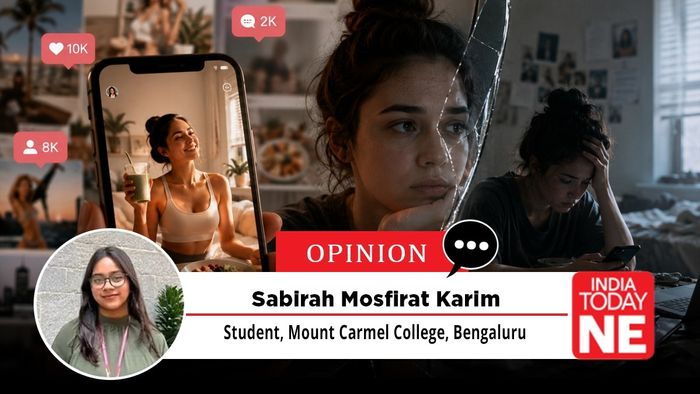
- Jun 11, 2026,
- Updated Jun 11, 2026, 4:36 PM IST
If one scrolls through any social media platform today, a familiar pattern emerges: perfect mornings, flawless skin, hyper-productive routines, and carefully curated lifestyles presented as effortless realities. Influencer culture has created a digital environment where life appears aesthetic and endlessly optimised. Beneath this polished surface, however, lies a growing concern- the normalisation of unrealistic expectations and performative behaviour, particularly among young audiences.
Social media rewards consistency, engagement, and visual appeal, encouraging creators to present versions of their lives that are not only polished but strategically constructed. The result is a blurring of boundaries between authenticity and performance, creating a digital landscape where reality is filtered, edited, and optimised for consumption.
Perhaps the most significant shift brought about by influencer culture is the redefinition of perfection. Traditionally, perfection was associated with exceptional achievements or rare moments of success. Today, it has become embedded in everyday life. A productive day is no longer simply about completing necessary tasks; it is portrayed as a seamless sequence of workouts, healthy meals, skincare routines, journaling sessions, and self-improvement practices. Individually, these habits may be beneficial. Collectively, however, they are often presented as the standard which should be maintained by everyone in society.
This creates an implicit expectation that ordinary life should be extraordinary.
For young people already navigating academic, social, and personal pressures, such standards can be difficult to reconcile with reality. Everyday experiences- messy, inconsistent, and imperfect by nature- begin to feel inadequate when measured against carefully curated content. The issue is not that these lifestyles exist, but that they are frequently presented without context.
Influencer content often captures moments of productivity, joy, achievement, or aesthetic appeal while leaving out the less visible aspects of life: fatigue, uncertainty, failure, boredom, and monotony. Audiences are left comparing their complete, unfiltered realities with highly selective fragments of someone else's life. It is a comparison that is inherently unequal and often psychologically damaging.
Unlike traditional forms of media, social media does not simply ask audiences to observe. It invites participation. Users engage with influencer culture, imitate it, and contribute to it. This participatory nature intensifies the pressure to conform to visible standards, making comparison more pervasive and more difficult to escape.
Alongside unrealistic expectations, performative behaviour has become one of the defining features of influencer culture. Activities that were once private, like self-care routines, personal reflections, acts of kindness, and even vulnerability, are increasingly performed before an audience.
This shift raises important questions about authenticity. When actions are shaped by their potential visibility, do they remain entirely genuine? Or do they become performances designed, consciously or unconsciously, to meet audience expectations?
The answer is rarely straightforward. Human behaviour has always been influenced by social approval. However, social media amplifies this dynamic by transforming everyday experiences into content. As a result, people may find themselves living not only for themselves, but also for the possibility of being seen.
For creators, this can lead to emotional exhaustion. Maintaining a carefully curated online persona requires constant effort, and the pressure to remain relevant, engaging, and relatable can be overwhelming. For audiences, it can distort perceptions of normalcy, making ordinary experiences feel insufficient.
The role of algorithms in this process cannot be ignored. Social media platforms prioritise content that captures attention and generates engagement. Posts that are visually appealing, emotionally charged, or aspirational tend to perform best. Over time, these incentives shape not only what people share but how they share it.
In such an environment, authenticity becomes increasingly complex. Ironically, authenticity itself has become a form of performance. Content marketed as "real" or "unfiltered" often exists within the same curated frameworks as everything else. A difficult day may be shared, but it is frequently packaged in a way that remains aesthetically pleasing and socially acceptable.
This does not mean that all influencer content lacks sincerity. Many creators use their platforms responsibly, fostering meaningful conversations, building supportive communities, and challenging harmful norms. The problem is not the existence of influencer culture itself, but the unrealistic standards that can emerge when curated representations are mistaken for reality.
One of the most profound consequences of this culture is the redefinition of self-worth. In digital spaces where success is measured through likes, followers, views, and engagement, validation increasingly becomes external. Achievements that are not visible or shareable may begin to feel less valuable, even when they hold deep personal significance.
This shift affects not only individuals but society as a whole. Influencer culture shapes collective ideas about beauty, success, productivity, and happiness. Over time, these ideals become internalised, influencing aspirations and expectations. The glorification of constant productivity, for example, reinforces a culture where rest is often viewed as laziness and busyness is treated as a badge of honour.
In this sense, influencer culture is both a reflection and a reinforcement of existing societal pressures. It magnifies ideals that already exist, making them more visible, more pervasive, and more difficult to challenge.
Yet it would be unfair to portray influencer culture as inherently harmful. It has created opportunities for creativity, entrepreneurship, education, and community-building on an unprecedented scale. It has given voices to individuals who may never have been heard through traditional media and has allowed important conversations to reach global audiences.
The challenge, therefore, is not to reject influencer culture but to engage with it more critically.
Audiences must recognise that social media is a curated environment rather than an objective reflection of reality. Understanding the mechanics behind content creation- the role of algorithms, branding, sponsorships, and audience expectations- can help reduce the tendency to internalise unrealistic standards.
Creators, too, have a responsibility to reflect on the impact of what they share. While complete transparency may be unrealistic, acknowledging imperfections, sharing processes alongside outcomes, and resisting the urge to aestheticise every aspect of life can contribute to more balanced representations of reality.
Platforms also bear responsibility. As gatekeepers of digital visibility, they influence the content that receives attention and amplification. Promoting diverse representations of success, beauty, and lifestyle could help create healthier digital environments.
Ultimately, the challenge lies in recalibrating our relationship with social media. Digital spaces do not have to revolve around perfection. They can also be places where inconsistency is acknowledged, where rest is normalised, and where ordinary experiences are valued.
Achieving this requires a shift not only in how content is created, but also in how it is consumed.
The illusion of perfection is powerful, but it is not permanent. By fostering greater awareness, encouraging critical engagement, and valuing authenticity over performance, we can create digital spaces that reflect the complexity of real life rather than beautifying it.
Because the truth, though often overlooked, remains simple: real life is not always productive, not always aesthetic, and not always meant to be shared.