The Paradox of Manipur: From Anti-Monarchy Revolution to Separatist Insurgency, Double-Standard Politics, and Ethnic Violence
Manipur occupies a unique place among the 565 princely states integrated into independent India. Unlike most rulers, who acceded voluntarily or through negotiated settlements, Manipur’s 1949 merger has been recast—decades later—by sections of the Meitei political elite as a story of “forced annexation.”
- Jan 24, 2026,
- Updated Jan 24, 2026, 12:34 PM IST
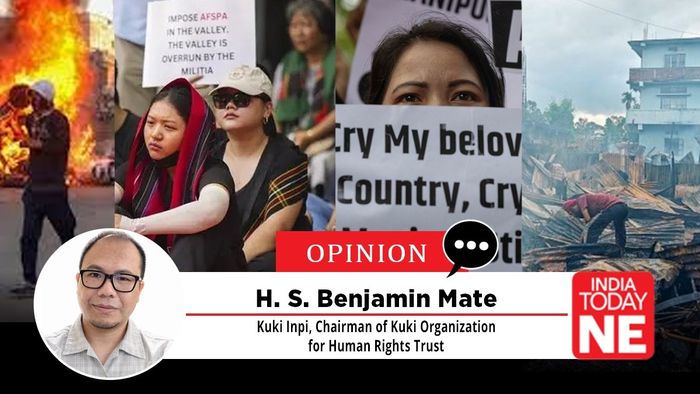
Manipur occupies a unique place among the 565 princely states integrated into independent India. Unlike most rulers, who acceded voluntarily or through negotiated settlements, Manipur’s 1949 merger has been recast—decades later—by sections of the Meitei political elite as a story of “forced annexation.” This selective retelling now underpins one of India’s longest-running separatist insurgencies and, most disturbingly, what has been described as the ethnic cleansing of the Kuki-Zo tribal communities since May 3, 2023.
The paradox is stark: the very community that led a mass movement against its own monarchy now invokes that monarchy’s alleged coercion to justify armed secession, violence against civilians, and claims of perpetual victimhood.
The Merger: A Revolt Against Monarchy, Not India
The dominant separatist narrative collapses under historical scrutiny. In the late 1940s, Manipur’s political ferment was driven not by anti-India sentiment but by popular opposition to feudal monarchy—a movement led overwhelmingly by Meitei reformers in the Imphal Valley. Hijam Irabot Singh, a communist revolutionary and founder of Manipur’s first communist movement, mobilized peasants, workers, and intellectuals against the exploitative maichou aristocracy. His campaign demanded democratic governance, land reforms, and an end to royal absolutism—not secession from India.
Under sustained pressure from the valley Meitei, Maharaja Bodhachandra Singh convened a Constituent Assembly in 1947, which produced Manipur’s first constitution and reduced the monarch to a ceremonial figure. By 1949, support for integration with India had gained momentum among Meitei political forces as a pathway to democracy and modern statehood.
The Merger Agreement of September 21, 1949—though signed under pressure—occurred in this political context. It was the Meitei-led anti-monarchy movement that dismantled royal authority, not Indian troops imposing colonial conquest.
Yet, within a decade, the same political space rebranded this history as “forced annexation,” laying the ideological groundwork for armed separatism.
The Rise of Meitei Separatist Groups and Foreign Patronage
This historical revisionism birthed armed organizations such as the United National Liberation Front (1964), the People’s Liberation Army (1978), PREPAK (1977), KYKL (1994), and multiple KCP factions. Cloaked in Marxist-Leninist rhetoric, these groups demanded an independent “Kangleipak” while enforcing ideological conformity through violence.
Their longevity has depended not on a popular mandate but on external patronage and sanctuaries. As documented by analysts like Bertil Lintner, China provided ideological inspiration and limited training during the Cold War; Pakistan’s ISI facilitated logistics and coordination in later decades; and Myanmar has functioned as the most durable rear base, offering camps, arms routes, and escape corridors.
These outfits enforce cultural authoritarianism—banning Hindi songs, films, and national celebrations for the past many decades
A Bloody Ledger: Security Forces and Civilians
The insurgency’s human toll is undeniable. Conflict databases such as the South Asia Terrorism Portal record over 1,000 Indian security personnel killed since the 1990s alone, with Meitei valley-based groups responsible for a significant share during peak years. The 2015 Chandel ambush, which killed 20 Army soldiers, and the 2021 Assam Rifles convoy attack, which killed an officer, his wife, child, and escorts, are among the most egregious examples.
Civilians—especially non-Manipuris in the valley—have been systematically targeted through extortion, abduction, and assassination.
But the gravest crimes have been inflicted on ethnic minorities, particularly the Kuki-Zo.
Crimes Against Women and Civilians: Beyond Insurgency, Into Atrocity
The record of banned Meitei insurgent groups against Kuki-Zo civilians reveals not “collateral damage” but deliberate terror.
Parbung, 2006: Cadres of the UNLF and allied groups were accused of the mass rape of at least 21 Kuki-Zo (Hmar) women and girls, several of them minors, in Parbung and Lungthulien villages. Survivors described the assaults as collective punishment following Army operations. A judicial inquiry and India’s National Commission for Women examined the case, yet no perpetrator was punished. Impunity prevailed.
Chandel District (2000s–2007): The UNLF planted landmines across Kuki-Zo villages, killing over 30 civilians—women gathering firewood, children on village paths, pastors traveling between hamlets. Entire villages were depopulated as fields and footpaths turned lethal. This was indiscriminate warfare against civilians, not a legitimate insurgency.
These are not aberrations. They form a pattern of militarized ethnic domination.
May 3, 2023: Insurgency Meets State Power
The violence that erupted on May 3, 2023, marked a decisive rupture. What followed was not spontaneous rioting but systematic, sustained violence.
More than 60,000 Kuki-Zo people were displaced. Over 200 villages were destroyed or abandoned. Churches, homes, and schools were burned. Manipur was ethnically partitioned through force. Kuki-Zo organizations describe this plainly as ethnic cleansing.
Crucially, this phase saw the direct involvement of banned Meitei insurgent groups. India’s National Investigation Agency has arrested cadres of the UNLF, KYKL, and KCP linked to killings, arson, and abductions during the violence. Security operations since have recovered arms and arrested militants tied to PLA, UNLF, KYKL, and KCP networks.
Even more damning are allegations of an insurgent–state overlap. Militants have been reported operating alongside Manipur Police commandos, sometimes in uniform. The mass looting of police armories in early May 2023—over 6,000 firearms and hundreds of thousands of rounds of ammunition—armed mobs and militant networks openly hostile to India.
This was not state collapse alone; it was a selective collapse.
The Meitei Double Standard
Here lies the core contradiction.Valley elites condemn India for a “forced merger” yet celebrate the overthrow of their own monarchy.
They invoke human rights against security forces yet rationalize or deny mass rape, landmines, and ethnic displacement.
They claim victimhood while entire tribal populations are erased from their homelands.
This is not resistance. It is double-standard politics sustained by impunity.
The Imperative for Accountability
Manipur’s tragedy is self-inflicted as much as it is inherited. An anti-monarchy revolution morphed into separatist violence, shielded by geopolitical games, local political patronage, and selective outrage.
The events since May 2023 expose the danger of unchecked militant infrastructure intersecting with state power. Peace will not come through silence, false equivalence, or appeasement.
India must confront:
The crimes against women and civilians perpetrated by banned Meitei terrorist groups and the allegations of state complicity that enabled ethnic cleansing.
Without dismantling these networks and delivering justice to victims—Kuki-Zo civilians, security personnel, and ordinary citizens alike—Manipur will remain trapped in cycles of violence, threatening not only its people but India’s northeastern frontier.