The Price of Your Battery: Youth, Rare Earths and Escalating Violence in Africa
Every time we swipe, scroll, or recharge, we tap into a hidden global struggle. Few realise that Africa’s young miners are paying the highest price for the world’s clean-energy ambitions.
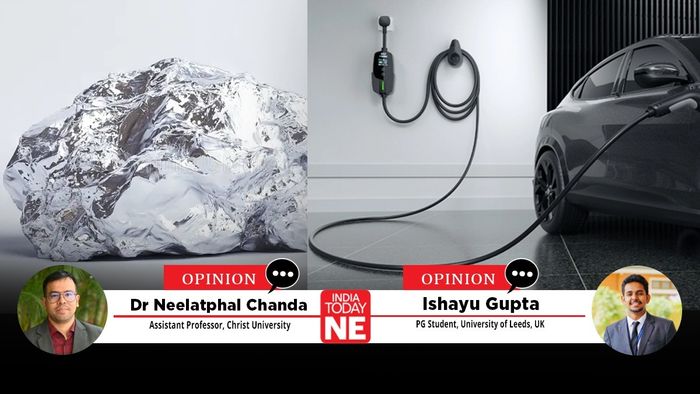
- Dec 11, 2025,
- Updated Dec 11, 2025, 3:32 PM IST
India's economy is rapidly being driven by electric cars, solar rooftops, and rechargeable gadgets, which makes it easy to celebrate the change as entirely eco-friendly and progressive. However, there is a darker side to the clean-energy revolution: how global competition for rare earth and other "transition" minerals, youth unemployment, and climate change are contributing to a new wave of violence in certain parts of Africa.
Ethnic tension or political instability cannot adequately describe these conflicts. Rather, they are a reflection of structural pressures, including rising temperatures, crop failures, declining livelihoods, and the risky mining of minerals vital to the global green transition.
A significant portion of the world’s vital mineral reserves, including cobalt, lithium, and rare earth elements, are located in Africa. Global supply chains are increasingly dependent on nations such as Burundi, Madagascar, Tanzania, and the Democratic Republic of the Congo. However, mining these resources frequently has detrimental effects on both people and the environment, including hazardous working conditions, environmental degradation, and minimal financial benefits for nearby populations. Armed organisations turn mining areas into conflict zones by exploiting the mineral wealth in numerous regions.
This situation is exacerbated by youth unemployment, as millions of young Africans turn to artisanal and small-scale mining due to limited economic opportunities and declining agricultural livelihoods caused by climate change. These mines are frequently unregulated, dangerous, and unofficial. While large-scale industrial operations often produce few jobs relative to the minerals they extract, children and young people are frequently forced to work in hazardous situations to extract these minerals. Young people witness the wealth of their lands flowing abroad, but they are nonetheless disenfranchised, making many of them susceptible to recruitment by militias or illicit mining networks. This is a powerful combination.
These demands are exacerbated by climate change. Droughts, rising temperatures, and increasingly unpredictable rainfall pose significant threats to local businesses and traditional farming practices. Despite the risks, mining is one of the few opportunities available to many young people. Economic strain brought on by climate change and the attraction of profitable minerals combine to create instability and, occasionally, violent conflict.
Systemic change—encompassing better governance, genuine protection for mining communities, and local value addition—is required. Governments and businesses must invest in local infrastructure and skill development, formalise artisanal mining to create safe jobs, and make licensing and extraction procedures transparent, so that African communities can truly benefit from their natural resources rather than suffering the most from exploitation. It is the duty of foreign consumers, especially those in India, to demand ethical sourcing standards and ensure that the benefits of green energy do not come at the expense of human rights violations.
There are moral obligations associated with this shift to green energy. It is crucial to consider both the technology we use and the sources of the resources used to power it. Africa's youth, already burdened by unemployment and the effects of climate change, cannot afford to be the unstated cost of a global green revolution. Such facts will be acknowledged by a truly equitable transition, which will force us to fund solutions that protect human lives while pursuing renewable energy.
Ultimately, the energy that drives our clean future will only be genuinely sustainable if it treats people and the environment with respect. The basic objectives of the green transition are compromised if we ignore the violence that lurks in our supply chains.