The Question of Academic Freedom and the Unequal Capacity to Exercise It
Academic freedom is often framed as the right to speak, research and question without interference—but what if that freedom means little when scholars lack the security or resources to use it? From funding and precarious jobs to visas and mobility, the conditions of academic life may quietly determine who gets to take intellectual risks, and whose ideas never get the chance to enter the conversation.
- Aug 27, 2026,
- Updated Aug 27, 2026, 3:23 PM IST
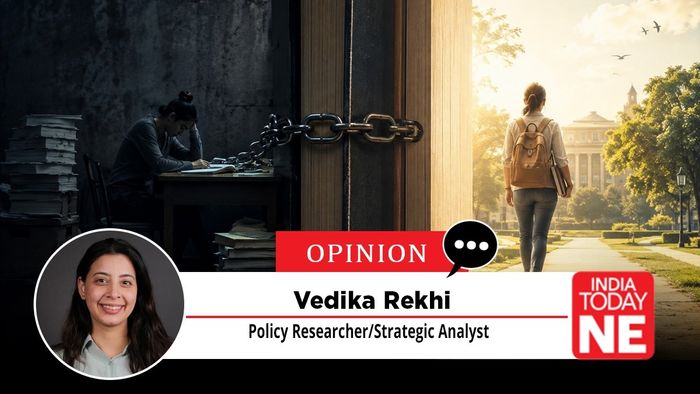
Academic freedom is generally discussed in terms of what scholars are free to do: whether they can pursue controversial research, teach disputed ideas, publish findings that challenge powerful interests, or express views without fear of illegitimate institutional interference. These questions are essential, but they begin from an assumption that deserves greater scrutiny: that the scholar whose freedom we are concerned with already possesses the institutional capacity to exercise it. Yet, the said capacity is far from equally distributed. To elucidate, let’s consider two researchers who formally possess the same freedom to pursue an intellectually controversial question. One has permanent employment with an established reputation, secure funding and institutional support, while the other works on a temporary contract with an uncertain source of funding or relies upon institutional sponsorship for immigration status. So, while their formal freedom may be similar, nevertheless, their practical ability to make use of it is not. This distinction, hence, points to the fact that academic freedom has a material dimension that is too casually treated as secondary to its intellectual one.
Academic freedom is, thus, generally understood as a protected principle: a scholar should be able to research, teach, publish, and communicate without illegitimate interference. This article asks whether that understanding is sufficient and tries to understand academic freedom as a lived capacity - one whose actual exercise depends upon material resources, institutional position, professional security, and mobility. The distinction matters because formally similar freedoms can have profoundly unequal practical value.
Amartya Sen’s distinction between formal freedoms and substantive capabilities provides a useful starting point for our discussion here. For Sen (1999), possessing a formal entitlement is not equivalent to possessing the substantive capability to actually achieve something one has reason enough to value. What needs to be reiterated here is the fact that freedom matters partly because people require actual opportunities to exercise it. Applied to the field of academia, the distinction raises a deceptively simple question - Is it enough for scholars to possess academic freedom formally, or should we also be concerned with their actual on-ground capacity to exercise it? This understanding matters because intellectual activity is greatly dependent upon institutional resources. Research requires time and, in certain cases, financial support; people who want academic careers require employment and professional networks, and need to find forums for intellectual engagement; moreover, fieldwork for research is dependent upon mobility. Furthermore, international scholarship requires visas and institutional sponsorship for students from most countries, and doctoral and post-doctoral education usually requires several years of financial support. In addition to this, publication and professional advancement are contingent upon infrastructures that no individual scholar controls entirely. In laypeople's terms, these conditions are classified as questions of employment, funding, immigration, administration, or higher-education policy. Yet, their effects do not stop at mere administrative boundaries; rather, they also shape who is able to produce knowledge and under what conditions.
Funding is an obvious case in point here, as a reduction in doctoral funding can be described accurately as a financial event, but its consequences are also epistemic. A doctoral researcher who is never funded does not simply represent an unoccupied place within a university but a possible research trajectory also disappears with that person - questions that might have been formulated, fieldwork that could have been conducted and findings that might eventually have altered a scholarly conversation, only if funding was not a constraint to the research. This, however, in no way directly implies that every unfunded project represents a violation of academic freedom. Resources are finite, and universities have to necessarily make choices about their allocation, but the point that this article is driving home is different; the allocation of material resources participates in shaping the boundaries of knowledge.
Pierre Bourdieu’s Homo Academicus (1988) makes it difficult to imagine academia as a space populated by intellectually equal actors who differ only in the quality of their ideas. Viewed through this lens, academic freedom operates within an unequal institutional structure. This means that prestige, institutional location, professional networks, seniority, and access to resources affect an individual’s capacity to act within the field, and unfortunately, academic freedom operates inside this unequal structure. The consequence, thus, is that formally identical freedoms can have radically different practical meanings. For instance, an established professor pursuing an unpopular argument may create controversy, but for a researcher whose next contract depends upon institutional approval, the same decision may threaten continued employment. Furthermore, for a doctoral researcher, the same thing might affect supervision or professional references, and for an international scholar, professional insecurity may intersect with immigration status and geographical mobility. These differences cannot and should not be reduced to individual willingness to take risks. It is pertinent to note that they arise partly from institutional position.
Judith Butler’s distinction between precariousness and precarity offers a useful way of understanding this problem. While vulnerability can be understood as widely shared, precarity draws attention to its unequal political and social distribution (Butler, 2009). Academic life contains a comparable inequality, and uncertainty may be common to a profession while its consequences fall much more heavily on some of its members than others. This is particularly visible at the beginning of academic careers; that is, entry into academia requires access to the resources through which academic capacity is produced - education, supervision, funding, professional networks, and often, geographical mobility. The question of who gets to become a scholar is, therefore, not entirely separate from the question of academic freedom. It determines who will eventually occupy the positions from which that freedom can be exercised. This relationship became apparent to me while observing the contraction of funded doctoral opportunities in the United States. What struck me was not simply that fewer opportunities might exist; rather, it was that something generally discussed as a question of budgets and university administration could have consequences for the future composition of knowledge-producing communities. The observation extends well beyond any particular country or political moment.
If particular groups face greater financial barriers to doctoral education, academic fields may lose perspectives they would otherwise have contained, and if international mobility becomes more difficult, intellectual networks may become geographically narrower. If prolonged employment insecurity becomes normal at the beginning of academic careers, researchers may rationally become more cautious about the intellectual risks they take. Furthermore, if particular forms of scholarship depend upon increasingly scarce resources, decisions about funding can indirectly influence the kinds of questions that remain viable. None of this requires an explicit prohibition on inquiry, and that is precisely why the distinction between formal freedom and substantive capacity matters.
A university could, in principle, strongly defend academic freedom while simultaneously maintaining conditions in which substantial numbers of its researchers possess very limited capacity to take advantage of it. There is no contradiction if academic freedom is understood purely as non-interference, but there is a significant tension if academic freedom is also understood as requiring meaningful conditions for intellectual agency. This does not mean universities could, or should, eliminate professional risk, as intellectual life necessarily, at its core, involves disagreement, evaluation, competition, and uncertainty. Nor should every employment dispute, unsuccessful grant application, visa restriction, or funding reduction be redescribed as an academic-freedom violation since doing so would make the concept so expansive that it would lose analytical value. Instead, we need to distinguish between academic freedom as a protected principle and academic freedom as a lived capacity. While the first asks whether scholars are formally protected in pursuing and communicating knowledge, the second looks at whether their position within academic institutions gives them a meaningful capacity to use that protection. Once that distinction is made, several familiar questions about universities look different. Precarious employment is not only a labour issue and funding is not only a budgetary issue; international mobility is not only an immigration issue and doctoral support is not only an educational issue. Each of these factors can affect the distribution of intellectual agency within academic communities. They, therefore, deserve attention not because they are equivalent to censorship, but because they help determine whose academic freedom becomes practically consequential.
This also changes how we understand inequality within universities. The relevant inequality is not simply that some academics earn more, possess greater prestige, or occupy more secure positions than others; instead, it is that these inequalities can produce different capacities to pursue uncertain or professionally risky intellectual work. Academic freedom consequently has a political economy which depends upon resources, institutional arrangements, employment structures, and systems of mobility that distribute intellectual security unevenly. These structures do not determine what scholars think, but they help determine what kinds of intellectual risks different scholars can afford to take and, before that, who acquires the opportunity to become a scholar at all. Protecting academic freedom, hence, requires more than defending scholars against direct interference. It also requires serious attention to the conditions under which intellectual agency is produced and distributed. The question is not only whether scholars are free, but it is also who has the capacity to make use of that freedom; therefore, rather than making a direct claim regarding the academicians' conviction and will, it is implicit to understand whether the academic system provides scholars an equal opportunity as others to exercise academic freedom.
References:
Bourdieu, Pierre. Homo Academicus. Stanford University Press, 1988.
Butler, Judith. Frames of War: When Is Life Grievable? Verso, 2009.
Sen, Amartya. Development as Freedom. Oxford University Press, 1999.
(Vedika Rekhi is a US-based independent policy researcher and strategic analyst working at the intersection of policy, institutions, and public discourse. Her broader research focuses on international security, conflict, diplomacy and strategic communication)
(The views expressed in this article are those of the author and do not necessarily reflect the views of India Today NE or its affiliates.)