Tribute to Thadou Church Leader Rev. Dr. Vumthang Sitlhou — Martyr for Truth, Faith, Peace, and Dignity
Wednesday, 13 May 2026, is a day forever etched in my memory and in the collective memory of the entire Thadou community and many others beyond it. At exactly 3:13 PM Melbourne time, I received a WhatsApp message informing me that leaders of the Thadou Baptist Association India (TBAI), including its President, Rev. Dr. Vumthang Sitlhou — who also served two terms as General Secretary of the Manipur Baptist Convention — Finance Secretary Rev. Kaigoulun Lhouvum, and Pastor Paogoulun Sitlhou, had come under a brutal and targeted ambush while returning home from a church event in Churachandpur.
- May 19, 2026,
- Updated May 19, 2026, 8:12 PM IST
Wednesday, 13 May 2026, is a day forever etched in my memory and in the collective memory of the entire Thadou community and many others beyond it. At exactly 3:13 PM Melbourne time, I received a WhatsApp message informing me that leaders of the Thadou Baptist Association India (TBAI), including its President, Rev. Dr. Vumthang Sitlhou — who also served two terms as General Secretary of the Manipur Baptist Convention — Finance Secretary Rev. Kaigoulun Lhouvum, and Pastor Paogoulun Sitlhou, had come under a brutal and targeted ambush while returning home from a church event in Churachandpur.
Five others were also seriously injured: Rev. S. M. Haopu, Executive Secretary of TBAI; Rev. Hekai Simte; Rev. Kaikhothang Singsit; and the two drivers, Thangtinlen Sitlhou and Goumang Lhouvum.
Moments later, another message briefly suggested that Rev. Vumthang was not among the victims, offering a fleeting sense of hope. But at 3:29 PM, the devastating confirmation arrived: Rev. Dr. Vumthang Sitlhou was no more.
I was overcome with disbelief. Within minutes, the world had lost three innocent and noble souls in one of the most horrific and cold-blooded attacks imaginable. The victims were travelling in two official TBAI vehicles, both clearly marked with TBAI identification plates, and were specifically targeted while other vehicles in the convoy were left untouched. Reports further indicated that the second TBAI vehicle, carrying Rev. Vumthang, came under particularly heavy gunfire, with at least fifteen bullets reportedly recovered from his body.
The news shook me profoundly. It shook the entire country and far beyond. This is the first time in the history of Northeast India that religious leaders have been ambushed and killed in such a manner. While the loss of the three TBAI leaders was heartbreaking, Rev. Vumthang’s death affected me most personally because he was not only a respected leader but also someone I knew closely, regularly spoke with, and deeply admired. The shock of his sudden and violent death nearly brought me to the ground.
I struggle to comprehend the depth of hatred required to deliberately target men whose lives were devoted to peace, faith, compassion, and service. Their only “fault” may have been their Thadou identity and their unwavering commitment to preaching love, reconciliation, and the Gospel of Jesus Christ. Rev. Dr. Vumthang was not only a devoted Christian preacher but also a steadfast advocate for peace, justice, and human dignity.
The attack on the TBAI leadership was devastating beyond words. It was not merely a tragedy for the Thadou community; it was a profound loss for the wider Christian community and for all who value peace, justice, and human life.
His death also reminded me of something deeply meaningful shared during a four-day Aboriginal Cultural Safety Training session in Australia on 15 May 2026, just days after the tragedy. An Aboriginal trainer said: “Aboriginal people should be asked how they want to identify themselves, rather than having an imposed ticked-box identity forced upon them.” She spoke about her lived experience as a member of the Stolen Generations, describing how her language, identity, and culture had been suppressed, and how she later reclaimed her Aboriginal identity with courage and self-determination.
Her words resonated deeply with me as I reflected on how Rev. Vumthang and other Thadou church leaders are sometimes referred to as “Kuki” by certain individuals and sections of the media — a contested label that many reject because it does not reflect their Thadou identity and is often used in ways that distort, subsume, or erase it.
I am proud to belong to the Thadou people, one of the world’s oldest surviving cultures, with a history spanning thousands of years. As a proud Thadou man and advocate for Thadou identity and rights, I found the Aboriginal trainer’s message profoundly relatable. It echoed the long and painful struggle of the Thadou people to preserve our authentic identity, heritage, dignity, and historical truth amid decades of marginalisation, coercion, and persecution.
For decades, the unarmed, peace-loving, indigenous Thadou community has endured systemic intimidation, persecution, and violent militant campaigns carried out by anti-Thadou Kuki supremacist groups. These groups, along with their proxies, operate through more than 40 armed militant organisations functioning under the controversial Suspension of Operations (SoO) arrangements, which provide them with financial assistance, regular stipends, logistical support, and, in practice, an alarming degree of impunity from the state — creating conditions many perceive as tantamount to state-enabled, or state-sponsored, armed militancy.
It is difficult to imagine when or how the Thadou community will fully reclaim its freedom, dignity, and right to self-determination from the grip of militant and deeply radicalised Kuki domination, especially amid continuing policies and politics of Kuki appeasement. Yet despite decades of suffering, fear, and marginalisation, I remain steadfast in my conviction that the Thadou community will endure, rise, and ultimately prevail.
I have known Rev. Dr. Vumthang since before I left Manipur, India, for Australia in 2008 to study a Master of Social Work. He was not only a respected Christian leader but also a courageous defender of Thadou identity, even when doing so required immense conviction and personal sacrifice. He remained steadfast, dignified, and unwavering in both his faith and his principles. While I, too, have experienced challenges because of my Thadou identity, the burden he carried and the example he set were far greater.
What made Rev. Vumthang especially beloved was his humility, warmth, and gentle humour. He was approachable, deeply respectful, and naturally compassionate, and people instinctively felt at ease in his presence. To many of us, he was more than a church leader — he was a mentor, spiritual guide, and trusted friend.
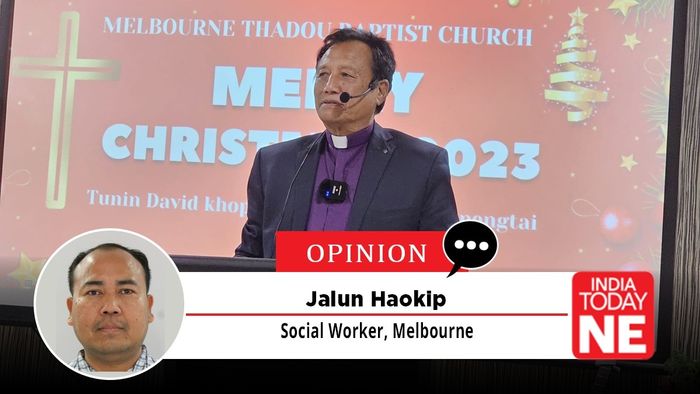
I had the privilege of hosting him in my family home in Melbourne for two weeks during Christmas 2023, when he visited the Melbourne Thadou Baptist Church. The Thadou community in Melbourne instantly connected with him and continues to cherish his memory with deep affection. Through his visit, the relationship between the Melbourne Thadou Baptist Church and the TBAI was further strengthened.
He was also deeply passionate about the Thadou translation of the Holy Bible, continuing the legacy of Pu Ngulhao Thomsong (1891–1945), the pioneering Thadou missionary who translated and published the New Testament in Thadou in 1942. Rev. Vumthang firmly believed that translating the Holy Bible into Thadou was essential because language is inseparable from identity, heritage, culture, and spiritual understanding.
Our conversations often turned to the future of the Thadou community — building a society free from violence, drugs, and corruption, strengthening cultural and spiritual identity, and ensuring that younger generations remained connected to their roots and values. He also envisioned stronger connections among Thadou Christian fellowships and churches beyond Manipur, where people could worship freely without fear, coercion, or pressure, particularly from Kuki groups.
Rev. Vumthang also carried forward a remarkable family legacy. His father, Pu Pakho, was a Thadou Christian missionary who ministered among the Rongmei community. In many ways, Rev. Vumthang continued that legacy of faith, peace, compassion, and inter-community understanding.
One of the most moving moments after his passing came during his funeral, when his son, Haominun Sitlhou, publicly forgave his father’s killers, echoing the extraordinary example of the Australian Christian missionary Graham Staines, who was murdered in India alongside his two sons. Such forgiveness in the face of unimaginable loss reflects profound moral courage and the deepest values of Christian faith.
Although some Kuki extremist groups reportedly took offence to this message of forgiveness and even threatened him because of it, his words touched countless hearts across India and beyond. It was a message desperately needed not only in Manipur, but everywhere hatred, extremism, and violence prevail. Forgiveness does not mean abandoning justice or obstructing the law from pursuing perpetrators. Rather, it reflects moral courage, resilience, and faith — and the biblical teaching to “love your enemies,” even in moments of immense grief and pain. The bereaved families should be allowed to grieve and express their faith. I express my heartfelt empathy and condolences to them.
I was also deeply moved to learn that the departed church leaders and Servants of God were given dignified Christian burials on May 16, 2026, at the Thadou Baptist Association Centre at Motbung in Manipur’s Kangpokpi District, despite strong pressure from Kuki groups to bury them at the Kukis “Martyrs Cemetery” at Phaijang. It is comforting to know that their dignity, identity, and wishes were ultimately respected and defended by their families and the TBAI and Thadou leadership.
Until the very end, we remained in regular contact. Every morning, Rev. Vumthang sentBible verses that encouraged and strengthened me. Those messages, once ordinary, have now become treasured memories. His final words to me — affirming his courage and unwavering commitment to his Thadou identity, while encouraging me to remain true to my own identity, purpose, and convictions — now carry even deeper meaning.
Rev. Vumthang is no longer with us, but his faith, courage, humility, and vision will never be forgotten. His life stands as a testimony of conviction, service, sacrifice, and love for his people. He will be remembered as a martyr for truth, faith, peace, and the dignity of the Thadou people. May his sacrifice inspire unity, resilience, and strength within the Thadou community.
May his legacy inspire all people to reject violence, hatred, extremism, and dehumanisation, and instead embrace peace, justice, compassion, reconciliation, and our shared humanity. May his soul rest in eternal peace.
As the Apostle Paul wrote in 2 Timothy 4:7: “I have fought the good fight, I have finished the race, I have kept the faith.” Rev. Dr. Vumthang, Rev. Kaigoulun, and Pastor Paogoulun truly lived these words.
To conclude, I humbly appeal to members of all other communities, the international community, human rights organisations, Indian authorities, governments, and church organisations — including the Baptist World Alliance and other church councils — as well as the media and all right-thinking people, to condemn these atrocities and to work toward peace, an end to violence and militancy, and justice for the victims and for the Thadou community.
I further urge that the Thadou people and their identity be recognised accurately as Thadou, and not otherwise. I also call on all concerned to act as fair, truthful, and responsible narrators of the suffering, history, and identity of the Thadou people.
The writer is a Melbourne-based Manipur native with professional experience as a social worker working with both mainstream and Indigenous Australian communities across different parts of Australia. He currently works as a family violence practitioner for the Victorian Government in Melbourne, Australia, and is the Secretary of the Melbourne Thadou Baptist Church.
(The views expressed in this article are those of the author and do not necessarily reflect the views of India Today NE or its affiliates.)